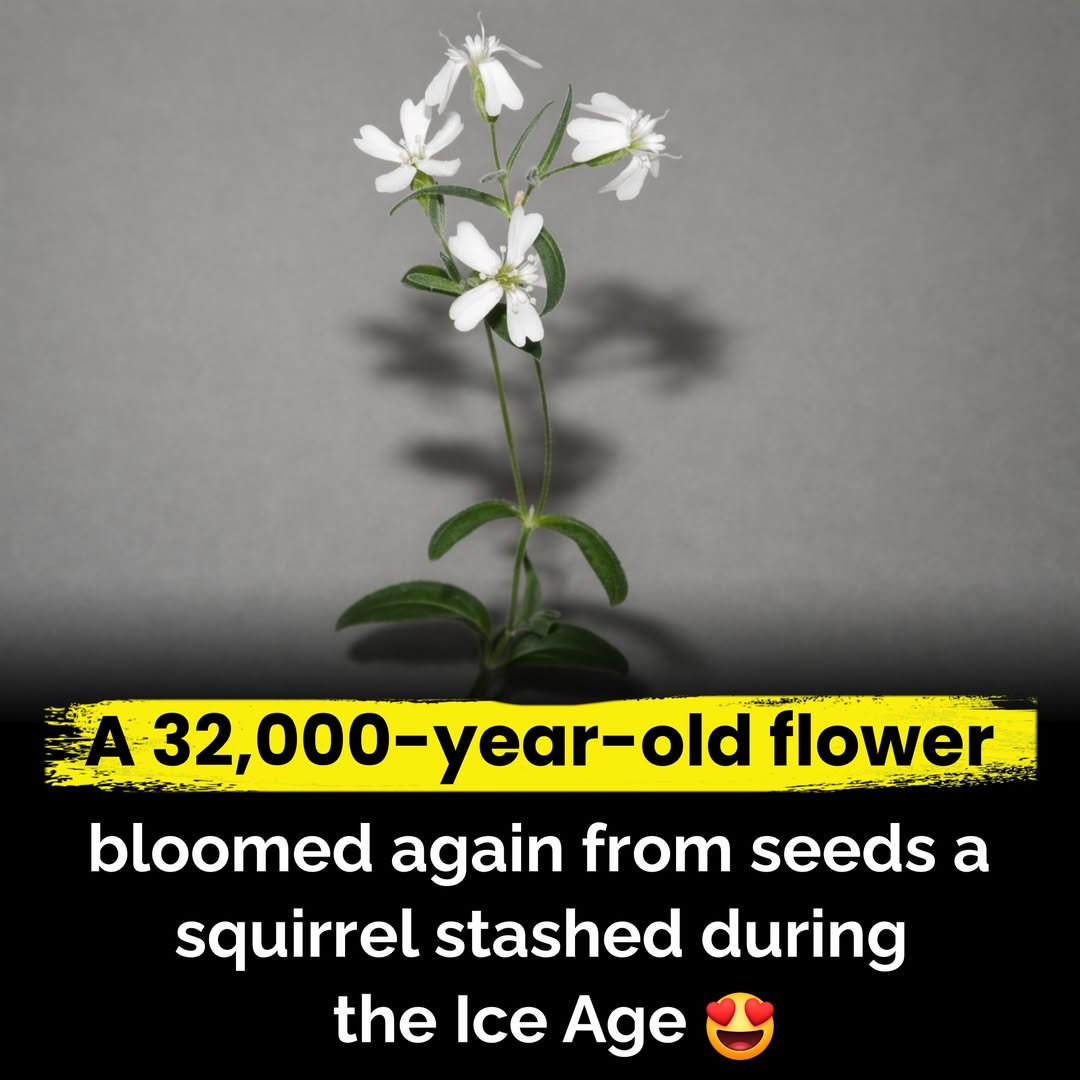
Scientists successfully revived a plant from 32,000-year-old seeds discovered frozen in Siberian permafrost — making it the oldest organism ever brought back to life.
The seeds belonged to Silene stenophylla and were found buried 124 feet underground near the Kolyma River, preserved inside an Ice Age squirrel’s burrow. Constantly frozen at about 19°F (-7°C), the extreme cold prevented cellular decay since the time of the woolly mammoths . Although the mature seeds were damaged, researchers extracted living tissue from immature ones and grew them in a sterile lab environment. The regenerated plants not only bloomed but produced fertile seeds, showing slight evolutionary differences from modern varieties.
Beyond reviving ancient life, the breakthrough offers valuable insight for biodiversity preservation . Studying how these cells survived for millennia could strengthen global seed banks and help protect plant genetics against future climate disasters.
Scientists successfully revived a plant from 32,000-year-old seeds discovered frozen in Siberian permafrost — making it the oldest organism ever brought back to life.
The seeds belonged to Silene stenophylla and were found buried 124 feet underground near the Kolyma River, preserved inside an Ice Age squirrel’s burrow. Constantly frozen at about 19°F (-7°C), the extreme cold prevented cellular decay since the time of the woolly mammoths . Although the mature seeds were damaged, researchers extracted living tissue from immature ones and grew them in a sterile lab environment. The regenerated plants not only bloomed but produced fertile seeds, showing slight evolutionary differences from modern varieties.
Beyond reviving ancient life, the breakthrough offers valuable insight for biodiversity preservation . Studying how these cells survived for millennia could strengthen global seed banks and help protect plant genetics against future climate disasters.