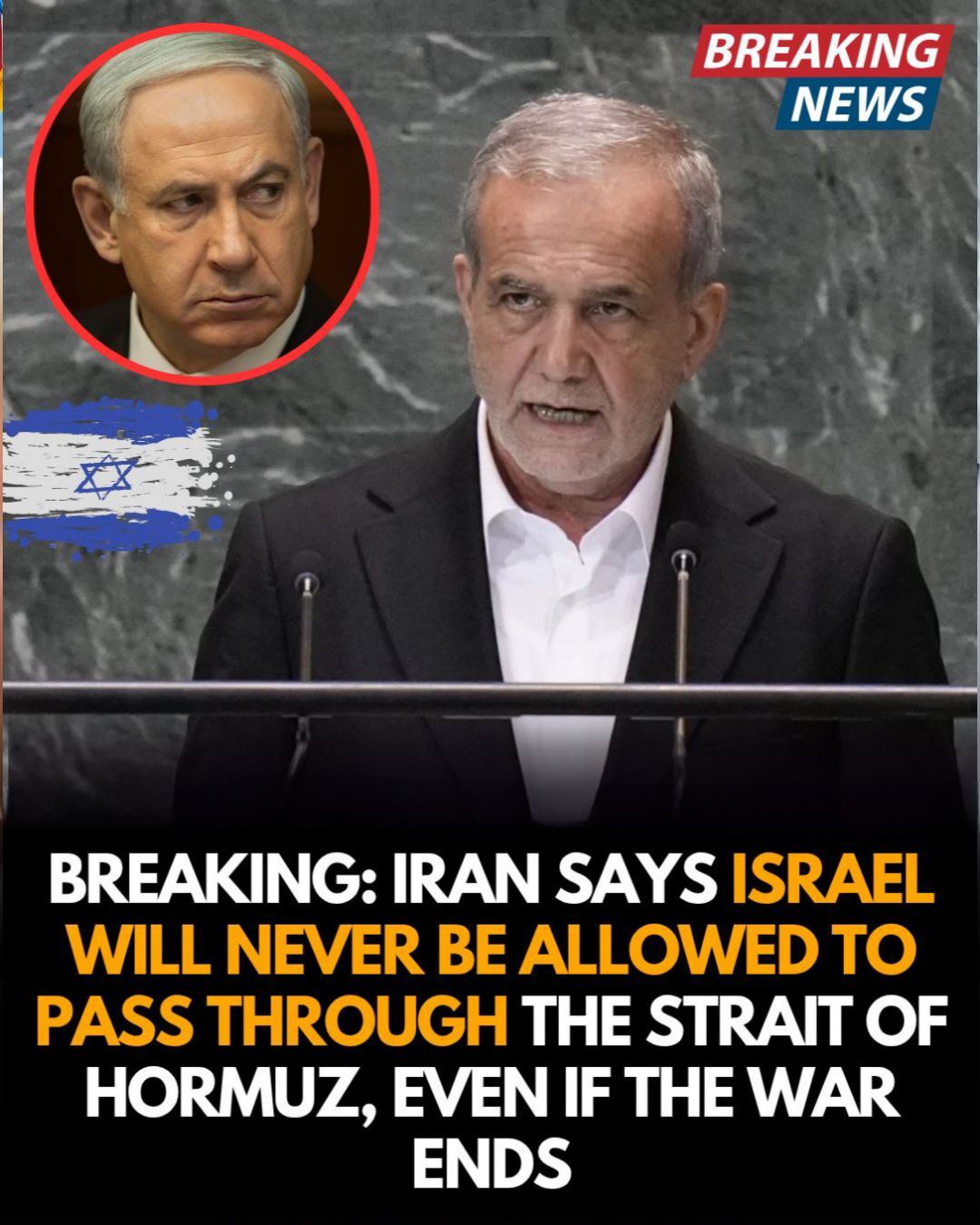
President Masoud Pezeshkian has issued a definitive and historic declaration regarding the future of Middle Eastern maritime security, stating that Israeli vessels will face a permanent ban from the Strait of Hormuz. This decree, delivered during a late-night address on April 1st, signals that Iran intends to maintain its blockade against Israel as a long-term strategic policy, regardless of any potential ceasefire or end to current hostilities.
This hardline stance follows a day of intense military and diplomatic friction, including a massive new wave of Iranian missiles launched at Israel and the official rejection of President Trump’s ceasefire claims. By making this "never" pledge, Tehran is seeking to fundamentally alter the regional status quo and establish a new "Hormuz Doctrine" that excludes its primary adversary from the world's most critical energy chokepoint.
The declaration comes as Russia, China, India, Iraq, and Pakistan enjoy exclusive "safe passage" through the corridor, creating a starkly divided maritime landscape. Iranian officials emphasized that while they are open to "brotherly" cooperation with neutral states like Malaysia and Oman, Israel remains an "existential enemy" that has forfeited all rights to regional transit.
International analysts suggest this move is designed to maximize Israel’s long-term economic isolation and force the U.S.-led coalition into a difficult choice between accepting a permanent blockade or initiating a high-risk naval war. The White House has characterized the statement as "unacceptable and illegal," while Jerusalem has reiterated its right to defend freedom of navigation.
As the IEA warns of a historic energy crisis and the 35-country summit in London enters its second day, the prospect of a diplomatic resolution has dimmed significantly. The world is watching to see if this permanent ban will be enforced by the IRGC’s coastal batteries or if it will trigger a decisive military confrontation to break the blockade once and for all.
#NationalSecurity #MaritimeLaw #Geopolitics #MiddleEastWar #GlobalTradePresident Masoud Pezeshkian has issued a definitive and historic declaration regarding the future of Middle Eastern maritime security, stating that Israeli vessels will face a permanent ban from the Strait of Hormuz. This decree, delivered during a late-night address on April 1st, signals that Iran intends to maintain its blockade against Israel as a long-term strategic policy, regardless of any potential ceasefire or end to current hostilities.
This hardline stance follows a day of intense military and diplomatic friction, including a massive new wave of Iranian missiles launched at Israel and the official rejection of President Trump’s ceasefire claims. By making this "never" pledge, Tehran is seeking to fundamentally alter the regional status quo and establish a new "Hormuz Doctrine" that excludes its primary adversary from the world's most critical energy chokepoint.
The declaration comes as Russia, China, India, Iraq, and Pakistan enjoy exclusive "safe passage" through the corridor, creating a starkly divided maritime landscape. Iranian officials emphasized that while they are open to "brotherly" cooperation with neutral states like Malaysia and Oman, Israel remains an "existential enemy" that has forfeited all rights to regional transit.
International analysts suggest this move is designed to maximize Israel’s long-term economic isolation and force the U.S.-led coalition into a difficult choice between accepting a permanent blockade or initiating a high-risk naval war. The White House has characterized the statement as "unacceptable and illegal," while Jerusalem has reiterated its right to defend freedom of navigation.
As the IEA warns of a historic energy crisis and the 35-country summit in London enters its second day, the prospect of a diplomatic resolution has dimmed significantly. The world is watching to see if this permanent ban will be enforced by the IRGC’s coastal batteries or if it will trigger a decisive military confrontation to break the blockade once and for all.
#NationalSecurity #MaritimeLaw #Geopolitics #MiddleEastWar #GlobalTrade