Adult


-
-
Aaron Swartz was only 14 when he helped create RSS, the technology behind how millions subscribe to content online. By 19, he had helped launch Reddit. By 24, he was a research fellow at Harvard University studying political corruption.
But he believed something simple: knowledge funded by the public should be free for everyone.
In 2010–2011, he downloaded about 4.8 million academic articles from JSTOR through Massachusetts Institute of Technology’s network. His intention was believed to be making research accessible instead of locked behind paywalls.
Authorities intervened. Swartz was arrested and later charged by federal prosecutors with multiple felonies, including wire fraud and computer fraud — charges carrying a possible 35 years in prison and $1 million in fines.
JSTOR itself declined to pursue charges after the data was returned, but the case continued.
Swartz had previously spoken publicly about struggling with depression. His lawyers tried to negotiate a plea deal, but the legal fight dragged on.
On January 11, 2013, Aaron Swartz tk his own life** in his Brooklyn apartment. He was 26 years old.
His d**th triggered global backlash. Legal scholars, technologists, and activists questioned whether the case had been pursued too aggressively for a situation involving no financial profit and no direct victim.
In the years that followed, MIT conducted an internal review, and JSTOR released millions of articles for free access in his memory.
But none of it could bring him back.Aaron Swartz was only 14 when he helped create RSS, the technology behind how millions subscribe to content online. By 19, he had helped launch Reddit. By 24, he was a research fellow at Harvard University studying political corruption. But he believed something simple: knowledge funded by the public should be free for everyone. In 2010–2011, he downloaded about 4.8 million academic articles from JSTOR through Massachusetts Institute of Technology’s network. His intention was believed to be making research accessible instead of locked behind paywalls. Authorities intervened. Swartz was arrested and later charged by federal prosecutors with multiple felonies, including wire fraud and computer fraud — charges carrying a possible 35 years in prison and $1 million in fines. JSTOR itself declined to pursue charges after the data was returned, but the case continued. Swartz had previously spoken publicly about struggling with depression. His lawyers tried to negotiate a plea deal, but the legal fight dragged on. On January 11, 2013, Aaron Swartz tk his own life** in his Brooklyn apartment. He was 26 years old. His d**th triggered global backlash. Legal scholars, technologists, and activists questioned whether the case had been pursued too aggressively for a situation involving no financial profit and no direct victim. In the years that followed, MIT conducted an internal review, and JSTOR released millions of articles for free access in his memory. But none of it could bring him back.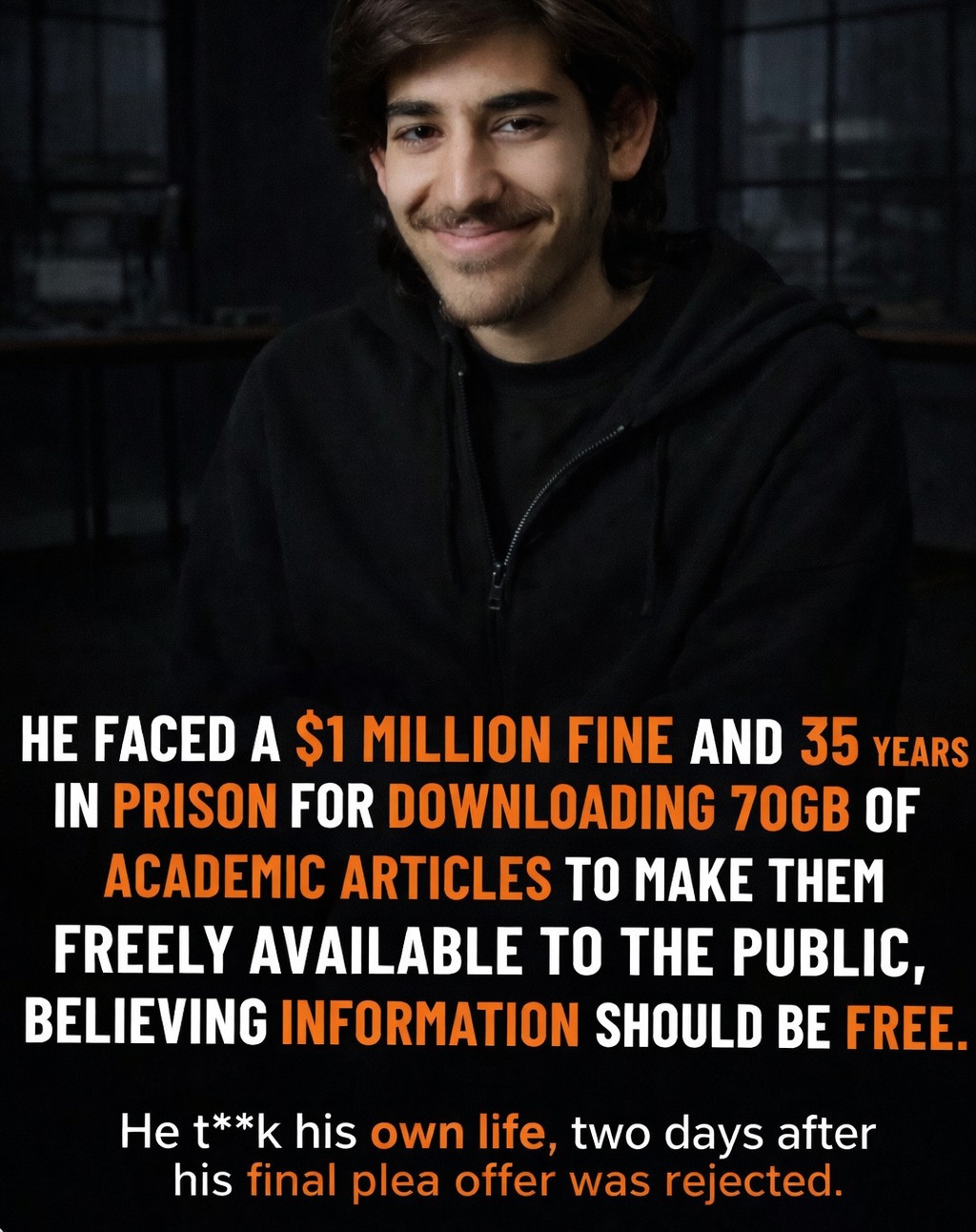 · 0 Comentários ·0 Compartilhamentos ·105 Visualizações ·0 Anterior
 3
3