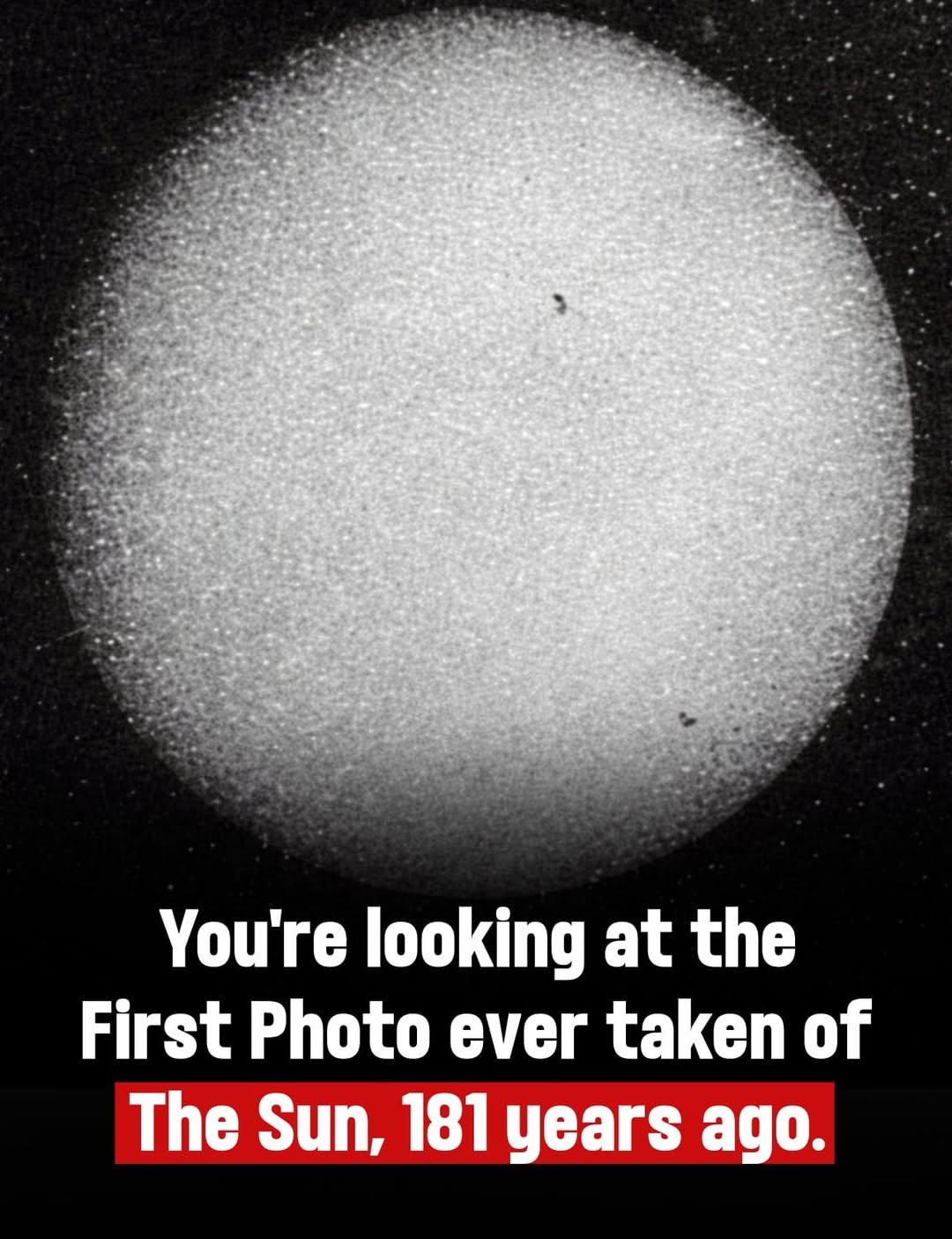
On April 2, 1845, the first-ever photograph of the Sun was captured by French physicists Hippolyte Fizeau and Léon Foucault. Using an early photographic process called a daguerreotype, they produced a 12 cm image with an exposure time of just 1/60th of a second — a remarkable technical achievement for that era
The image clearly revealed sunspots and the solar limb, offering one of the first visual records of activity on the Sun’s surface. At a time when photography itself was still in its infancy, this breakthrough marked a major step forward in both astronomy and imaging technology, opening the door to studying celestial objects in entirely new ways
The image clearly revealed sunspots and the solar limb, offering one of the first visual records of activity on the Sun’s surface. At a time when photography itself was still in its infancy, this breakthrough marked a major step forward in both astronomy and imaging technology, opening the door to studying celestial objects in entirely new ways
On April 2, 1845, the first-ever photograph of the Sun was captured by French physicists Hippolyte Fizeau and Léon Foucault. Using an early photographic process called a daguerreotype, they produced a 12 cm image with an exposure time of just 1/60th of a second — a remarkable technical achievement for that era
The image clearly revealed sunspots and the solar limb, offering one of the first visual records of activity on the Sun’s surface. At a time when photography itself was still in its infancy, this breakthrough marked a major step forward in both astronomy and imaging technology, opening the door to studying celestial objects in entirely new ways