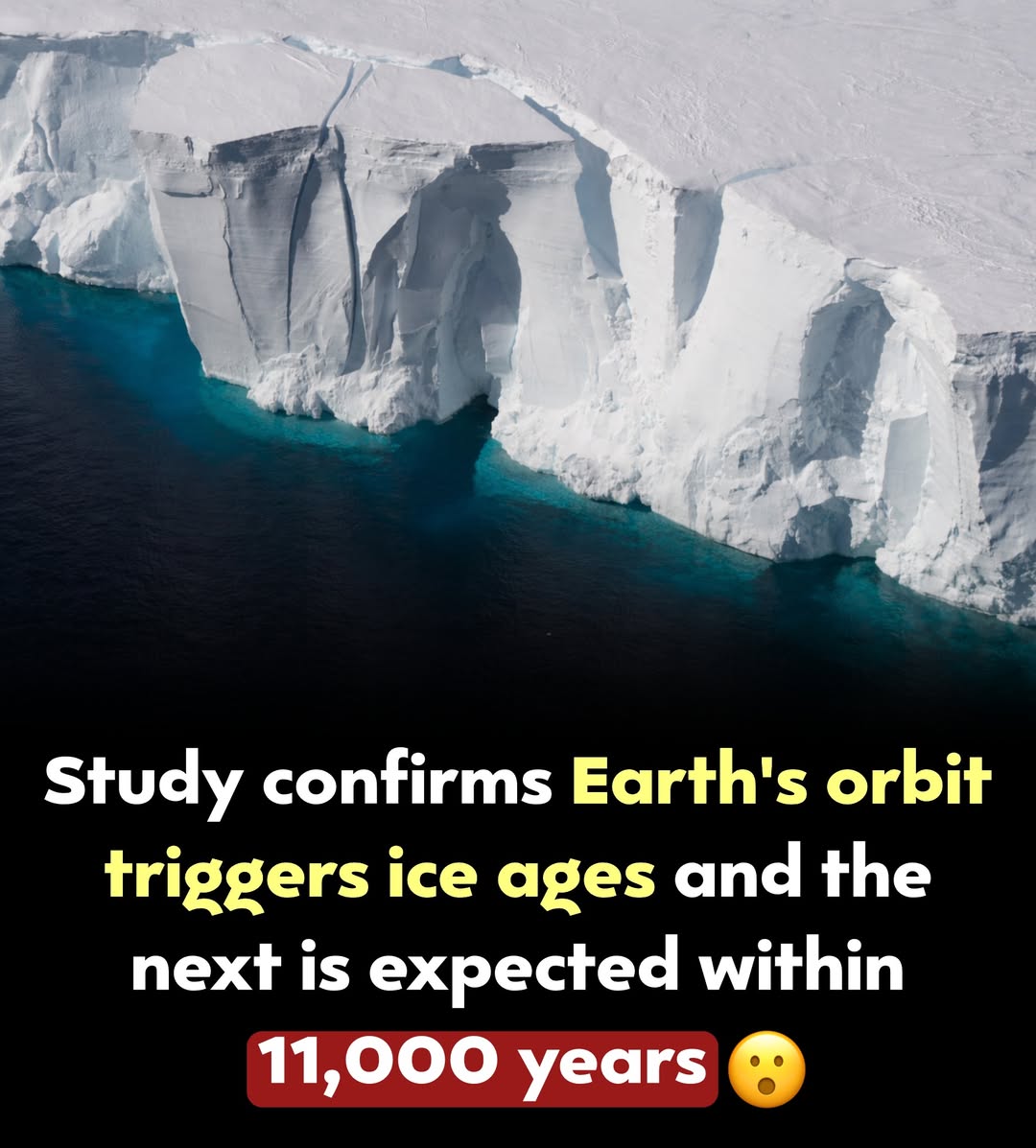
Researchers from Cardiff University have uncovered a major clue about Earth’s 100,000-year ice age cycles
By studying deep-sea fossils , they found that the start of ice ages is mainly driven by changes in Earth’s axial tilt, known as obliquity This tilt affects how sunlight is distributed across the planet, slowly triggering cooling over time
However, ending an ice age is more complex It depends on a precise combination of Earth’s tilt and its orbital wobble working together Still, the shift into a cooling phase follows a natural and predictable rhythm—like a planetary clock
This discovery strengthens the link between Earth’s orbit and long-term climate changes It even suggests that, naturally, Earth could be heading toward another ice age… eventually
But there’s a twist Human activity is now interfering. Rising greenhouse gas emissions are pushing global temperatures higher than normal potentially delaying or disrupting this natural cooling cycle for thousands of years
The study highlights something powerful While Earth follows ancient natural patterns, human impact is now strong enough to reshape the planet’s climate future
By studying deep-sea fossils , they found that the start of ice ages is mainly driven by changes in Earth’s axial tilt, known as obliquity This tilt affects how sunlight is distributed across the planet, slowly triggering cooling over time
However, ending an ice age is more complex It depends on a precise combination of Earth’s tilt and its orbital wobble working together Still, the shift into a cooling phase follows a natural and predictable rhythm—like a planetary clock
This discovery strengthens the link between Earth’s orbit and long-term climate changes It even suggests that, naturally, Earth could be heading toward another ice age… eventually
But there’s a twist Human activity is now interfering. Rising greenhouse gas emissions are pushing global temperatures higher than normal potentially delaying or disrupting this natural cooling cycle for thousands of years
The study highlights something powerful While Earth follows ancient natural patterns, human impact is now strong enough to reshape the planet’s climate future
Researchers from Cardiff University have uncovered a major clue about Earth’s 100,000-year ice age cycles
By studying deep-sea fossils , they found that the start of ice ages is mainly driven by changes in Earth’s axial tilt, known as obliquity This tilt affects how sunlight is distributed across the planet, slowly triggering cooling over time
However, ending an ice age is more complex It depends on a precise combination of Earth’s tilt and its orbital wobble working together Still, the shift into a cooling phase follows a natural and predictable rhythm—like a planetary clock
This discovery strengthens the link between Earth’s orbit and long-term climate changes It even suggests that, naturally, Earth could be heading toward another ice age… eventually
But there’s a twist Human activity is now interfering. Rising greenhouse gas emissions are pushing global temperatures higher than normal potentially delaying or disrupting this natural cooling cycle for thousands of years
The study highlights something powerful While Earth follows ancient natural patterns, human impact is now strong enough to reshape the planet’s climate future