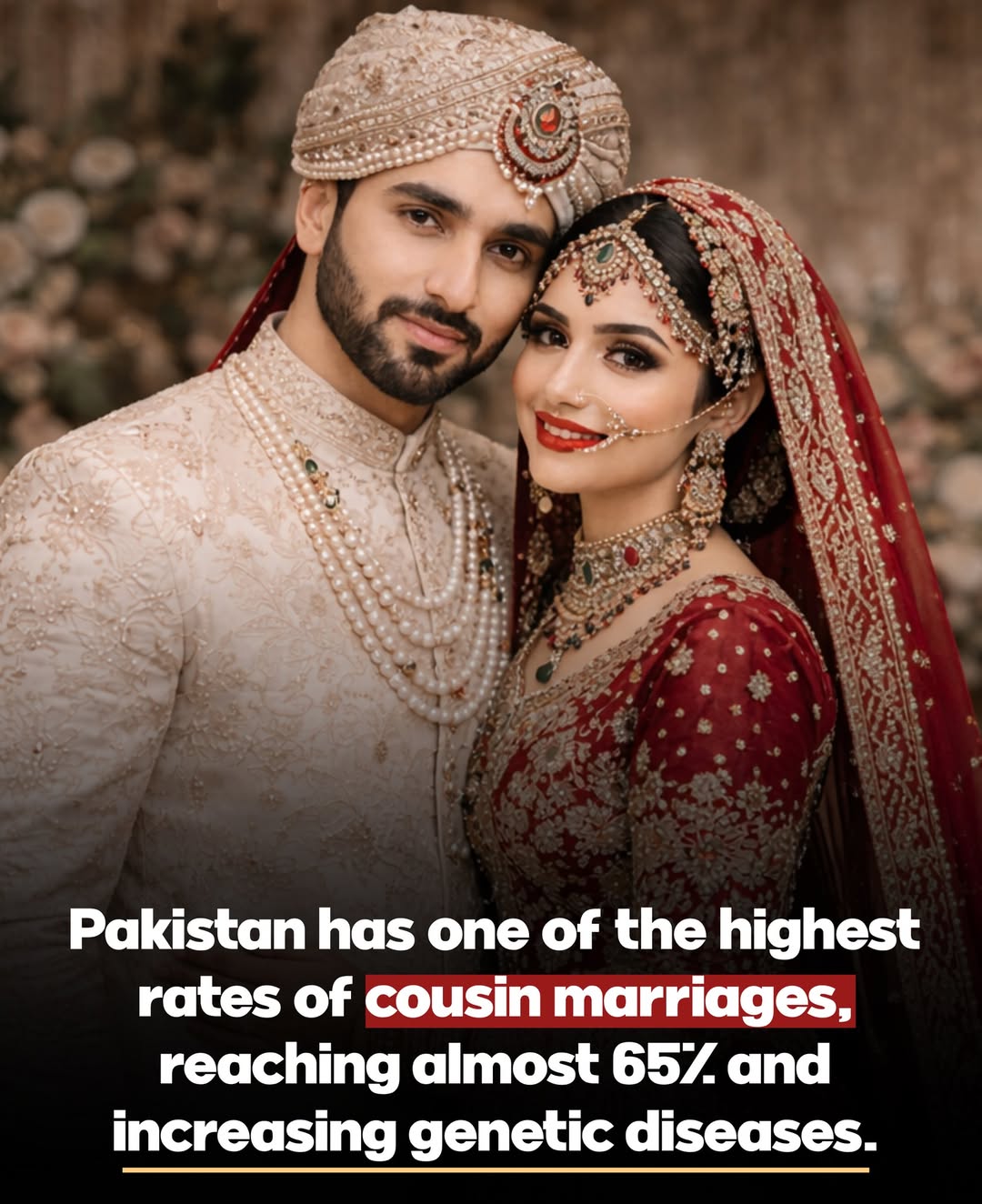
In Pakistan, marriages between relatives — especially cousins — are common, with studies estimating 60–65% of unions fall into this category.
For many families, this isn’t unusual.
It’s about:
Trust within known families
Keeping property and support systems intact
Strengthening close-knit community ties
But there’s another side to the story.
Medical experts say when close relatives have children, the chances of inheriting certain genetic conditions can increase.
Conditions often discussed include:
Beta thalassemia
Inherited hearing loss
Metabolic disorders
Rare neurological conditions
Still, this isn’t a story about blame.
Researchers describe Pakistan as having an “intensive kinship system” — where family networks are deeply tied to survival and stability.
That’s why many doctors are focusing on solutions that respect culture while protecting health:
Premarital screening
Carrier testing
Genetic counseling
Public awareness
Because in many cases, families only learn about risks after multiple children are affected.
The goal isn’t judgment.
It’s awareness.
Because when tradition and health intersect…
information can make all the difference.
For many families, this isn’t unusual.
It’s about:
Trust within known families
Keeping property and support systems intact
Strengthening close-knit community ties
But there’s another side to the story.
Medical experts say when close relatives have children, the chances of inheriting certain genetic conditions can increase.
Conditions often discussed include:
Beta thalassemia
Inherited hearing loss
Metabolic disorders
Rare neurological conditions
Still, this isn’t a story about blame.
Researchers describe Pakistan as having an “intensive kinship system” — where family networks are deeply tied to survival and stability.
That’s why many doctors are focusing on solutions that respect culture while protecting health:
Premarital screening
Carrier testing
Genetic counseling
Public awareness
Because in many cases, families only learn about risks after multiple children are affected.
The goal isn’t judgment.
It’s awareness.
Because when tradition and health intersect…
information can make all the difference.
In Pakistan, marriages between relatives — especially cousins — are common, with studies estimating 60–65% of unions fall into this category.
For many families, this isn’t unusual.
It’s about:
Trust within known families
Keeping property and support systems intact
Strengthening close-knit community ties
But there’s another side to the story.
Medical experts say when close relatives have children, the chances of inheriting certain genetic conditions can increase.
Conditions often discussed include:
Beta thalassemia
Inherited hearing loss
Metabolic disorders
Rare neurological conditions
Still, this isn’t a story about blame.
Researchers describe Pakistan as having an “intensive kinship system” — where family networks are deeply tied to survival and stability.
That’s why many doctors are focusing on solutions that respect culture while protecting health:
Premarital screening
Carrier testing
Genetic counseling
Public awareness
Because in many cases, families only learn about risks after multiple children are affected.
The goal isn’t judgment.
It’s awareness.
Because when tradition and health intersect…
information can make all the difference.