• Joy Behar slammed Donald Trump during a heated segment on The View, accusing the president of creating “chaos” and economic pain.

    “Every day I wake up and he has created more chaos, more misery around the world,” Behar said, arguing the economy is “going down the toilet,” gas prices are rising, and the country is caught in escalating global tensions.

    She also criticized Republicans in Congress, saying the party “will not stand up to this fool,” and claiming Americans feel increasingly powerless as political divisions deepen.
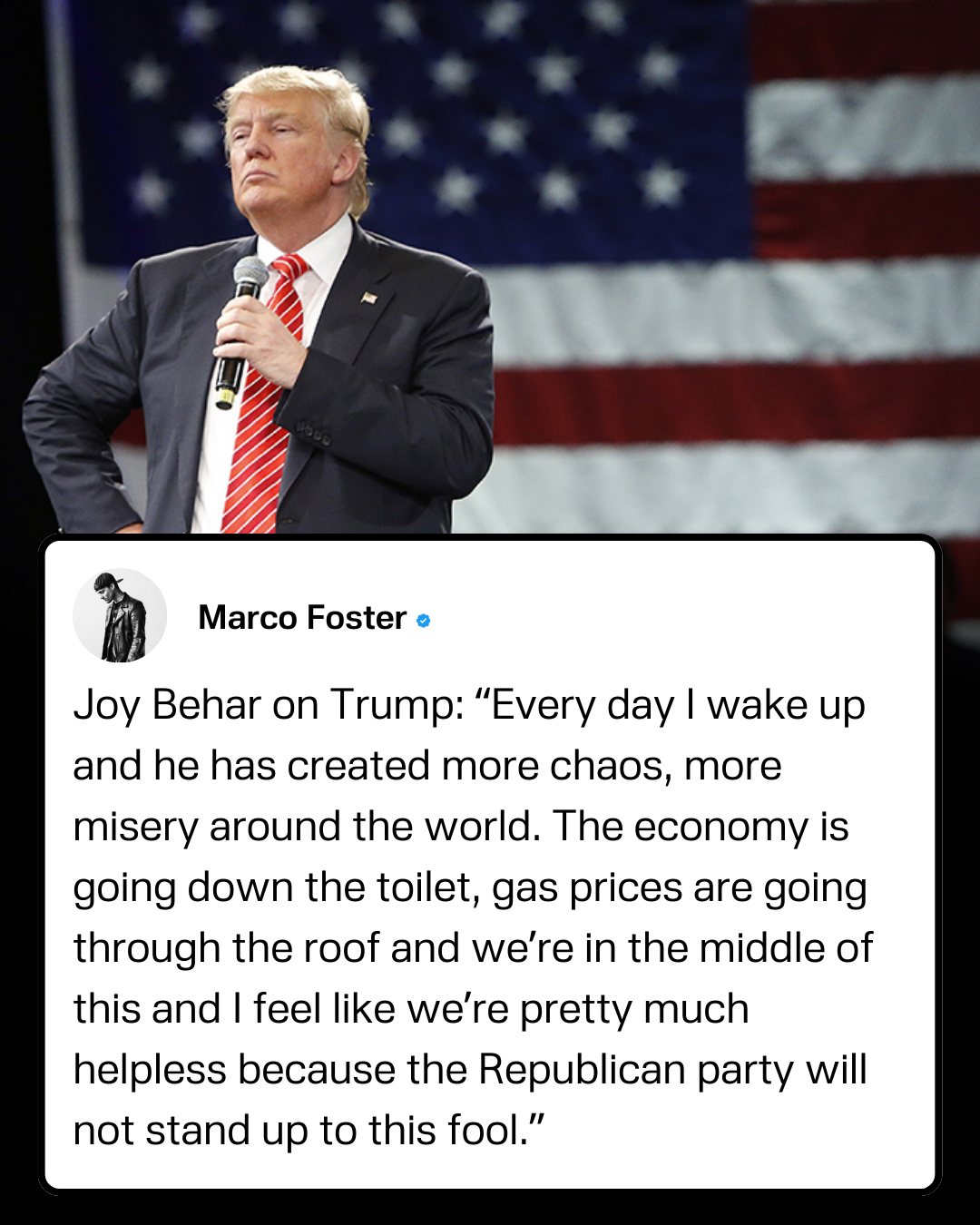
    Joy Behar slammed Donald Trump during a heated segment on The View, accusing the president of creating “chaos” and economic pain. “Every day I wake up and he has created more chaos, more misery around the world,” Behar said, arguing the economy is “going down the toilet,” gas prices are rising, and the country is caught in escalating global tensions. She also criticized Republicans in Congress, saying the party “will not stand up to this fool,” and claiming Americans feel increasingly powerless as political divisions deepen.
    Like
    Love
    Wow
    3
    · 0 Comments ·0 Shares ·285 Views ·0 Reviews
  • President Donald Trump has reportedly expressed growing frustration over the length of the ongoing conflict in the Middle East, telling senior military advisers that he is “getting tired” of the prolonged war with Iran.
    Despite recent Pentagon statements that U.S. forces have been “unleashed” to carry out operations against Iranian targets, the President is said to be questioning why a decisive outcome has not yet been achieved.
    The situation has become increasingly complex as the conflict spreads across the region. Reports indicate that U.S. and allied strikes have targeted key Iranian infrastructure, while Iran has responded with missile attacks against regional targets and energy facilities, raising fears of wider escalation.
    At the same time, global markets are reacting sharply. Concerns over disruptions to energy supplies — particularly around the Strait of Hormuz — have triggered major volatility in oil prices and heightened fears of a broader economic crisis.
    International leaders are now calling for restraint as diplomatic pressure grows to prevent further escalation. Analysts warn that the gap between expectations of a quick resolution and the reality of a prolonged regional conflict could shape global politics and energy markets in the months ahead.
    #WorldNews #MiddleEast #Geopolitics #GlobalEconomy #USPolitics
    President Donald Trump has reportedly expressed growing frustration over the length of the ongoing conflict in the Middle East, telling senior military advisers that he is “getting tired” of the prolonged war with Iran. Despite recent Pentagon statements that U.S. forces have been “unleashed” to carry out operations against Iranian targets, the President is said to be questioning why a decisive outcome has not yet been achieved. The situation has become increasingly complex as the conflict spreads across the region. Reports indicate that U.S. and allied strikes have targeted key Iranian infrastructure, while Iran has responded with missile attacks against regional targets and energy facilities, raising fears of wider escalation. At the same time, global markets are reacting sharply. Concerns over disruptions to energy supplies — particularly around the Strait of Hormuz — have triggered major volatility in oil prices and heightened fears of a broader economic crisis. International leaders are now calling for restraint as diplomatic pressure grows to prevent further escalation. Analysts warn that the gap between expectations of a quick resolution and the reality of a prolonged regional conflict could shape global politics and energy markets in the months ahead. #WorldNews #MiddleEast #Geopolitics #GlobalEconomy #USPolitics
    Like
    Love
    Wow
    3
    · 0 Comments ·0 Shares ·477 Views ·0 Reviews
  • Industrial Symbiosis and the Transition to a Circular Economy For the Future

    read more : https://bi-journal.com/industrial-symbiosiss-transition-to-circular-economy/

    #IndustrialSymbiosis #CircularEconomy #BIJournal #BIJournalnews #BusinessInsightsarticles #BIJournalinterview
    Industrial Symbiosis and the Transition to a Circular Economy For the Future read more : https://bi-journal.com/industrial-symbiosiss-transition-to-circular-economy/ #IndustrialSymbiosis #CircularEconomy #BIJournal #BIJournalnews #BusinessInsightsarticles #BIJournalinterview
    Industrial Symbiosis and the Transition to a Circular Economy For the Future
    bi-journal.com
    Explore how industrial symbiosis accelerates the circular economy by enabling industrial collaboration that helps businesses reduce waste
    0 Comments ·0 Shares ·1K Views ·0 Reviews
  • Rising economic pressure is adding another layer of uncertainty to the ongoing conflict involving the United States and Iran.
    Some analysts argue that the financial shock from the war — including volatility in energy markets and global trade disruptions — could become a major political challenge for President Donald Trump. While humanitarian concerns and geopolitical risks remain central to the debate, economists note that prolonged instability can also trigger serious economic consequences at home and abroad.
    Even if economic pressure encourages a push toward de-escalation, experts say finding a clear path to end the conflict may not be easy. Tensions between Washington and Tehran remain high, and Iranian leaders have signaled they are unlikely to quickly accept a ceasefire after recent military exchanges.
    As markets react and diplomatic options are debated, many observers warn that the situation could continue to shape global politics, energy prices, and economic stability in the months ahead.
    Read more from Jeet Heer at the link in our bio.
    #WorldNews #Geopolitics #GlobalEconomy #MiddleEast #USPolitics
    Rising economic pressure is adding another layer of uncertainty to the ongoing conflict involving the United States and Iran. Some analysts argue that the financial shock from the war — including volatility in energy markets and global trade disruptions — could become a major political challenge for President Donald Trump. While humanitarian concerns and geopolitical risks remain central to the debate, economists note that prolonged instability can also trigger serious economic consequences at home and abroad. Even if economic pressure encourages a push toward de-escalation, experts say finding a clear path to end the conflict may not be easy. Tensions between Washington and Tehran remain high, and Iranian leaders have signaled they are unlikely to quickly accept a ceasefire after recent military exchanges. As markets react and diplomatic options are debated, many observers warn that the situation could continue to shape global politics, energy prices, and economic stability in the months ahead. Read more from Jeet Heer at the link in our bio. #WorldNews #Geopolitics #GlobalEconomy #MiddleEast #USPolitics
    Like
    Love
    Wow
    3
    · 0 Comments ·0 Shares ·544 Views ·0 Reviews
  • U.S. national debt has climbed to roughly $38.9 trillion as of March 2026, highlighting how rapidly government borrowing continues to grow.
    At the current pace, the debt is increasing by about $2.6 trillion per year — roughly $7.2 billion every single day.
    That means the government adds $1 trillion in new debt about every 155 days, reflecting expanding budget deficits as federal spending and borrowing continue to rise.
    Economists say rising debt levels are driven by several factors, including interest payments on existing debt, entitlement programs, defense spending, and broader fiscal policy decisions.
    Liked this content? Follow @Businessbulls.in for more!
    #Businessbulls #Economics #USDebt #Finance #GlobalEconomy
    U.S. national debt has climbed to roughly $38.9 trillion as of March 2026, highlighting how rapidly government borrowing continues to grow. At the current pace, the debt is increasing by about $2.6 trillion per year — roughly $7.2 billion every single day. That means the government adds $1 trillion in new debt about every 155 days, reflecting expanding budget deficits as federal spending and borrowing continue to rise. Economists say rising debt levels are driven by several factors, including interest payments on existing debt, entitlement programs, defense spending, and broader fiscal policy decisions. Liked this content? Follow @Businessbulls.in for more! #Businessbulls #Economics #USDebt #Finance #GlobalEconomy
    Like
    Love
    Wow
    3
    · 0 Comments ·0 Shares ·1K Views ·0 Reviews
More Results