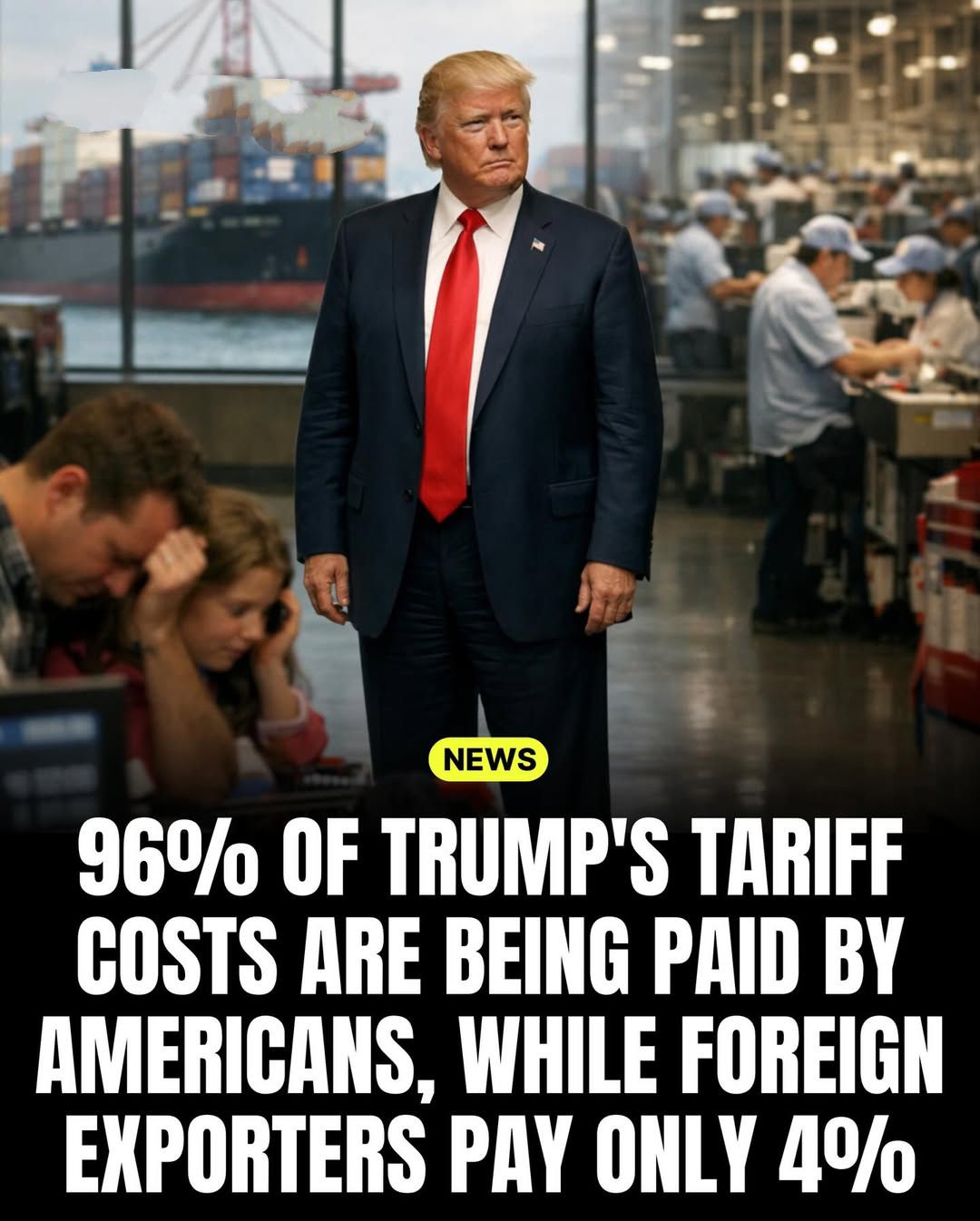
• A new analysis from the Kiel Institute for the World Economy concludes that Americans bore the overwhelming majority of the costs associated with tariffs imposed during the administration of Donald Trump.
    After examining roughly $4 trillion in import transactions, researchers estimate that approximately 96% of the tariff burden was passed through to U.S. consumers and businesses rather than absorbed by foreign exporters. Economists involved in the study argue this indicates the tariffs functioned more like a domestic tax on importers and buyers, challenging earlier claims that the financial impact would primarily fall on overseas producers.
    Supporters of the tariff policy have maintained that the measures were intended to strengthen domestic manufacturing and address trade imbalances, while critics argue that higher import costs ultimately raised prices for American households and companies.
    The broader debate over tariffs continues to shape discussions around trade policy, inflation, and economic competitiveness.
    #BusinessBulls #TradePolicy #Tariffs #USPolitics #GlobalEconomy
    A new analysis from the Kiel Institute for the World Economy concludes that Americans bore the overwhelming majority of the costs associated with tariffs imposed during the administration of Donald Trump. After examining roughly $4 trillion in import transactions, researchers estimate that approximately 96% of the tariff burden was passed through to U.S. consumers and businesses rather than absorbed by foreign exporters. Economists involved in the study argue this indicates the tariffs functioned more like a domestic tax on importers and buyers, challenging earlier claims that the financial impact would primarily fall on overseas producers. Supporters of the tariff policy have maintained that the measures were intended to strengthen domestic manufacturing and address trade imbalances, while critics argue that higher import costs ultimately raised prices for American households and companies. The broader debate over tariffs continues to shape discussions around trade policy, inflation, and economic competitiveness. #BusinessBulls #TradePolicy #Tariffs #USPolitics #GlobalEconomy
    Like
    Love
    Wow
    3
    · 0 Commentarii ·0 Distribuiri ·598 Views ·0 previzualizare
  • India has officially surpassed China and Vietnam to become the most cost-efficient destination for global manufacturing, according to recent industry reports. With a growing network of state-of-the-art factories, affordable labor, and favorable government policies, India is now the preferred choice for companies looking to diversify production away from China. This shift is a direct outcome of the #MakeInIndia initiative, which aims to boost domestic production, attract foreign investment, and enhance India’s role in global supply chains.

    This development not only highlights India’s rise as a manufacturing powerhouse but also reflects changing global dynamics. As China grapples with rising wages, trade tensions, and policy hurdles, India offers a strategic alternative—especially in electronics, textiles, and automotive sectors. Under Prime Minister Narendra Modi’s leadership, India’s manufacturing sector is poised for unprecedented growth, helping create millions of jobs and strengthening economic resilience in a post-pandemic world.

    #MakeInIndia #ManufacturingRevolution #IndiaVsChina #GlobalEconomy #IndustrialGrowth
    India has officially surpassed China and Vietnam to become the most cost-efficient destination for global manufacturing, according to recent industry reports. With a growing network of state-of-the-art factories, affordable labor, and favorable government policies, India is now the preferred choice for companies looking to diversify production away from China. This shift is a direct outcome of the #MakeInIndia initiative, which aims to boost domestic production, attract foreign investment, and enhance India’s role in global supply chains. This development not only highlights India’s rise as a manufacturing powerhouse but also reflects changing global dynamics. As China grapples with rising wages, trade tensions, and policy hurdles, India offers a strategic alternative—especially in electronics, textiles, and automotive sectors. Under Prime Minister Narendra Modi’s leadership, India’s manufacturing sector is poised for unprecedented growth, helping create millions of jobs and strengthening economic resilience in a post-pandemic world. #MakeInIndia #ManufacturingRevolution #IndiaVsChina #GlobalEconomy #IndustrialGrowth
    Like
    Love
    Wow
    3
    · 0 Commentarii ·0 Distribuiri ·37K Views ·0 previzualizare
  • In a historic breakthrough, geologists have uncovered the world’s largest iron ore deposit in Western Australia’s Hamersley Basin, containing an estimated 55 billion metric tons of high-grade ore. Valued at over $6 trillion, this discovery could reshape the global mining landscape and solidify Australia’s dominance as a critical supplier of iron—the backbone of global infrastructure and steelmaking.

    This deposit isn't just massive; it’s also geologically surprising. Dating back 1.4 billion years, the find is younger than many existing formations, offering new insights into Earth’s mineralization processes. Economists believe this could stabilize global iron prices and support the steel industry for decades. Yet, the road to extraction depends on strict environmental evaluations and sustainable mining strategies to ensure this colossal opportunity doesn't come at a catastrophic cost.

    #IronOre #MiningNews #AustraliaResources #GlobalEconomy
    #GeologyBreakthrough
    In a historic breakthrough, geologists have uncovered the world’s largest iron ore deposit in Western Australia’s Hamersley Basin, containing an estimated 55 billion metric tons of high-grade ore. Valued at over $6 trillion, this discovery could reshape the global mining landscape and solidify Australia’s dominance as a critical supplier of iron—the backbone of global infrastructure and steelmaking. This deposit isn't just massive; it’s also geologically surprising. Dating back 1.4 billion years, the find is younger than many existing formations, offering new insights into Earth’s mineralization processes. Economists believe this could stabilize global iron prices and support the steel industry for decades. Yet, the road to extraction depends on strict environmental evaluations and sustainable mining strategies to ensure this colossal opportunity doesn't come at a catastrophic cost. #IronOre #MiningNews #AustraliaResources #GlobalEconomy #GeologyBreakthrough
    0 Commentarii ·0 Distribuiri ·29K Views ·0 previzualizare