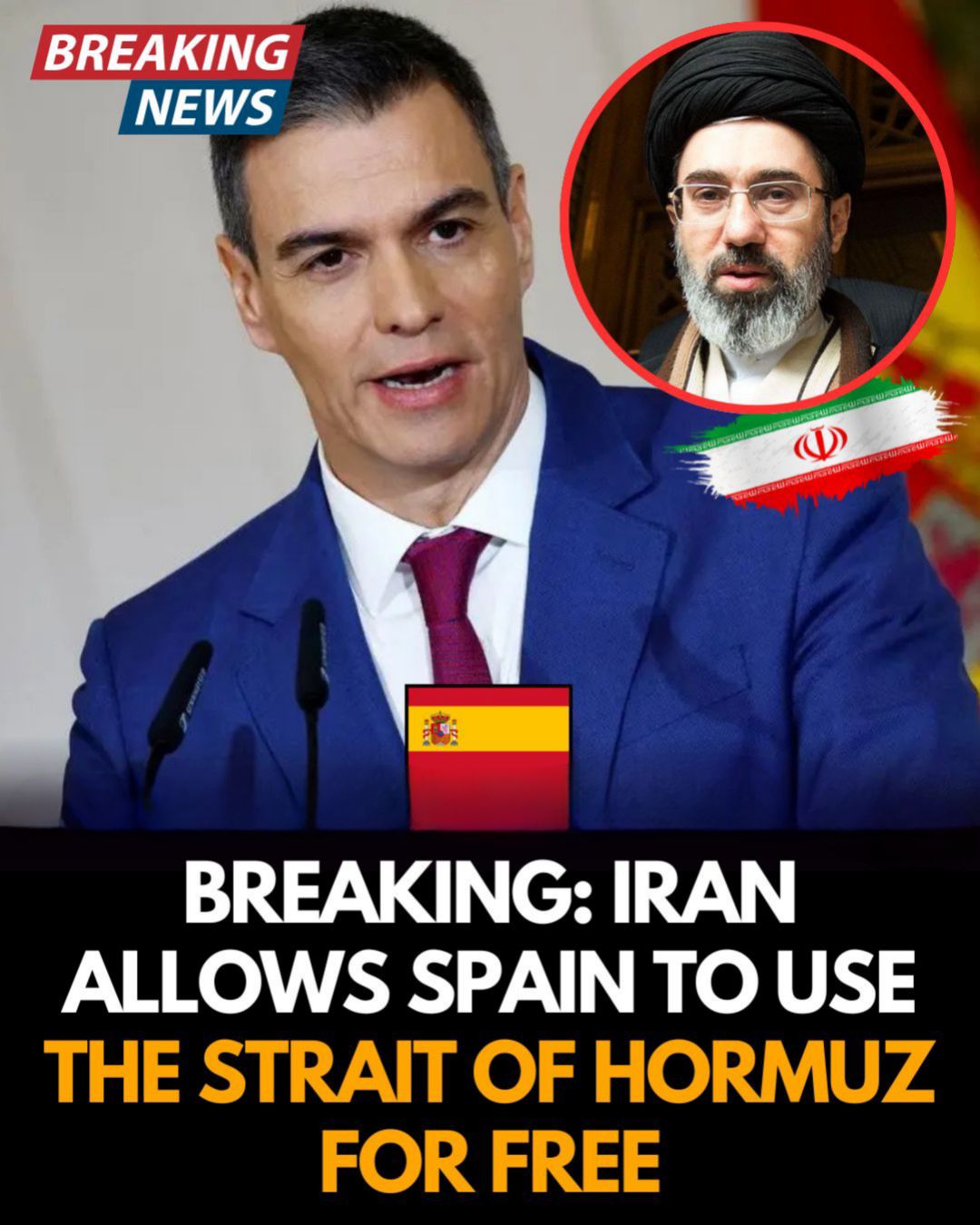
Iran has officially granted Spanish-flagged vessels unrestricted and free passage through the Strait of Hormuz, a move seen as a diplomatic "thank you" to Madrid. This decision comes as Tehran continues to enforce a strict "toll road" system, reportedly charging other nations up to $2 million per transit in cryptocurrency or yuan.
The exemption is largely attributed to Spanish Prime Minister Pedro Sánchez’s vocal criticism of recent U.S. and Israeli military actions in the region. By allowing Spain "complete freedom without restrictions," Iran is effectively rewarding Spain's "no to war" stance and its refusal to let U.S. forces use joint military bases for operations.
Logistics experts note that the Strait of Hormuz is a vital chokepoint, accounting for roughly 20% of the world's oil supply and a significant portion of global liquefied natural gas. While many European and Western ships remain blocked or face heavy fees, Spanish tankers can now bypass these costs, providing a massive economic advantage to Spanish energy imports.
This strategic maneuver by Tehran appears designed to deepen the diplomatic wedge between the United States and its European allies. While countries like the UK and Germany have maintained more supportive positions toward U.S. strategy, Spain’s independent path has now secured it a unique maritime corridor.
Despite the "free" access, the region remains a high-risk zone with heightened military presence and volatile insurance premiums for any vessel entering the Persian Gulf. International maritime organizations are closely watching to see if this "friendly nation" status will be extended to other European countries that distance themselves from the conflict.
#Spain #Iran #StraitOfHormuz #EnergyCrisis #GlobalTrade
The exemption is largely attributed to Spanish Prime Minister Pedro Sánchez’s vocal criticism of recent U.S. and Israeli military actions in the region. By allowing Spain "complete freedom without restrictions," Iran is effectively rewarding Spain's "no to war" stance and its refusal to let U.S. forces use joint military bases for operations.
Logistics experts note that the Strait of Hormuz is a vital chokepoint, accounting for roughly 20% of the world's oil supply and a significant portion of global liquefied natural gas. While many European and Western ships remain blocked or face heavy fees, Spanish tankers can now bypass these costs, providing a massive economic advantage to Spanish energy imports.
This strategic maneuver by Tehran appears designed to deepen the diplomatic wedge between the United States and its European allies. While countries like the UK and Germany have maintained more supportive positions toward U.S. strategy, Spain’s independent path has now secured it a unique maritime corridor.
Despite the "free" access, the region remains a high-risk zone with heightened military presence and volatile insurance premiums for any vessel entering the Persian Gulf. International maritime organizations are closely watching to see if this "friendly nation" status will be extended to other European countries that distance themselves from the conflict.
#Spain #Iran #StraitOfHormuz #EnergyCrisis #GlobalTrade
Iran has officially granted Spanish-flagged vessels unrestricted and free passage through the Strait of Hormuz, a move seen as a diplomatic "thank you" to Madrid. This decision comes as Tehran continues to enforce a strict "toll road" system, reportedly charging other nations up to $2 million per transit in cryptocurrency or yuan.
The exemption is largely attributed to Spanish Prime Minister Pedro Sánchez’s vocal criticism of recent U.S. and Israeli military actions in the region. By allowing Spain "complete freedom without restrictions," Iran is effectively rewarding Spain's "no to war" stance and its refusal to let U.S. forces use joint military bases for operations.
Logistics experts note that the Strait of Hormuz is a vital chokepoint, accounting for roughly 20% of the world's oil supply and a significant portion of global liquefied natural gas. While many European and Western ships remain blocked or face heavy fees, Spanish tankers can now bypass these costs, providing a massive economic advantage to Spanish energy imports.
This strategic maneuver by Tehran appears designed to deepen the diplomatic wedge between the United States and its European allies. While countries like the UK and Germany have maintained more supportive positions toward U.S. strategy, Spain’s independent path has now secured it a unique maritime corridor.
Despite the "free" access, the region remains a high-risk zone with heightened military presence and volatile insurance premiums for any vessel entering the Persian Gulf. International maritime organizations are closely watching to see if this "friendly nation" status will be extended to other European countries that distance themselves from the conflict.
#Spain #Iran #StraitOfHormuz #EnergyCrisis #GlobalTrade