• Here’s a cleaner rewritten version (same story, smoother for social media):

    A photo that took eight years to capture.

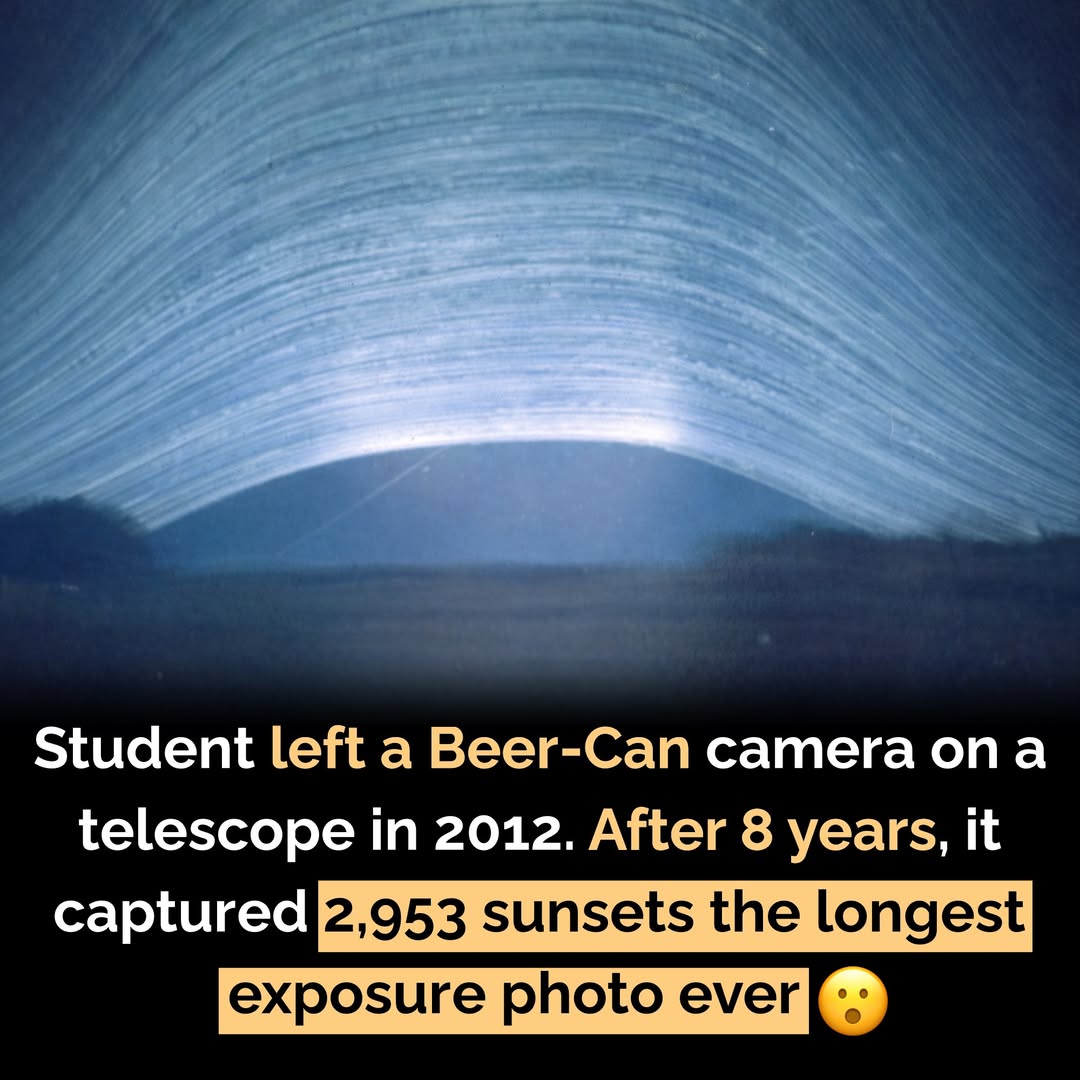
    In 2012, fine art student Regina Valkenborgh was experimenting with pinhole photography at the University of Hertfordshire’s Bayfordbury Observatory in England. She used a simple 500ml cider can, placed photographic paper inside it, poked a tiny hole in the side, and taped it to one of the observatory’s telescopes. Then she forgot about it.

    More than eight years later, in September 2020, the observatory’s technical officer David Campbell was preparing the area for solar panel installation when he noticed the old can. Before throwing it away, he decided to check inside.

    What he found was extraordinary.

    The photographic paper had captured 2,953 arcing trails of the sun rising and setting across the sky over nearly a decade. The image even shows the observatory’s oldest telescope dome and, faintly, a structure that wasn’t built until 2017—right in the middle of the exposure period.

    Valkenborgh had tried similar experiments before, but moisture usually ruined the paper. This one survived by pure chance, quietly recording the sun’s movement while Earth completed eight full orbits.

    The previous record for the longest photographic exposure was four years and eight months, held by German artist Michael Wesely. Valkenborgh’s accidental image nearly doubled it.

    She later said the photo reminds her how small human life is compared to the vast passage of time.

    Just a beer can, a piece of paper, a tiny hole—and eight years of patience she didn’t even know she had.
    Here’s a cleaner rewritten version (same story, smoother for social media): A photo that took eight years to capture. In 2012, fine art student Regina Valkenborgh was experimenting with pinhole photography at the University of Hertfordshire’s Bayfordbury Observatory in England. She used a simple 500ml cider can, placed photographic paper inside it, poked a tiny hole in the side, and taped it to one of the observatory’s telescopes. Then she forgot about it. More than eight years later, in September 2020, the observatory’s technical officer David Campbell was preparing the area for solar panel installation when he noticed the old can. Before throwing it away, he decided to check inside. What he found was extraordinary. The photographic paper had captured 2,953 arcing trails of the sun rising and setting across the sky over nearly a decade. The image even shows the observatory’s oldest telescope dome and, faintly, a structure that wasn’t built until 2017—right in the middle of the exposure period. Valkenborgh had tried similar experiments before, but moisture usually ruined the paper. This one survived by pure chance, quietly recording the sun’s movement while Earth completed eight full orbits. The previous record for the longest photographic exposure was four years and eight months, held by German artist Michael Wesely. Valkenborgh’s accidental image nearly doubled it. She later said the photo reminds her how small human life is compared to the vast passage of time. Just a beer can, a piece of paper, a tiny hole—and eight years of patience she didn’t even know she had.
    Like
    Love
    Wow
    3
    · 0 Comments ·0 Shares ·190 Views ·0 Reviews
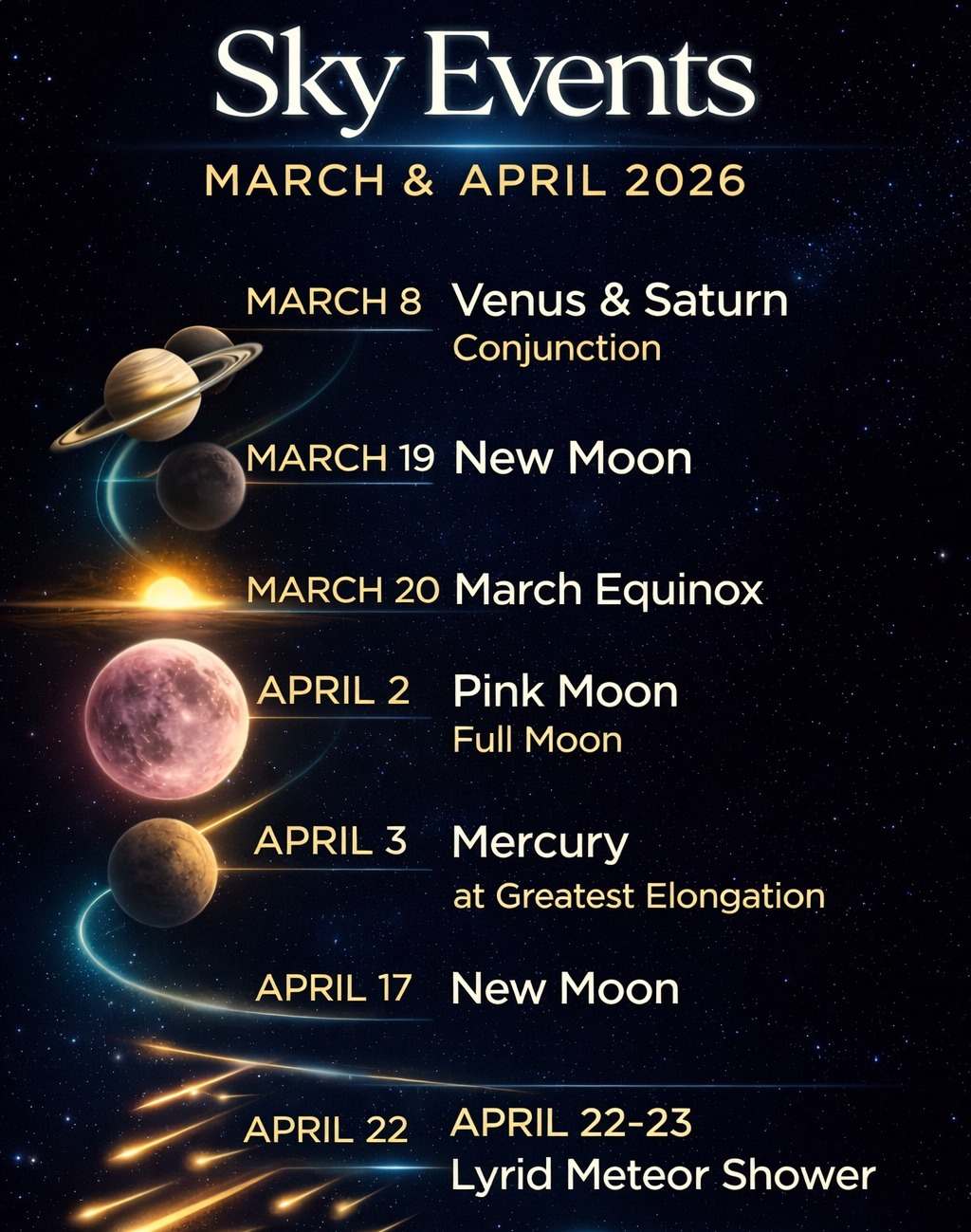
  • The next few weeks bring beautiful celestial events for skywatchers. If you enjoy stepping outside and looking up, this is a perfect time to keep an eye on the night sky.

    March 8 – Venus & Saturn Conjunction
    Two bright planets will appear very close together in the evening sky, creating a stunning planetary pairing.

    March 19 – New Moon
    With the Moon absent from the sky, this will be one of the best nights for stargazing and Milky Way photography.

    March 20 – March Equinox
    Day and night become nearly equal worldwide, marking the start of astronomical spring in the Northern Hemisphere.

    April 2 – Full “Pink” Moon
    Despite the name, the Moon won’t actually look pink. The name comes from early spring wildflowers that bloom around this time.

    ☿ April 3 – Mercury at Greatest Elongation
    One of the best chances to spot Mercury, the most elusive planet, shining low in the morning sky.

    April 17 – New Moon
    Another excellent window for deep-sky observing and astrophotography.

    April 22–23 – Lyrid Meteor Shower (Peak)
    One of the oldest recorded meteor showers, with shooting stars streaking across the sky before dawn.

    Most of these events are visible without special equipment.

    Just find a dark spot, give your eyes a few minutes to adjust, and enjoy the universe above.
    The next few weeks bring beautiful celestial events for skywatchers. If you enjoy stepping outside and looking up, this is a perfect time to keep an eye on the night sky. March 8 – Venus & Saturn Conjunction Two bright planets will appear very close together in the evening sky, creating a stunning planetary pairing. March 19 – New Moon With the Moon absent from the sky, this will be one of the best nights for stargazing and Milky Way photography. March 20 – March Equinox Day and night become nearly equal worldwide, marking the start of astronomical spring in the Northern Hemisphere. April 2 – Full “Pink” Moon Despite the name, the Moon won’t actually look pink. The name comes from early spring wildflowers that bloom around this time. ☿ April 3 – Mercury at Greatest Elongation One of the best chances to spot Mercury, the most elusive planet, shining low in the morning sky. April 17 – New Moon Another excellent window for deep-sky observing and astrophotography. April 22–23 – Lyrid Meteor Shower (Peak) One of the oldest recorded meteor showers, with shooting stars streaking across the sky before dawn. Most of these events are visible without special equipment. Just find a dark spot, give your eyes a few minutes to adjust, and enjoy the universe above.
    Like
    Love
    Wow
    3
    · 0 Comments ·0 Shares ·1K Views ·0 Reviews
  • Thomas Massie says foreign strikes won’t make Epstein files disappear

    In a moment that quickly caught national attention, Congressman Thomas Massie shared a sharp reminder about accountability. His words were simple but powerful. At a time when global tensions and political debates feel overwhelming, many people paused to think about what he really meant.

    Massie said, “PSA: Bombing a country on the other side of the globe won’t make the Epstein files go away, any more than the Dow going above 50,000 will.” Massie suggested that taking military action abroad would not distract from ongoing questions surrounding the Epstein files.

    His comment came during heated discussions about foreign policy and economic headlines. By linking international conflict with domestic transparency, he pushed a conversation that blends politics, public trust, and unanswered questions.

    For many Americans and people watching from the UK, the statement felt less about war and more about responsibility. It raised a bigger issue about whether major world events shift attention from important investigations at home. In moments like this, people often ask what truly deserves the spotlight.

    #fblifestyle #photography #community #ThomasMassie #EpsteinFiles #USPolitics

    References:
    BBC News: Who Was Jeffrey Epstein?
    Reuters: US Congressman Thomas Massie Criticizes Foreign Policy Debate
    The Daily Beast: Republican Rep Thomas Massie Exposes Real Reason for Donald Trump's War
    AP News: Lawmakers Debate US Military Action Abroad
    Smithsonian Magazine: The Rise and Fall of Jeffrey Epstein
    Thomas Massie says foreign strikes won’t make Epstein files disappear In a moment that quickly caught national attention, Congressman Thomas Massie shared a sharp reminder about accountability. His words were simple but powerful. At a time when global tensions and political debates feel overwhelming, many people paused to think about what he really meant. Massie said, “PSA: Bombing a country on the other side of the globe won’t make the Epstein files go away, any more than the Dow going above 50,000 will.” Massie suggested that taking military action abroad would not distract from ongoing questions surrounding the Epstein files. His comment came during heated discussions about foreign policy and economic headlines. By linking international conflict with domestic transparency, he pushed a conversation that blends politics, public trust, and unanswered questions. For many Americans and people watching from the UK, the statement felt less about war and more about responsibility. It raised a bigger issue about whether major world events shift attention from important investigations at home. In moments like this, people often ask what truly deserves the spotlight. #fblifestyle #photography #community #ThomasMassie #EpsteinFiles #USPolitics References: BBC News: Who Was Jeffrey Epstein? Reuters: US Congressman Thomas Massie Criticizes Foreign Policy Debate The Daily Beast: Republican Rep Thomas Massie Exposes Real Reason for Donald Trump's War AP News: Lawmakers Debate US Military Action Abroad Smithsonian Magazine: The Rise and Fall of Jeffrey Epstein
    Like
    Love
    Wow
    3
    · 0 Comments ·0 Shares ·2K Views ·0 Reviews
  • I would appreciate your honest feedback on my photography
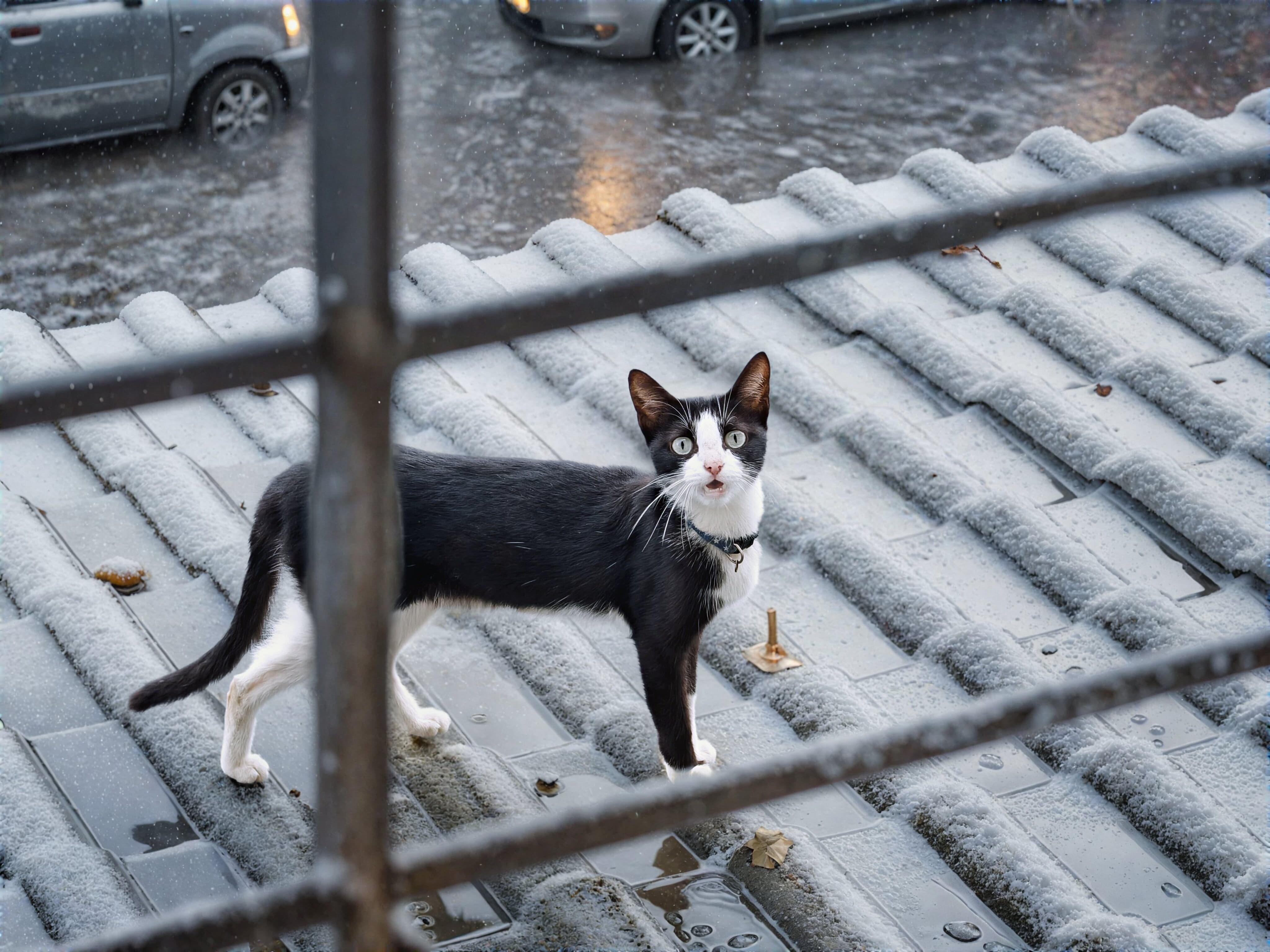
    I would appreciate your honest feedback on my photography
    Like
    Love
    Wow
    3
    · 0 Comments ·0 Shares ·132K Views ·0 Reviews
  • Om a reel about a photography technique
    Om a reel about a photography technique
    Like
    Love
    Wow
    3
    · 0 Comments ·0 Shares ·126K Views ·0 Reviews
More Results