• A growing number of U.S. allies have pushed back against President Trump’s demands related to the war with Iran — in ways that underline deep divisions within NATO and global diplomacy.

    Spain has taken one of the strongest stands, closing its airspace and refusing use of its military bases for U.S. operations linked to the Iran conflict — a symbolic and practical rebuke to Trump’s strategy. Madrid’s government has openly condemned the strikes as violations of international law.

    Italy also refused to allow U.S. bombers to land at the Sigonella air base, saying proper procedural approvals weren’t followed. Though Rome says it still supports NATO broadly, the move sent a clear message that U.S. war planning can’t proceed unilaterally on Italian soil.

    France denied overflight rights to planes carrying U.S. weapons bound for Israel — an unprecedented blockade since the Iran conflict began — and official statements emphasized that Paris is not joining offensive military actions.

    The United Kingdom has declined to send warships or commit to frontline combat roles in the Strait of Hormuz, with leaders instead prioritizing defensive postures and domestic considerations — even as Trump publicly criticized the UK’s stance.

    Germany has also made clear that the Iran conflict is not a NATO war, and Berlin has no plans to dispatch forces to the region, reinforcing the message that collective defense does not equate to joining every U.S.-led campaign.

    Canada and other partners have similarly refrained from joining combat operations, focusing instead on diplomatic channels and humanitarian concerns rather than military escalation.

    Even outside Europe, Japan, Australia, and other U.S. partners have signaled they won’t send warships to help secure the Strait of Hormuz, rejecting Trump’s call for security contributions.

    These standoffs go beyond routine alliance disagreements — they underline that many countries are unwilling to be drawn into a war they didn’t choose, even as the U.S. seeks broader participation or assistance.

    A growing number of U.S. allies have pushed back against President Trump’s demands related to the war with Iran — in ways that underline deep divisions within NATO and global diplomacy. Spain has taken one of the strongest stands, closing its airspace and refusing use of its military bases for U.S. operations linked to the Iran conflict — a symbolic and practical rebuke to Trump’s strategy. Madrid’s government has openly condemned the strikes as violations of international law. Italy also refused to allow U.S. bombers to land at the Sigonella air base, saying proper procedural approvals weren’t followed. Though Rome says it still supports NATO broadly, the move sent a clear message that U.S. war planning can’t proceed unilaterally on Italian soil. France denied overflight rights to planes carrying U.S. weapons bound for Israel — an unprecedented blockade since the Iran conflict began — and official statements emphasized that Paris is not joining offensive military actions. The United Kingdom has declined to send warships or commit to frontline combat roles in the Strait of Hormuz, with leaders instead prioritizing defensive postures and domestic considerations — even as Trump publicly criticized the UK’s stance. Germany has also made clear that the Iran conflict is not a NATO war, and Berlin has no plans to dispatch forces to the region, reinforcing the message that collective defense does not equate to joining every U.S.-led campaign. Canada and other partners have similarly refrained from joining combat operations, focusing instead on diplomatic channels and humanitarian concerns rather than military escalation. Even outside Europe, Japan, Australia, and other U.S. partners have signaled they won’t send warships to help secure the Strait of Hormuz, rejecting Trump’s call for security contributions. These standoffs go beyond routine alliance disagreements — they underline that many countries are unwilling to be drawn into a war they didn’t choose, even as the U.S. seeks broader participation or assistance.
    Like
    Love
    Wow
    3
    · 0 Σχόλια ·0 Μοιράστηκε ·122 Views ·0 Προεπισκόπηση
  • President Donald Trump has just lost a major court battle over funding for public broadcasting, with a judge ruling that his administration cannot move forward with efforts to defund NPR and PBS without congressional approval. The case centered on whether the executive branch has the authority to unilaterally cut funding that has already been allocated by Congress.

    The court’s decision reinforces a key constitutional principle: control over federal spending rests with Congress, not the president. That means funding for public broadcasters like NPR and PBS — which provide news, educational programming, and local coverage across the country — cannot be stripped away through executive action alone.

    Supporters of public broadcasting are calling the ruling a major victory for independent media and democratic institutions, arguing that outlets like these play a critical role in informing the public, especially in underserved communities. Critics of Trump’s efforts say the move to defund them raised serious concerns about press freedom and political interference in media.
    President Donald Trump has just lost a major court battle over funding for public broadcasting, with a judge ruling that his administration cannot move forward with efforts to defund NPR and PBS without congressional approval. The case centered on whether the executive branch has the authority to unilaterally cut funding that has already been allocated by Congress. The court’s decision reinforces a key constitutional principle: control over federal spending rests with Congress, not the president. That means funding for public broadcasters like NPR and PBS — which provide news, educational programming, and local coverage across the country — cannot be stripped away through executive action alone. Supporters of public broadcasting are calling the ruling a major victory for independent media and democratic institutions, arguing that outlets like these play a critical role in informing the public, especially in underserved communities. Critics of Trump’s efforts say the move to defund them raised serious concerns about press freedom and political interference in media.
    Like
    Love
    Wow
    3
    · 0 Σχόλια ·0 Μοιράστηκε ·99 Views ·0 Προεπισκόπηση
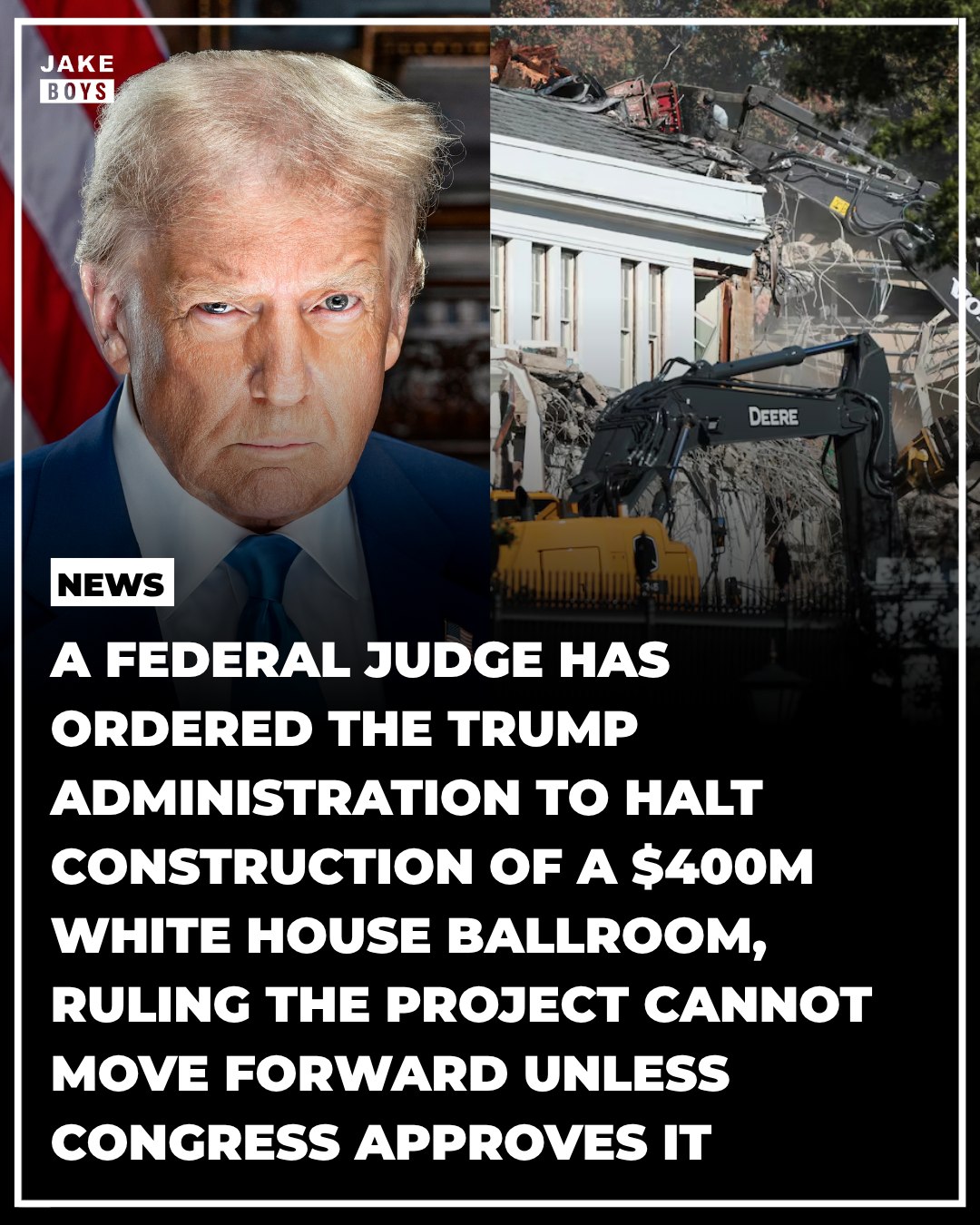
  • A federal judge has ordered the Trump administration to halt construction of a proposed $400 million White House ballroom, ruling that the project cannot move forward without explicit approval from Congress. The decision centers on the constitutional principle that federal spending must be authorized by lawmakers, not unilaterally directed by the executive branch.

    The ballroom project — which would add a large, modern event space to the White House grounds — has faced mounting scrutiny over its price tag, funding source, and potential impact on a historic federal site. Critics have argued that bypassing Congress raises serious concerns about oversight and misuse of taxpayer funds, while supporters say the addition would address long-standing space limitations for official events.

    The ruling effectively puts the project on indefinite pause and sets up a broader clash over presidential authority, congressional control of spending, and the limits of executive power.
    A federal judge has ordered the Trump administration to halt construction of a proposed $400 million White House ballroom, ruling that the project cannot move forward without explicit approval from Congress. The decision centers on the constitutional principle that federal spending must be authorized by lawmakers, not unilaterally directed by the executive branch. The ballroom project — which would add a large, modern event space to the White House grounds — has faced mounting scrutiny over its price tag, funding source, and potential impact on a historic federal site. Critics have argued that bypassing Congress raises serious concerns about oversight and misuse of taxpayer funds, while supporters say the addition would address long-standing space limitations for official events. The ruling effectively puts the project on indefinite pause and sets up a broader clash over presidential authority, congressional control of spending, and the limits of executive power.
    Like
    Love
    Wow
    3
    · 0 Σχόλια ·0 Μοιράστηκε ·132 Views ·0 Προεπισκόπηση
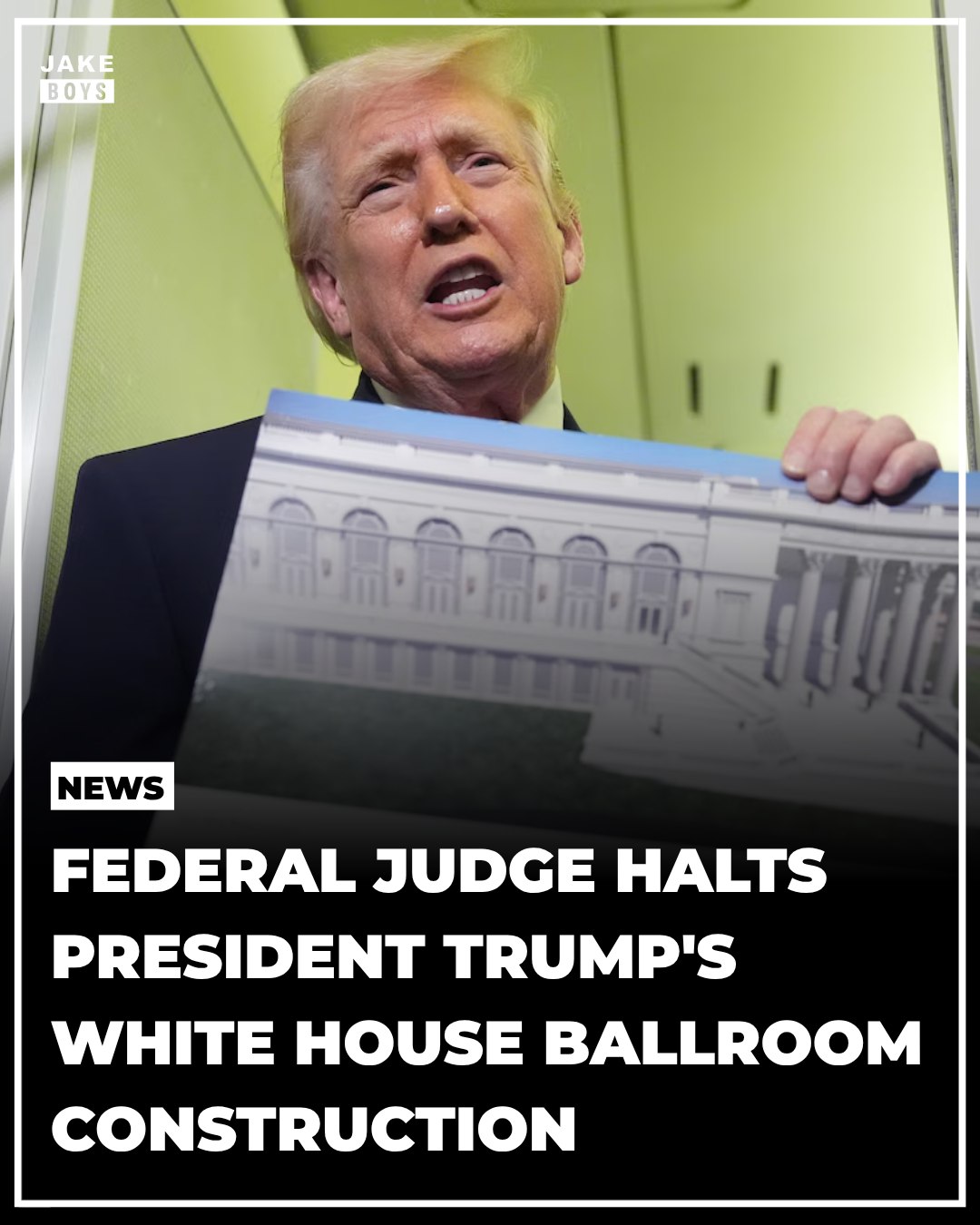
  • A federal judge has halted construction of President Donald Trump’s proposed White House ballroom, putting the high-profile project on hold amid legal challenges. The plan — which involved building a large new event space on White House grounds — had already drawn criticism over costs, use of federal property, and whether proper approvals were followed.

    The court’s decision to pause construction signals that serious legal questions remain unresolved, including concerns about executive authority, funding mechanisms, and compliance with preservation rules tied to historic government buildings.

    Critics argue the project represents a misuse of public resources for a vanity-style addition, while supporters say it would modernize the White House’s capacity for large events. For now, the ruling stops work entirely, setting up what could become a longer legal battle over presidential powers and the use of federal space.
    A federal judge has halted construction of President Donald Trump’s proposed White House ballroom, putting the high-profile project on hold amid legal challenges. The plan — which involved building a large new event space on White House grounds — had already drawn criticism over costs, use of federal property, and whether proper approvals were followed. The court’s decision to pause construction signals that serious legal questions remain unresolved, including concerns about executive authority, funding mechanisms, and compliance with preservation rules tied to historic government buildings. Critics argue the project represents a misuse of public resources for a vanity-style addition, while supporters say it would modernize the White House’s capacity for large events. For now, the ruling stops work entirely, setting up what could become a longer legal battle over presidential powers and the use of federal space.
    Like
    Love
    Wow
    3
    · 0 Σχόλια ·0 Μοιράστηκε ·201 Views ·0 Προεπισκόπηση
  • Multiple key U.S. allies in Europe are now taking unprecedented steps to restrict American military flights amid the ongoing conflict with Iran, widening diplomatic tensions with Washington. After Spain closed its airspace to U.S. military aircraft involved in operations against Iran — forcing bombers and refueling planes to reroute around Spanish territory — France has joined in by refusing to allow planes carrying U.S. weapons destined for the war to pass over its airspace.

    Spain’s defense minister said the move reflects Madrid’s position that the conflict is “unilateral” and “against international law,” and it follows earlier refusals to let U.S. forces use jointly operated bases for war‑related flights. France’s action — reported by multiple diplomatic sources — marks the first time Paris has denied overflight for U.S. weapons shipments since the Iran conflict began, and has drawn sharp criticism from President Trump.

    These developments signal a deepening rift within NATO, as European leaders balance alliance obligations with opposition to what they view as an escalating military campaign that risks broader regional and global instability.
    Multiple key U.S. allies in Europe are now taking unprecedented steps to restrict American military flights amid the ongoing conflict with Iran, widening diplomatic tensions with Washington. After Spain closed its airspace to U.S. military aircraft involved in operations against Iran — forcing bombers and refueling planes to reroute around Spanish territory — France has joined in by refusing to allow planes carrying U.S. weapons destined for the war to pass over its airspace. Spain’s defense minister said the move reflects Madrid’s position that the conflict is “unilateral” and “against international law,” and it follows earlier refusals to let U.S. forces use jointly operated bases for war‑related flights. France’s action — reported by multiple diplomatic sources — marks the first time Paris has denied overflight for U.S. weapons shipments since the Iran conflict began, and has drawn sharp criticism from President Trump. These developments signal a deepening rift within NATO, as European leaders balance alliance obligations with opposition to what they view as an escalating military campaign that risks broader regional and global instability.
    Like
    Love
    Wow
    3
    · 0 Σχόλια ·0 Μοιράστηκε ·189 Views ·0 Προεπισκόπηση
Αναζήτηση αποτελεσμάτων