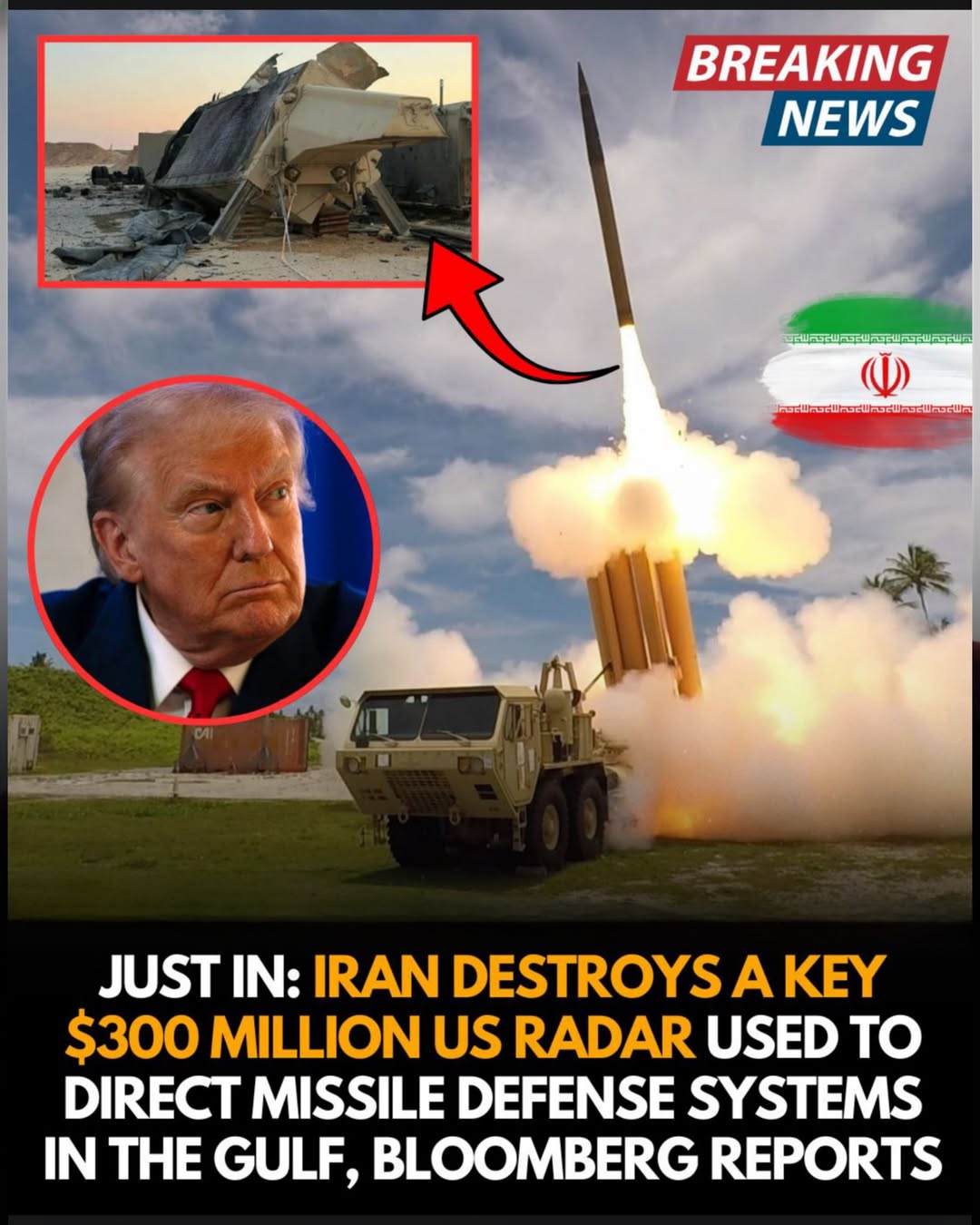
• Iran has successfully targeted and destroyed a sophisticated U.S. radar installation valued at approximately $300 million, which served as a primary guidance hub for regional missile defense. This high-precision strike utilized a combination of ballistic missiles and specialized "suicide" drones to overwhelm the site’s automated defenses in a coordinated barrage.

    The loss of this specific radar unit creates a significant temporary "blind spot" in the U.S. and allied early-warning network across the Persian Gulf. Military analysts suggest this could temporarily degrade the effectiveness of the Patriot and THAAD batteries currently protecting strategic oil infrastructure and forward operating bases.

    This attack marks one of the most expensive material losses for the U.S. military since the start of "Operation Epic Fury," demonstrating Iran's refined capability to strike high-value, fixed assets. In response, the Pentagon has reportedly moved mobile radar units into the sector to restore coverage while the extent of the damage is fully assessed.

    Geopolitical tensions have spiked following the Bloomberg report, as this strike proves that despite a week of heavy bombardment, Iran maintains potent retaliatory capabilities. Financial markets reacted immediately to the news, with global oil prices climbing as investors weigh the increased risk to maritime shipping and refinery safety.

    We are continuing to monitor the situation at TechTimes for official statements regarding any casualties or the timeline for replacing this critical piece of military hardware. Stay tuned for further updates on how the U.S. administration intends to secure these vital defense links against future precision strikes.

    #IranWar #MilitaryTech #BreakingNews #Geopolitics #DefenseNews
    Iran has successfully targeted and destroyed a sophisticated U.S. radar installation valued at approximately $300 million, which served as a primary guidance hub for regional missile defense. This high-precision strike utilized a combination of ballistic missiles and specialized "suicide" drones to overwhelm the site’s automated defenses in a coordinated barrage. The loss of this specific radar unit creates a significant temporary "blind spot" in the U.S. and allied early-warning network across the Persian Gulf. Military analysts suggest this could temporarily degrade the effectiveness of the Patriot and THAAD batteries currently protecting strategic oil infrastructure and forward operating bases. This attack marks one of the most expensive material losses for the U.S. military since the start of "Operation Epic Fury," demonstrating Iran's refined capability to strike high-value, fixed assets. In response, the Pentagon has reportedly moved mobile radar units into the sector to restore coverage while the extent of the damage is fully assessed. Geopolitical tensions have spiked following the Bloomberg report, as this strike proves that despite a week of heavy bombardment, Iran maintains potent retaliatory capabilities. Financial markets reacted immediately to the news, with global oil prices climbing as investors weigh the increased risk to maritime shipping and refinery safety. We are continuing to monitor the situation at TechTimes for official statements regarding any casualties or the timeline for replacing this critical piece of military hardware. Stay tuned for further updates on how the U.S. administration intends to secure these vital defense links against future precision strikes. #IranWar #MilitaryTech #BreakingNews #Geopolitics #DefenseNews
    Like
    Love
    Wow
    3
    · 0 Σχόλια ·0 Μοιράστηκε ·172 Views ·0 Προεπισκόπηση
  • A former U.S. government official has claimed that the United States secretly spent around $21 trillion building underground “doomsday bunkers.”

    The allegation comes from Catherine Austin Fitts, who says the massive network of hidden facilities was developed over decades using funds that were allegedly unaccounted for in government budgets.

    According to her claims, these underground bases were designed to protect elites and key officials in the event of catastrophic global crises.

    Fitts argues that thousands of these facilities may exist across the U.S. and even beneath the oceans, connected through a secret infrastructure system.

    However, no official confirmation has been provided, and experts say many of the claims remain unverified and controversial.

    Still, the idea of a vast hidden network of bunkers has sparked intense debate online.

    Secret preparation… or conspiracy theory? What do you think?
    A former U.S. government official has claimed that the United States secretly spent around $21 trillion building underground “doomsday bunkers.” The allegation comes from Catherine Austin Fitts, who says the massive network of hidden facilities was developed over decades using funds that were allegedly unaccounted for in government budgets. According to her claims, these underground bases were designed to protect elites and key officials in the event of catastrophic global crises. Fitts argues that thousands of these facilities may exist across the U.S. and even beneath the oceans, connected through a secret infrastructure system. However, no official confirmation has been provided, and experts say many of the claims remain unverified and controversial. Still, the idea of a vast hidden network of bunkers has sparked intense debate online. Secret preparation… or conspiracy theory? What do you think?
    Like
    Love
    Wow
    3
    · 0 Σχόλια ·0 Μοιράστηκε ·313 Views ·0 Προεπισκόπηση
  • Iranian officials have issued a chilling warning to the West, stating that upcoming retaliatory strikes against U.S. and Israeli targets will be significantly more powerful than previous engagements. Tehran claims it has not yet unleashed its full military capabilities, despite the intense ongoing aerial campaign being conducted by the combined forces of Washington and Jerusalem.#Headlines360 #IranConflict #MiddleEastWar #BreakingNews #GlobalCrisis
    Iranian officials have issued a chilling warning to the West, stating that upcoming retaliatory strikes against U.S. and Israeli targets will be significantly more powerful than previous engagements. Tehran claims it has not yet unleashed its full military capabilities, despite the intense ongoing aerial campaign being conducted by the combined forces of Washington and Jerusalem.#Headlines360 #IranConflict #MiddleEastWar #BreakingNews #GlobalCrisis
    Like
    Love
    Wow
    3
    · 0 Σχόλια ·0 Μοιράστηκε ·717 Views ·0 Προεπισκόπηση
  • Barron Trump reportedly purchased $30 million worth of oil just 48 hours before the outbreak of hostilities with Iran. This significant investment occurred just as the global energy market began to reel from a series of massive shocks. The timing of the purchase has drawn intense scrutiny as Qatar declares a state of emergency and halts all gas production. Simultaneously, President Putin has threatened to cut off Russian gas to Europe, and the IRGC claims total control over the Strait of Hormuz. These market disruptions coincide with a legislative revolt in Washington, where Congress voted to block President Trump from ordering new strikes. Despite this, the Pentagon is moving forward with a $50 billion funding request following the loss of nearly $2 billion in equipment. On the front lines, the human toll continues to mount after a U.S. strike sank an Iranian warship, leaving 150 people missing. In a further escalation, Russia is preparing to seize Iranian nuclear sites after losing contact with Tehran's nuclear leadership. As oil storage in Saudi Arabia reaches maximum capacity, the investment by the President's son highlights the high-stakes financial maneuvering occurring alongside the war. The international community is now questioning the intersection of private interests and the unfolding "Big Wave" offensive. Follow @entrepreneurdominate for more valuable content daily! #BarronTrump #OilMarket #entrepreneur #EnergyCrisis #IranConflict
    Barron Trump reportedly purchased $30 million worth of oil just 48 hours before the outbreak of hostilities with Iran. This significant investment occurred just as the global energy market began to reel from a series of massive shocks. The timing of the purchase has drawn intense scrutiny as Qatar declares a state of emergency and halts all gas production. Simultaneously, President Putin has threatened to cut off Russian gas to Europe, and the IRGC claims total control over the Strait of Hormuz. These market disruptions coincide with a legislative revolt in Washington, where Congress voted to block President Trump from ordering new strikes. Despite this, the Pentagon is moving forward with a $50 billion funding request following the loss of nearly $2 billion in equipment. On the front lines, the human toll continues to mount after a U.S. strike sank an Iranian warship, leaving 150 people missing. In a further escalation, Russia is preparing to seize Iranian nuclear sites after losing contact with Tehran's nuclear leadership. As oil storage in Saudi Arabia reaches maximum capacity, the investment by the President's son highlights the high-stakes financial maneuvering occurring alongside the war. The international community is now questioning the intersection of private interests and the unfolding "Big Wave" offensive. Follow @entrepreneurdominate for more valuable content daily! #BarronTrump #OilMarket #entrepreneur #EnergyCrisis #IranConflict
    Like
    Love
    Wow
    3
    · 0 Σχόλια ·0 Μοιράστηκε ·830 Views ·0 Προεπισκόπηση
  • Wall Street is reeling after a brutal week of trading as U.S. markets reportedly saw more than $2 trillion in value wiped out since Monday morning. Investors have grown increasingly nervous amid economic uncertainty and rising global tensions, triggering a widespread sell-off across major indices like the S&P 500, Dow Jones Industrial Average, and NASDAQ Composite.
    Analysts say the sharp downturn reflects fears about inflation pressures, geopolitical instability, and the possibility of slower economic growth. When markets experience sudden volatility like this, investors often pull money from riskier assets, which can accelerate declines across the financial system.
    Attention is now turning to the Federal Reserve, as financial experts watch closely to see whether policymakers might signal intervention or adjustments to interest rate policy in an effort to stabilize markets. For now, traders remain cautious as they try to determine whether the current sell-off is a temporary correction or the beginning of a deeper financial downturn.
    #Headlines360 #StockMarket #WallStreet #EconomyNews #MarketVolatility #BreakingNews #FinancialMarkets #GlobalEconomy
    Wall Street is reeling after a brutal week of trading as U.S. markets reportedly saw more than $2 trillion in value wiped out since Monday morning. Investors have grown increasingly nervous amid economic uncertainty and rising global tensions, triggering a widespread sell-off across major indices like the S&P 500, Dow Jones Industrial Average, and NASDAQ Composite. Analysts say the sharp downturn reflects fears about inflation pressures, geopolitical instability, and the possibility of slower economic growth. When markets experience sudden volatility like this, investors often pull money from riskier assets, which can accelerate declines across the financial system. Attention is now turning to the Federal Reserve, as financial experts watch closely to see whether policymakers might signal intervention or adjustments to interest rate policy in an effort to stabilize markets. For now, traders remain cautious as they try to determine whether the current sell-off is a temporary correction or the beginning of a deeper financial downturn. #Headlines360 #StockMarket #WallStreet #EconomyNews #MarketVolatility #BreakingNews #FinancialMarkets #GlobalEconomy
    Like
    Love
    Wow
    3
    · 0 Σχόλια ·0 Μοιράστηκε ·1χλμ. Views ·0 Προεπισκόπηση
Αναζήτηση αποτελεσμάτων