
• In 2009, during a TED conference, Bill Gates made a bold and unforgettable statement about malaria .

    He walked on stage with a jar full of mosquitoes and released them into a room filled with wealthy attendees, saying, “There’s no reason only poor people should have the experience.” For a brief moment, the audience felt the discomfort and fear that millions of people in malaria-affected regions live with every day.

    Gates quickly clarified that the mosquitoes were harmless, but the message had already landed.

    This wasn’t just a stunt—it was a powerful way to turn a distant global issue into something immediate and personal . Malaria continues to claim hundreds of thousands of lives each year, especially among young children in poorer regions.

    By creating that shared experience, Gates cut through indifference and “charity fatigue,” making people truly pay attention. His approach highlighted how diseases affecting low-income populations often receive less attention and funding.

    The moment became one of TED’s most memorable, proving that sometimes the strongest messages aren’t spoken—they’re felt .

    In 2009, during a TED conference, Bill Gates made a bold and unforgettable statement about malaria . He walked on stage with a jar full of mosquitoes and released them into a room filled with wealthy attendees, saying, “There’s no reason only poor people should have the experience.” For a brief moment, the audience felt the discomfort and fear that millions of people in malaria-affected regions live with every day. Gates quickly clarified that the mosquitoes were harmless, but the message had already landed. This wasn’t just a stunt—it was a powerful way to turn a distant global issue into something immediate and personal . Malaria continues to claim hundreds of thousands of lives each year, especially among young children in poorer regions. By creating that shared experience, Gates cut through indifference and “charity fatigue,” making people truly pay attention. His approach highlighted how diseases affecting low-income populations often receive less attention and funding. The moment became one of TED’s most memorable, proving that sometimes the strongest messages aren’t spoken—they’re felt .

    Haha
    Love
    Wow
    Like
    11
    0 Комментарии 0 Поделились 302 Просмотры 0 предпросмотр
  • Recent economic estimates discussed by researchers at the Brookings Institution suggest that the United States may have experienced a rare period of negative net migration in 2025, meaning slightly more people left the country than arrived. The analysis draws on data from the United States Census Bureau and has been reported by major outlets including The Washington Post and The Wall Street Journal.
    If confirmed, this would be a significant demographic shift, as the U.S. has historically maintained strong net positive immigration. The last comparable period of sustained net outflow is often associated with the economic instability of the 1930s.
    As for what could be driving such a trend, analysts typically point to a combination of factors rather than a single cause. Economic pressures such as housing costs, healthcare expenses, and regional affordability gaps can influence decisions to relocate. Employment opportunities abroad, remote work flexibility, and return migration to home countries after temporary residence in the U.S. may also contribute. In addition, changes in immigration policy, global economic conditions, and post-pandemic mobility patterns have all affected international movement in recent years.
    Economists caution that migration data can shift significantly with revisions, so these figures are best understood as early estimates rather than final conclusions.
    #migration #economy #usa #population #brookings #census #globaltrends #news #demographics #fblifestyle
    Recent economic estimates discussed by researchers at the Brookings Institution suggest that the United States may have experienced a rare period of negative net migration in 2025, meaning slightly more people left the country than arrived. The analysis draws on data from the United States Census Bureau and has been reported by major outlets including The Washington Post and The Wall Street Journal. If confirmed, this would be a significant demographic shift, as the U.S. has historically maintained strong net positive immigration. The last comparable period of sustained net outflow is often associated with the economic instability of the 1930s. As for what could be driving such a trend, analysts typically point to a combination of factors rather than a single cause. Economic pressures such as housing costs, healthcare expenses, and regional affordability gaps can influence decisions to relocate. Employment opportunities abroad, remote work flexibility, and return migration to home countries after temporary residence in the U.S. may also contribute. In addition, changes in immigration policy, global economic conditions, and post-pandemic mobility patterns have all affected international movement in recent years. Economists caution that migration data can shift significantly with revisions, so these figures are best understood as early estimates rather than final conclusions. #migration #economy #usa #population #brookings #census #globaltrends #news #demographics #fblifestyle
    Haha
    Like
    Wow
    Love
    9
    0 Комментарии 0 Поделились 606 Просмотры 0 предпросмотр
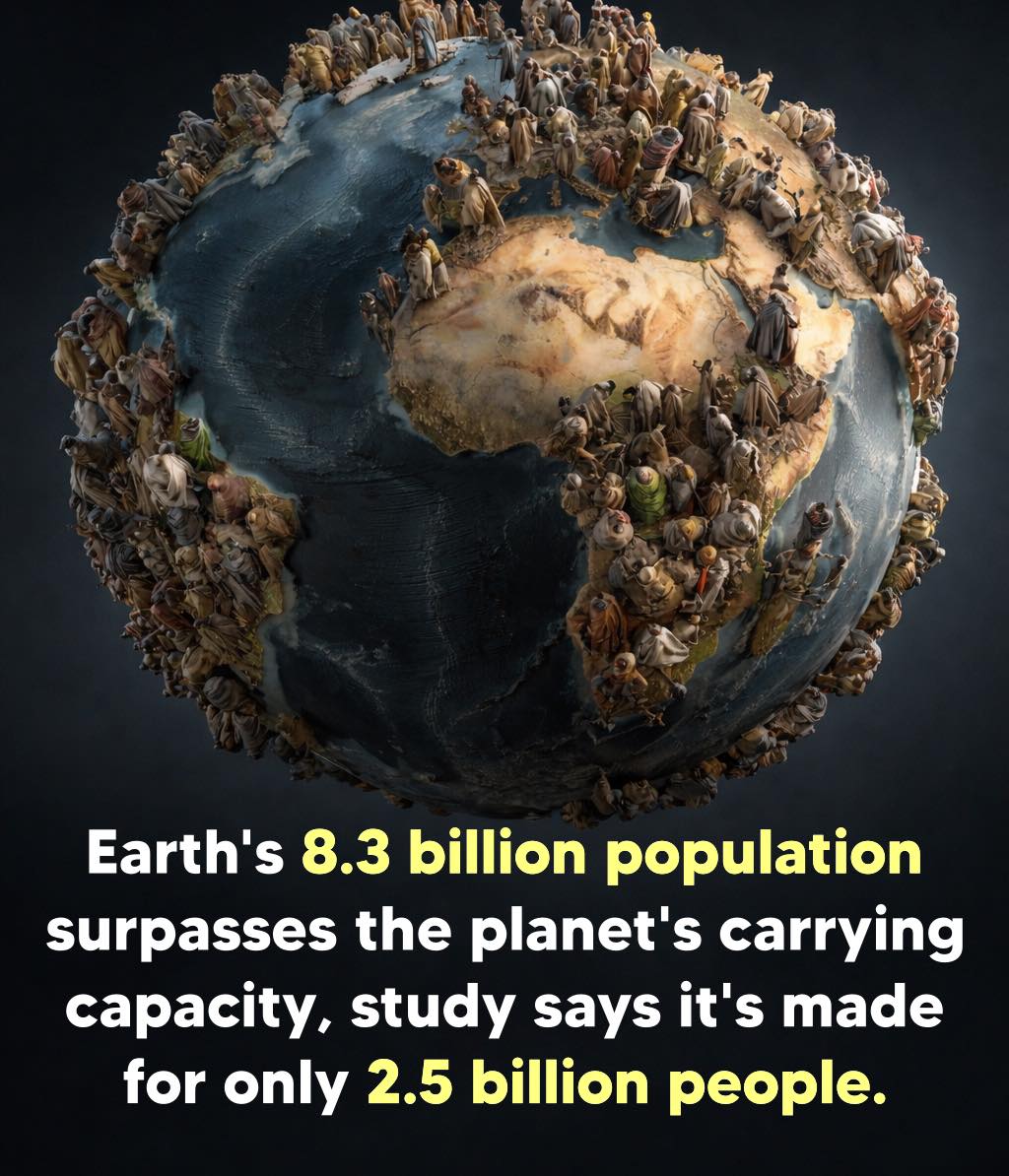
  • A new study led by Corey Bradshaw from Flinders University suggests that Earth’s current population of around 8.3 billion has already surpassed what the planet can sustainably support at today’s consumption levels.

    Carrying capacity—the maximum number of people Earth can support long-term based on resources like food, water, and energy—is estimated in the study to be closer to 2.5 billion, far below current figures.

    The research highlights how fossil fuels have temporarily boosted this capacity, allowing rapid population growth while also increasing environmental strain and climate risks.

    With global population expected to approach 12 billion, the study warns that without major changes, the pressure on Earth’s systems will continue to intensify.
    A new study led by Corey Bradshaw from Flinders University suggests that Earth’s current population of around 8.3 billion has already surpassed what the planet can sustainably support at today’s consumption levels. Carrying capacity—the maximum number of people Earth can support long-term based on resources like food, water, and energy—is estimated in the study to be closer to 2.5 billion, far below current figures. The research highlights how fossil fuels have temporarily boosted this capacity, allowing rapid population growth while also increasing environmental strain and climate risks. With global population expected to approach 12 billion, the study warns that without major changes, the pressure on Earth’s systems will continue to intensify.
    Love
    Haha
    Wow
    Like
    13
    0 Комментарии 0 Поделились 141 Просмотры 0 предпросмотр