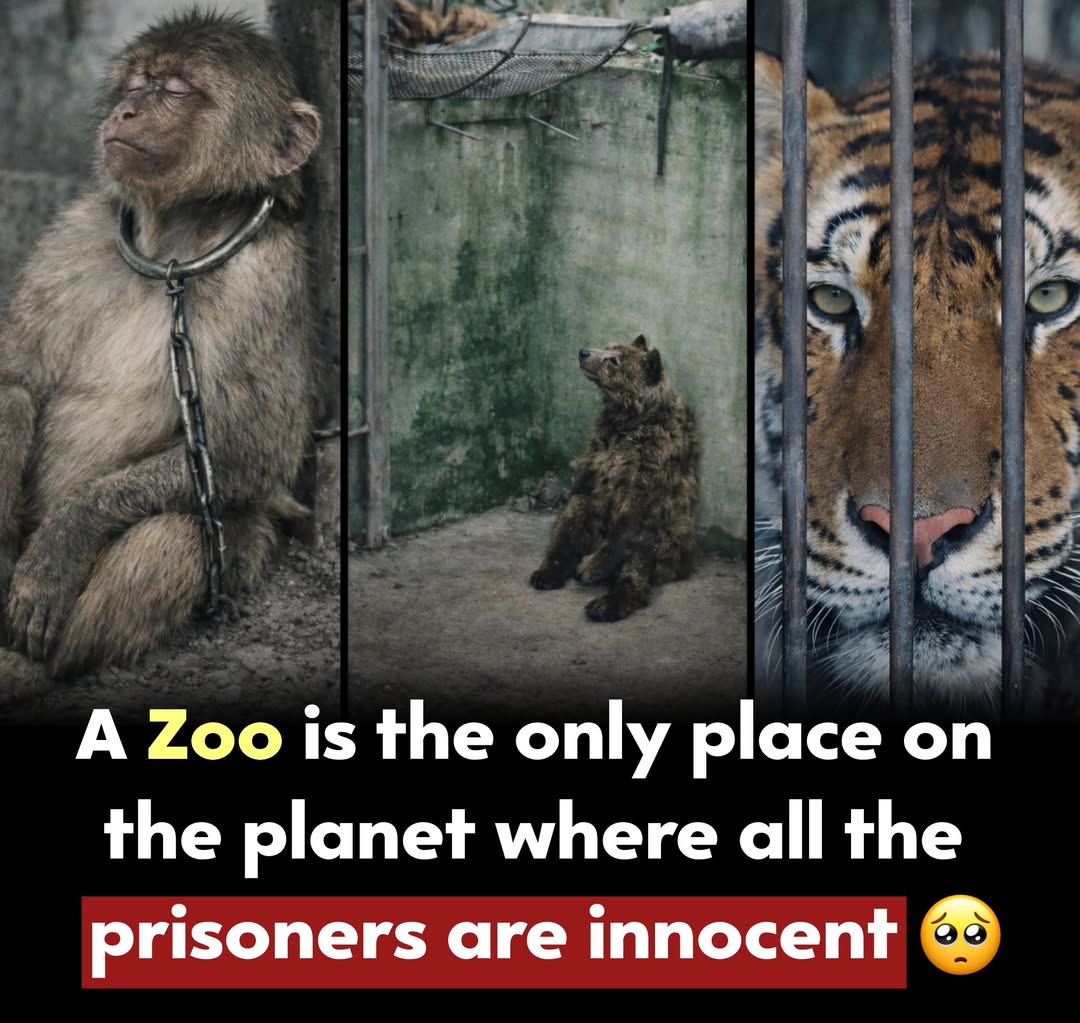
If we wouldn’t chain a human to a wall for entertainment, why is it considered acceptable for animals?
There are more than 10,000 zoos and aquariums around the world, housing millions of animals in captivity. While many modern facilities claim to focus on conservation and education , the reality for many animals is living in spaces far smaller than their natural habitats.
Elephants that would normally roam up to 50 miles a day can spend their lives in enclosures smaller than a football field. Bears are often kept in concrete pits , and some primates live behind glass or restraints for decades .
Supporters say accredited zoos help protect endangered species and fund research that supports wildlife conservation . Critics argue that most zoo animals are not endangered and will never return to the wild, meaning their captivity mainly serves human entertainment .
Because of this, the debate continues worldwide: are zoos necessary for conservation, or an outdated practice that needs to change?
There are more than 10,000 zoos and aquariums around the world, housing millions of animals in captivity. While many modern facilities claim to focus on conservation and education , the reality for many animals is living in spaces far smaller than their natural habitats.
Elephants that would normally roam up to 50 miles a day can spend their lives in enclosures smaller than a football field. Bears are often kept in concrete pits , and some primates live behind glass or restraints for decades .
Supporters say accredited zoos help protect endangered species and fund research that supports wildlife conservation . Critics argue that most zoo animals are not endangered and will never return to the wild, meaning their captivity mainly serves human entertainment .
Because of this, the debate continues worldwide: are zoos necessary for conservation, or an outdated practice that needs to change?
If we wouldn’t chain a human to a wall for entertainment, why is it considered acceptable for animals?
There are more than 10,000 zoos and aquariums around the world, housing millions of animals in captivity. While many modern facilities claim to focus on conservation and education , the reality for many animals is living in spaces far smaller than their natural habitats.
Elephants that would normally roam up to 50 miles a day can spend their lives in enclosures smaller than a football field. Bears are often kept in concrete pits , and some primates live behind glass or restraints for decades .
Supporters say accredited zoos help protect endangered species and fund research that supports wildlife conservation . Critics argue that most zoo animals are not endangered and will never return to the wild, meaning their captivity mainly serves human entertainment .
Because of this, the debate continues worldwide: are zoos necessary for conservation, or an outdated practice that needs to change?