The Bizarre Biological Trick That Makes Mollusk Teeth Tougher Than Steel
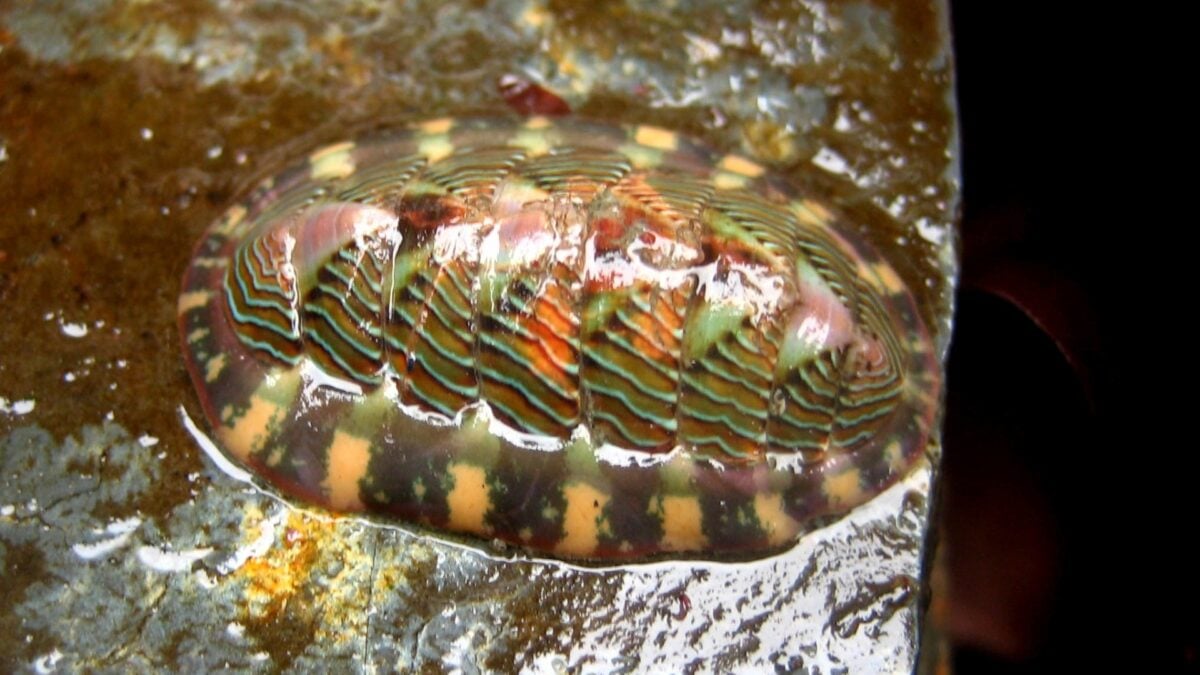
At first glance, chitons look like any other mollusk: round, bashful creatures creeping across seashore rocks. Flip one over, however, and you’ll notice rows of freakishly sharp, polished teeth—indestructible, multi-purpose chompers that researchers are seeking to replicate for the next breakthrough in material science.
A new study published August 7 in Science presents a detailed investigation into what makes chiton teeth so strong and durable. By analyzing chiton anatomy, the team found a remarkably precise, consistent stream of iron-binding proteins that resulted in dental structures “superior to materials used in industrial cutting tools, grinding media, dental implants, surgical implants, and protective coatings,” paper co-author David Kisalilus explained in a statement. Even more impressive is the fact that, unlike human-made materials, chitons produce their teeth at room temperature with nanoscale precision, he added.
The new paper lays out the underlying mechanisms of this process, which the researchers believe could inform future advances in the fabrication of advanced materials. “We can learn a lot from these biological designs and processes,” said Kisalius, a materials scientist at the University of California.
Kisalius collaborated with research partners in Japan to study larger types of chitons found in the northwest United States and the coasts of Hokkaido, Japan. They identified a protein, RTMP1, which is unique to chitons and enables the deposition of iron onto the mollusks’ teeth. Scientists knew that this allowed chitons to scrape off stubborn bits of algae from rock, but it was unknown how and when these proteins interacted with chiton teeth.
Using tools from both material science and molecular biology, the researchers built the protein’s itinerary through chiton anatomy “from the ground up,” Kisalilus explained. First, RTMP1 travels through nanoscopic tubes leading out from each tooth, then binds to compounds that control the architecture of magnetite, a type of iron oxide. At the same time, the protein releases the iron stored in ferritin, another protein found in the tissues near chiton teeth. As a result, the new teeth grow into neat rows of ultrahard structures that also grow back after a certain amount of wear.
The results demonstrate a fantastic opportunity for humans to learn from nature. Further investigations into chiton teeth could inform “spatially and temporally controlled synthesis of other materials for a broad range of applications, such as batteries, fuel cell catalysts, and semiconductors,” Kisailus said, in addition to “new approaches toward additive manufacturing—3D printing—and synthesis methods that are far more environmentally friendly and sustainable.”
Those are perhaps grand expectations for a creature as visually unassuming as the chiton. Then again, these mollusks look extra metal when flipped over (both literally and figuratively). So who knows? Maybe chiton dental steel will truly be the next big thing in materials science.


Categories
Read More
Ingredients:- 4 thin-cut sirloin steaks (about 1/4 inch thick)- 1 cup shredded mozzarella cheese- 1/2 cup crumbled blue cheese (optional)- 1/4 cup fresh spinach, chopped- 1 small red bell pepper, julienned- 1 tsp garlic powder- 1 tsp smoked paprika- 1/2 tsp black pepper- Salt, to taste- 2 tbsp olive oil (for searing)For the Sauce:- 1/2 cup beef broth- 1/4 cup heavy cream- 1 tbsp Dijon mustard-...

Game thủ qua đời vì đột tửCộng đồng "Mộng Ảo Tây Du" tại Trung Quốc đang xôn xao trước sự ra đi của một game thủ có biệt danh “Jay” thuộc máy chủ Quốc Thái Dân An vào ngày mùng 4 tháng này. Theo chia sẻ từ bạn bè, Jay đã đột ngột qua đời vì bệnh, để lại con gái 10 tuổi sống cùng bà nội. Mong muốn những vật phẩm trong game của mình được sử dụng một cách có ý nghĩa, Jay đã ủy thác...

Loài vật quý hiếm sinh con trên đảo Cát Bà Theo báo Hải Dương, ngày 6 tháng 5 năm 2024, hình ảnh của một "gia đình" voọc Cát Bà hay còn gọi voọc đầu trắng ở Cát Bà (Hải Phòng) thu hút sự chú ý trên các nền tảng mạng xã hội. Chia sẻ với báo Pháp luật Thành phố Hồ Chí Minh (PLO), lãnh đạo Vườn Quốc gia Cát Bà (Hải Phòng) đã xác nhận thông tin và các bức...
Tài xế xe buýt dừng xe không sát theo lề đường năm 2025 bị phạt bao nhiêu tiền theo Nghị định 168? Căn cứ vào điểm đ khoản 2 Điều 6 Nghị định 168/2024/NĐ-CP quy định: Xử phạt, trừ điểm giấy phép lái xe của người điều khiển xe ô tô, xe chở người bốn bánh có gắn động cơ, xe chở hàng bốn bánh có gắn động cơ và các loại xe tương tự xe ô tô vi phạm quy...

Some good news for bargain hunters out there: New research shows that while the food bought at dollar stores is generally less healthy, customers’ diets aren’t suffering greatly as a result. Scientists at Tufts University and the USDA-Economic Research Service collaborated for the study, which tracked the food purchasing habits of nearly 200,000...