


How to Find Out If Microplastics Are Actually Destroying Our Health
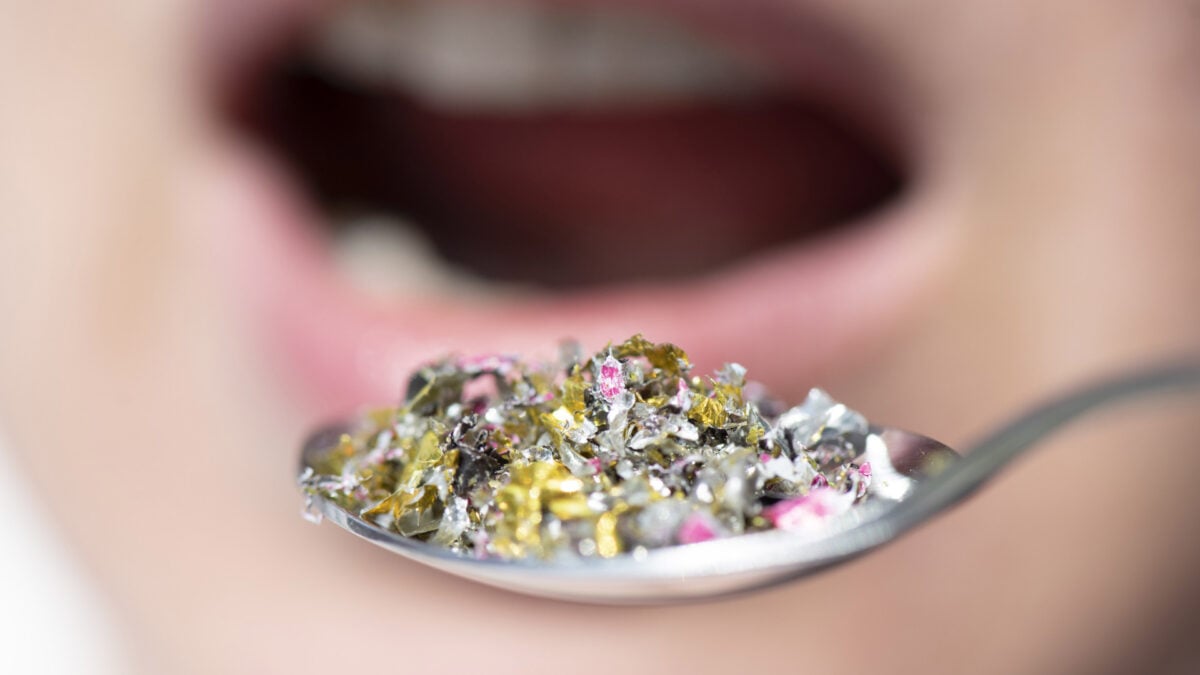
Researchers have found plastic in almost every corner of the human body, from our brains and poop to blood and testicles (at least it’s not making our stomachs crunch yet). Is this plastic contamination bad for us?
While the answer to that question might seem like a no-brainer—and certainly no one is crazy enough to theorize that microplastics in breast milk are a good thing—there haven’t been any human trials to confirm that microplastics are detrimental to human health. Some research has simply linked microplastics to health complications, which isn’t nearly definitive enough.
So what are we waiting for? To be clear, it’s not simply a matter of getting it done. To understand how or if micro- and nanoplastics (MNPs) are toxic for human health, we first need to quantify and analyze their concentration and composition in samples from living organisms. Spoiler alert—there is no guidebook on how to do this. After surveying the existing scientific literature on the matter, however, a team of researchers has outlined some best practices that could finally get us started in the right direction.
“Most detection techniques are better suited for microplastic and nanoplastic (MNP) identification in ideal media (such as water) and face limitations when analysing biological samples,” the researchers wrote in a study published last month in the journal Nature Reviews Bioengineering.
Part of the problem is that different biological samples have different compositions. Apples, for example, are fibrous, while our bodies also have fats and proteins, and trees and plants have lignin, Baoshan Xing, an environmental and soil chemistry professor at UMass Amherst and lead author of the study, said in a university statement.
“Strategies for digestion [preparation], separation, enrichment and detection of MNPs need to be optimized depending on the category of organism under investigation,” the researchers explained in the study. Currently, there is no standard approach for this, an unfortunate fact that Xing described as a “headache” in the statement.
Another complication is that most studies in this context presume MNPs to be spherical-shaped. That might not be the case, which carries important implications, given that particle shape can impact how MNPs travel through a system. Plus, toxic substances might collect in tiny niches or cavities. As such, the team argues that researchers need protocols for analyzing the polymer types and shapes, as well as MNPs’ surface characteristics.
If that sounds like a whole lot of features to analyze, you’re not wrong. Luckily, “machine learning algorithms can greatly reduce the labour time and cost of MNP identification and characterization,” the researchers pointed out in the study.
“The day is not far off when we’ll be able to accurately detect, characterize and quantify MNPs in biological samples,” Xing concluded in the statement.
In the meantime, though, stop chewing gum. Just in case.


Catégories
Lire la suite
Crispy Baked Tofu Tacos with Cilantro Lime SlawIngredients:For the Crispy Tofu:1 block firm tofu, pressed to remove excess moisture2 tbsp olive oil1 tsp garlic powder1 tsp smoked paprika1/2 tsp ground cuminSalt and pepper, to tasteCornstarch (about 1/4 cup, for extra crispiness)For the Cilantro Lime Slaw:2 cups shredded cabbage (purple or green, or a mix)1/2 cup shredded carrots1/4 cup fresh...

Thời gian vốn được coi là vàng là bạc, thậm chí quý hơn cả tiền bạc. Bởi tiền bạc nếu mất có thể kiếm lại còn thời gian trôi qua thì không. Trong chương trình thời sự 19 giờ trên sóng VTV tối qua (9/12), một phóng sự bàn về tình trạng lãng phí thời gian được quan tâm. Theo đó, nhà đài cho biết, mỗi ngày trung bình người Việt dành 2 giờ 25 phút cho mạng xã hội, thuộc top 20 trên...

Homeland Security Secretary Kristi Noem wants to buy planes for Immigration and Customs Enforcement that would be dedicated to deporting as many migrants as possible, according to a new report from NBC News. And it seems extremely likely that she’ll get them, given the fact that recent legislation allocated billions in new funding for ICE....

Củ khoai lang là nguồn cung cấp rất nhiều vitamin, khoáng chất, riboflavin, thiamine, niacin và carotenoid. Chính nhờ những thành phần dinh dưỡng này mà củ khoai lang có thể hỗ trợ bạn phòng và chữa nhiều bệnh mãn tính, tăng cường giảm cân, cải thiện làn da và mái tóc. Điều nhiều người thắc mắc là nên ăn khoai lang trước hay sau giảm cân để đạt hiệu...

Phong Việt, Quỳnh Thi: minishow ‘Lạc quan Yêu’ khiến chúng tôi bồi hồi xao xuyến. 5 ca khúc trong album được Quỳnh Thi lần lượt trình diễn trong minishow là: Chuồn chuồn ớt (tác giả Lê Minh Sơn), Và cơn mưa tới (tác giả Bảo Chấn), Lạc quan Yêu (tác giả Phong Việt), Mùa hè đẹp nhất (tác giả Đức Huy), Biển chiều (tác giả Tuấn Phương). Album ‘Lạc...
