These $30,000 TVs With 'Micro RGB' Are a Reminder That You Shouldn't Hype New Screens
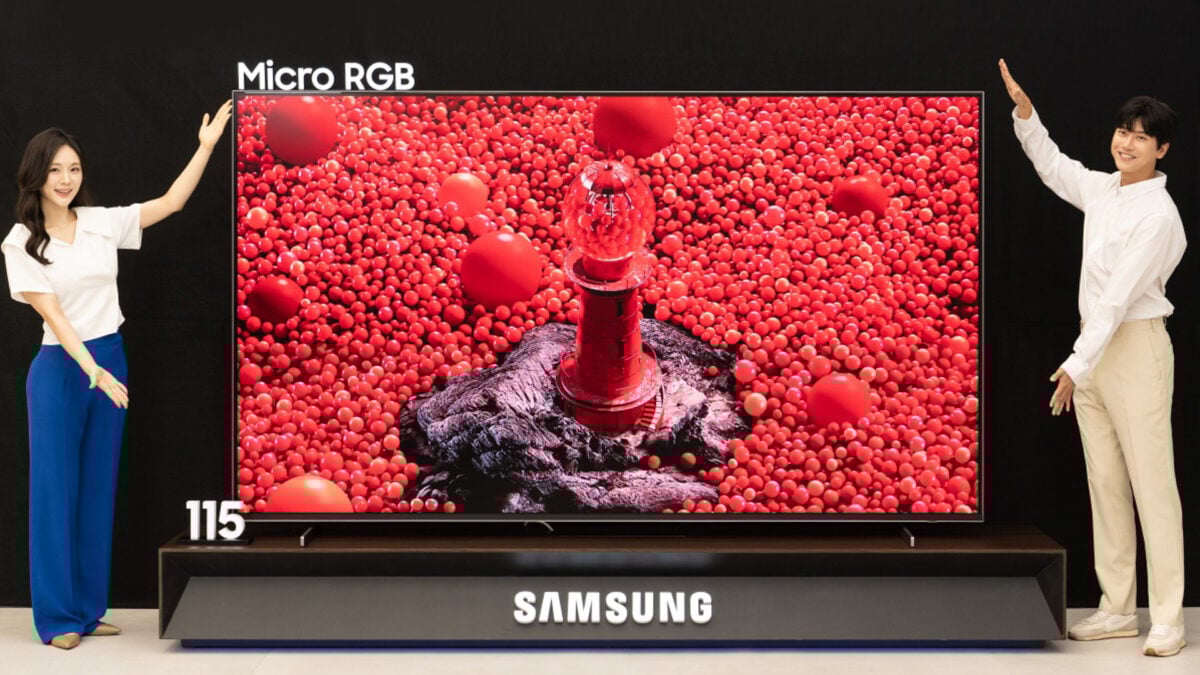
Samsung and Hisense have a new type of TV you can buy right now if you have more than $30,000 sitting in an overstuffed piggy bank somewhere. You’ve heard of OLED, mini LED, and maybe even micro LED, but Samsung and Hisense are asking if you could care about micro RGB? Probably not, but the display makers are selling them at a premium and at a size you couldn’t fit into any living room without barn-high ceilings. The price is just a distraction—a means of drawing eyeballs to new screen technology that’s not yet available for most consumers. If anything, prototype screens serve as a reminder of just how long display technology needs to bake before it’s actually consumer-ready.
Samsung first teased this micro RGB technology at CES earlier this year. The technology is akin to the well-worn standard of mini LED you’ll find in today’s wide variety of expensive and affordable QLEDs. However, micro RGB is based on a back panel of miniscule 100μm RGB (red, green, and blue) lights arrayed behind the TV panel. Samsung claims this allows for higher precision of color accuracy compared to other standard displays. All that sounds well and good until you decide you want to try and buy one. The first display of its kind is a 115-inch flat panel that costs 44.9 million South Korean won, or more than $32,000. It’s not available in the U.S. right away, but it’ll arrive in the States eventually for a grand total of $30,000.
The tech is still interesting enough considering it’s using a special RGB “AI engine” for fine control of each red, green, and blue backlight. In a press release, Samsung said the engine analyzes each frame for optimized color output while enhancing “dull color tones.” The micro RGB television additionally runs with Bixby, Samsung’s voice assistant that has slowly been supplanted by Google Gemini on its own smartphones. Some naysayers have pointed out that Samsung’s TV still doesn’t support Dolby Vision, which is one of the leading forms of HDR, allowing for brighter highlights and better contrast. That’s to be expected. Samsung would rather promote its own HDR10+ version of high-dynamic range. It’s been consistent about that for the last several years of its TV lineup.

If you can’t get enough of uber-expensive displays, Hisense has a somewhat related display tech in the form of an RGB-mini LED. The company’s new 116UX (yes, the screen is a mammoth 116 inches) uses very similar technology to Samsung’s. It even contains its own AI-based chip for reproducing accurate colors. You can buy it from Best Buy for $30,000 instead of putting down money on a home or buying a new car.
Hisense has another TV that’s more on the cutting edge. The company’s 136MX, which first debuted at CES earlier this year, is a micro LED display. It’s a kind of tech using more than 24 million microscopic LED lights with their own RGB light. These generate every pixel you see on a screen, potentially creating ultra-detailed and colorful images. The main difference between micro LED and micro RGB is that the latter is housed behind an LCD panel, where the RGB lights are the backlight. In micro LED, each pixel is its own light source using self-emissive light-emitting diodes. This allows for brighter screens up to a boggling 10,000 nits of stated peak brightness with a high color accuracy. Samsung has been talking this screen technology up for more than five years.
Micro RGB may be the next replacement for QLED, which is a type of mini LED that uses a layer of miniscule quantum dots for more dynamic colors. TV technology takes a very, very long time to improve. LCDs, or liquid crystal displays, were around for many decades before they eventually eclipsed the picture quality of a good CRT TV. Meanwhile OLED, aka an organic light-emitting diode display, has pixel-level control over its colors. That screen type finally became ubiquitous in recent years after remaining way too expensive for most consumers (though they’re normally pricier than other screen types). Getting to this point has taken years of effort, requiring companies to build up the specialized facilities for crafting these screens. Now that OLED serves as the standard for other screens thanks to its high contrast and inky blacks, it will take more years for micro RGB to scale up and size down. Micro LED, which does have pixel-level control, will also require a whole new manufacturing process.
Which is to say, file micro RGB in the back of your brain along with micro LED, then wait a few years. That’s when we’ll find if QD-OLED or extremely tiny RGB LEDs will reign supreme.


Categorías
Read More
Luật sư Châu Duy Nguyên - Văn phòng Luật sư An Đăng (TP Hồ Chí Minh) - cho biết, việc bổ sung đối tượng tham gia BHXH tự nguyện là một bước tiến lớn trong chính sách an sinh, đảm bảo quyền lợi thiết thực cho người dân, đặc biệt là lao động tự do. Chế độ trợ cấp thai sản Về chế độ trợ cấp thai sản, theo Điều 95 Luật BHXH 2024, người tham gia BHXH tự...

Ngành Kinh doanh Nông nghiệp Ngành Kinh doanh Nông nghiệp đang nổi lên như một lựa chọn chiến lược trong xu thế hiện đại hóa nông nghiệp và hội nhập kinh tế. Đây là ngành học mang tính liên ngành cao, kết hợp giữa quản trị, kinh tế và nông nghiệp, bao phủ toàn bộ chuỗi giá trị từ sản xuất đến tiêu thụ, gồm quy hoạch, quản lý chi phí, phân phối,...

Trước đó, Chủ tịch UBND thành phố Hà Nội Trần Sỹ Thanh đã ký ban hành Kế hoạch số 158/KH-UBND về tổ chức các hoạt động kỷ niệm 80 năm Cách mạng Tháng Tám (19/8/1945 - 19/8/2025) và Quốc khánh nước Cộng hòa xã hội chủ nghĩa Việt Nam (2/9/1945 - 2/9/2025). Theo kế hoạch, dịp này, thành phố sẽ tổ chức bắn pháo hoa tại 5 điểm. Theo đó, 5 địa điểm cụ thể...

Unlike the Galaxy Z Fold 7, Samsung’s Z Flip 7 feels less like a major leap forward. Announced at Unpacked, the fllp-style smartphone has the largest cover screen that Samsung’s ever put on phone that folds in half like an old cellphone, and certain specs are improved, but the dimensions still feel like the Z Flip 6. I really wish Samsung trimmed...

The crypto world’s biggest and most consequential legal war is finally over. Ripple Labs, a fintech giant, has just closed the book on its nearly five-year battle with the U.S. Securities and Exchange Commission, ending a fight that had become a proxy for the future of cryptocurrency regulation in America. The surprise settlement is being hailed as...