


In a First, Scientists Capture Human Embryo Implantation in Real Time
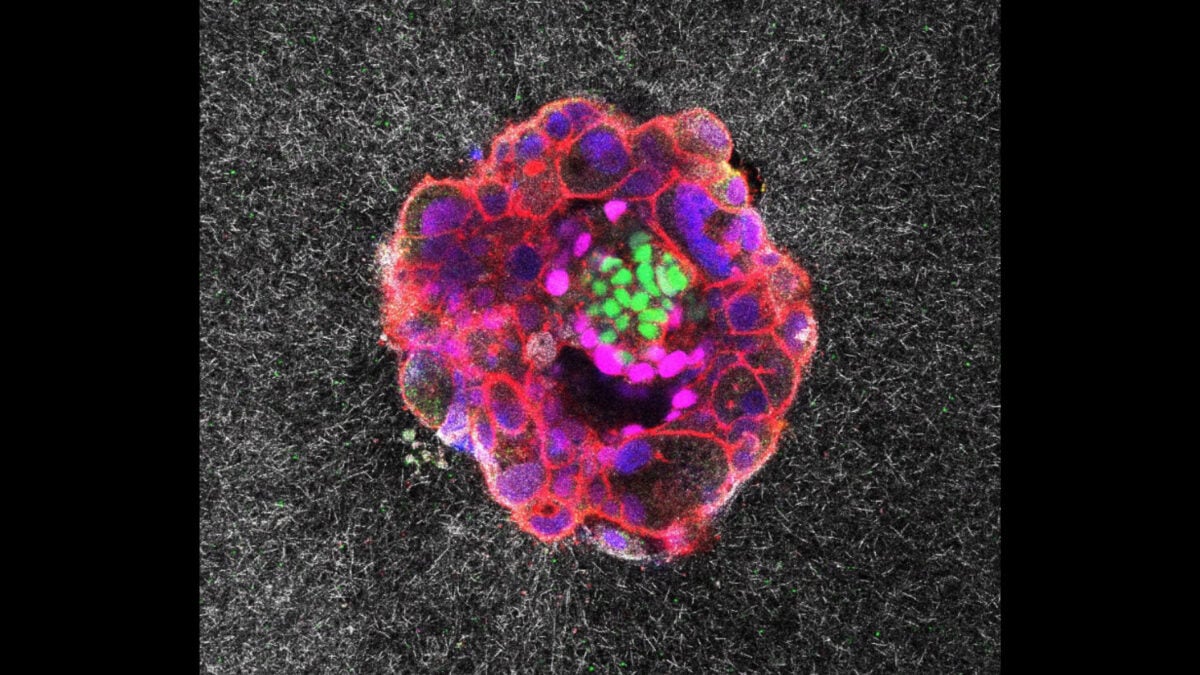
A team of scientists has just gotten a closer peek into one of the earliest and most fundamental steps of creating a human life. Research out today highlights how they captured—for the first time—footage of human embryo implantation right as it’s happening.
Researchers at the Institute for Bioengineering of Catalonia (IBEC), in collaboration with Dexeus University Hospital, detailed their work in a study published Friday in Science Advances. Among other things, the footage shows that human embryos use force to burrow deep into the uterus for implantation. The new method may allow scientists to better understand why embryos so often fail to implant, and someday improve fertility treatment, the researchers say.
“The reason that we want to start studying implantation is because implantation is the main roadblock in human reproduction,” study author Samuel Ojosnegros, lead researcher of IBEC’s Bioengineering for Reproductive Health group, told Gizmodo. “But we know very little about it and we know very little because it happens inside the mother.”
Scientists have certainly learned a lot over time about how the human embryo develops. But there have been limitations to this research, Ojosnegros notes. We’ve only been able to study the first few days of the human embryo in real time, prior to implantation. After that, most research looks at snapshots of embryo development, usually taken of other non-human animals. These animal models are an important tool, but they can only tell us so much about how humans develop in the womb. Implantation is the first step of gestation, and it’s only after an embryo embeds into the uterus that a pregnancy is considered to have actually begun.
The team, additionally led by scientists Amélie Godeau and Anna Seriola, created a material that could mimic the outer uterine tissue that an embryo attaches to for implantation. This gel-like matrix is mostly made out of collagen but is also infused with other proteins important to embryo development. With their creation in hand, they were now able to microscopically record how the human embryo implants itself. They also studied mouse embryos for comparison and noticed some important differences.

“The mouse embryo, if you put it on the matrix, stays superficially, spreads out, but will not invade. It will mainly spread out superficially. While the human, if you put it on the surface, it will dig a hole, penetrate, and it will sort of bury itself inside and then start growing,” Ojosnegros explained. “So then the human embryo is stronger, it’s bigger, and it’s way more invasive.”
There are many more mysteries left to be solved about the process of implantation, including the exact mechanisms that the embryo uses to so aggressively invade the uterus. But the lessons that Ojosnegros and other scientists can learn from this work could help families in the future. The researchers note that only about 30% of embryos (whether from natural birth or in vitro fertilization) make it all the way to being born, and of those that don’t, most are lost during implantation or immediately after. So simply being able to see how the process unfolds could provide vital clues on how to prevent miscarriages or otherwise improve fertility.
The researchers plan to continue to study the ins and outs of embryo implantation, but they’re also hoping to standardize the materials used for this research so that others can conduct their own similar experiments. Ojosnegros also wants to highlight the contributions of the Dexeus University Hospital and the patients whose donated embryos made this work possible in the first place.
“I think it’s good to recognize that without the generosity of the patients who donated the embryos for research, we could not study our own species,” he said.


Kategoriler
Read More
Dự án đường sắt tốc độ cao Bắc - Nam có chiều dài 1.541 km, điểm đầu tại ga Ngọc Hồi (Hà Nội), điểm cuối tại ga Thủ Thiêm (TP.HCM). Dự án đi qua 15 tỉnh, thành phố - với quy mô gồm 23 ga (trong đó có 5 ga hàng hóa). Theo quy hoạch, đoạn tuyến đi qua Thanh Hóa dài hơn 95km, cắt ngang địa bàn 7 phường và 12 xã. Để phục vụ thi công, tỉnh sẽ thu hồi...

Tối 29/6, Tập đoàn Điện lực Việt Nam (EVN) phát đi cảnh báo về hiện tượng một số đối tượng xấu lợi dụng thông tin liên quan đến việc sáp nhập, điều chỉnh địa giới hành chính tại các địa phương để thực hiện hành vi lừa đảo. Các đối tượng giả danh nhân viên ngành điện, tiếp cận khách hàng với mục đích thu thập thông tin cá nhân nhằm chiếm đoạt tài sản....

Mai Dora, nữ MC đình đám làng game Liên Minh Huyền Thoại Việt Nam.Cô nàng Mai Dora luôn là tâm điểm chú ý nhờ vào nhan sắc xinh đẹp và phong cách gợi cảm. Bên cạnh đó, nữ MC còn được yêu mến nhờ lối dẫn linh hoạt, hài hước trên sân khấu. Mỗi lần xuất hiện, cô đều "gây sốt" với người hâm mộ và lần này cũng không phải ngoại lệ. Mới đây, Mai Dora thêm một lần khiến cộng đồng mạng...

Ông Trần Hòa, 74 tuổi, sống giản dị trong căn nhà cấp bốn tại một góc phố nhỏ ở Trùng Khánh (Trung Quốc), đã gắn bó hơn 50 năm với nghề sửa đồng hồ ven đường. Dù thu nhập khiêm tốn, ông luôn tiết kiệm từng đồng, không phải để làm giàu mà để phòng khi tuổi già gặp bất trắc, tránh trở thành gánh nặng cho con cháu. Vợ mất sớm, ông một mình nuôi ba người...

Zohran Mamdani has managed to do something rare in today’s fractured political climate: he has united a faction of the Democratic establishment with an army of online alpha males in shared outrage. Since his victory in the Democratic primary for mayor of New York on June 24, the socialist assemblyman has been subjected to a relentless and violent...
