


Picking a Spot for NASA’s Lunar Nuclear Reactor Is Trickier Than It Sounds
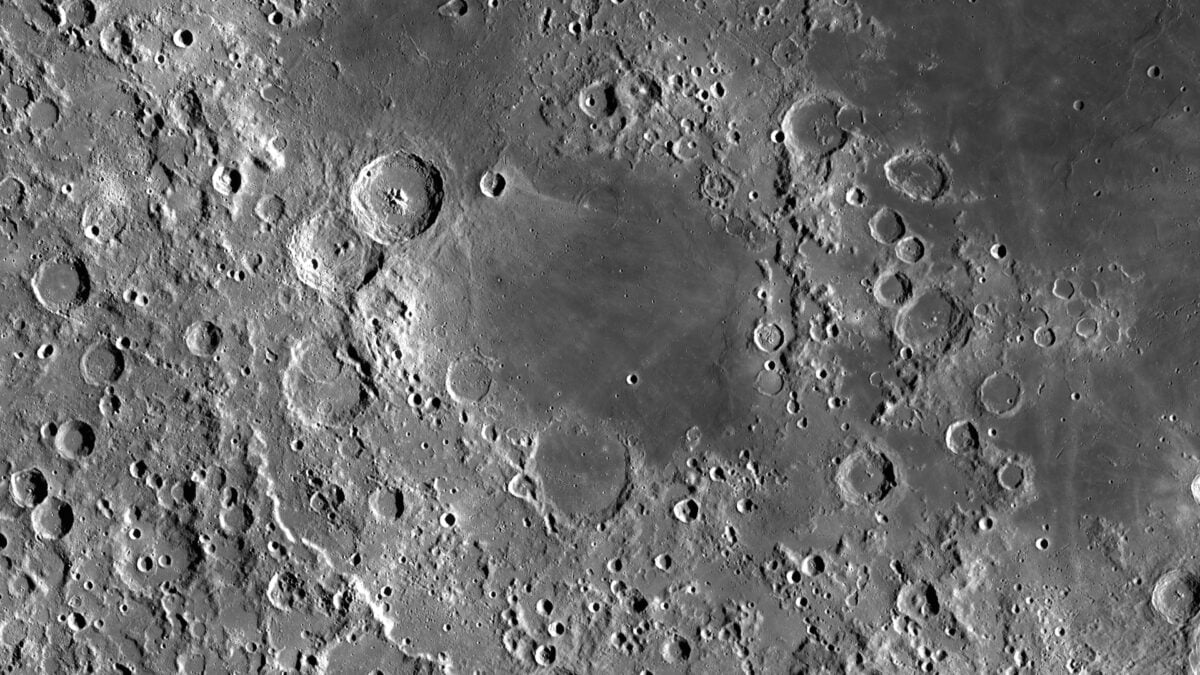
In a bold, strategic move for the U.S., acting NASA Administrator Sean Duffy announced plans on Aug. 5, 2025, to build a nuclear fission reactor for deployment on the lunar surface in 2030. Doing so would allow the United States to gain a foothold on the Moon by the time China plans to land the first taikonaut, what China calls its astronauts, there by 2030.
Apart from the geopolitical importance, there are other reasons why this move is critically important. A source of nuclear energy will be necessary for visiting Mars, because solar energy is weaker there. It could also help establish a lunar base and potentially even a permanent human presence on the Moon, as it delivers consistent power through the cold lunar night.
As humans travel out into the solar system, learning to use the local resources is critical for sustaining life off Earth, starting at the nearby Moon. NASA plans to prioritize the fission reactor as power necessary to extract and refine lunar resources.
As a geologist who studies human space exploration, I’ve been mulling over two questions since Duffy’s announcement. First, where is the best place to put an initial nuclear reactor on the Moon to set up for future lunar bases? Second, how will NASA protect the reactor from plumes of regolith—or loosely fragmented lunar rocks—kicked up by spacecraft landing near it? These are two key questions the agency will have to answer as it develops this technology.
Where do you put a nuclear reactor on the Moon?
The nuclear reactor will likely form the power supply for the initial U.S.-led Moon base that will support humans who’ll stay for ever-increasing lengths of time. To facilitate sustainable human exploration of the Moon, using local resources such as water and oxygen for life support and hydrogen and oxygen to refuel spacecraft can dramatically reduce the amount of material that needs to be brought from Earth, which also reduces cost.
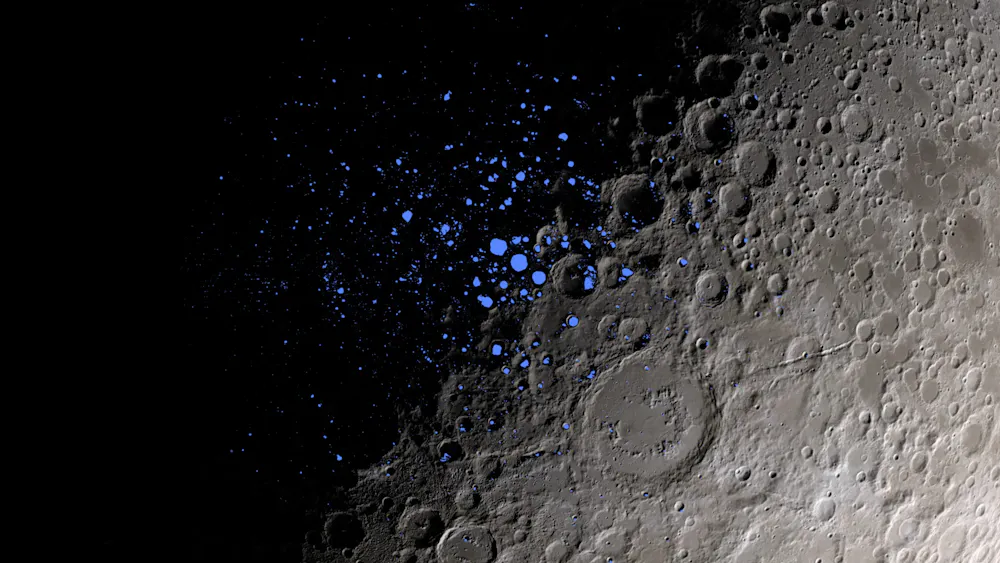
In the 1990s, spacecraft orbiting the Moon first observed dark craters called permanently shadowed regions on the lunar north and south poles. Scientists now suspect these craters hold water in the form of ice, a vital resource for countries looking to set up a long-term human presence on the surface. NASA’s Artemis campaign aims to return people to the Moon, targeting the lunar south pole to take advantage of the water ice that is present there.
NASA’s Goddard Space Flight Center
In order to be useful, the reactor must be close to accessible, extractable, and refinable water ice deposits. The issue is we currently do not have the detailed information needed to define such a location.
The good news is the information can be obtained relatively quickly. Six lunar orbital missions have collected, and in some cases are still collecting, relevant data that can help scientists pinpoint which water ice deposits are worth pursuing.
These datasets give indications of where either surface or buried water ice deposits are. It is looking at these datasets in tandem that can indicate water ice “hot prospects,” which rover missions can investigate and confirm or deny the orbital observations. But this step isn’t easy.
Luckily, NASA already has its Volatiles Investigating Polar Exploration Rover mission built, and it has passed all environmental testing. It is currently in storage, awaiting a ride to the Moon. The VIPER mission can be used to investigate on the ground the hottest prospect for water ice identified from orbital data. With enough funding, NASA could probably have this data in a year or two at both the lunar north and south poles.
[embed]https://www.youtube.com/watch?v=S9Y6n1G5hhc[/embed]
How do you protect the reactor?
Once NASA knows the best spots to put a reactor, it will then have to figure out how to shield the reactor from spacecraft as they land. As spacecraft approach the Moon’s surface, they stir up loose dust and rocks, called regolith. It will sandblast anything close to the landing site, unless the items are placed behind large boulders or beyond the horizon, which is more than 1.5 miles (2.4 kilometers) away on the Moon.
Scientists already know about the effects of landing next to a pre-positioned asset. In 1969, Apollo 12 landed 535 feet (163 meters) away from the robotic Surveyor 3 spacecraft, which showed corrosion on surfaces exposed to the landing plume. The Artemis campaign will have much bigger lunar landers, which will generate larger regolith plumes than Apollo did. So any prepositioned assets will need protection from anything landing close by, or the landing will need to occur beyond the horizon.
Until NASA can develop a custom launch and landing pad, using the lunar surface’s natural topography or placing important assets behind large boulders could be a temporary solution. However, a pad built just for launching and landing spacecraft will eventually be necessary for any site chosen for this nuclear reactor, as it will take multiple visits to build a lunar base. While the nuclear reactor can supply the power needed to build a pad, this process will require planning and investment.
Human space exploration is complicated. But carefully building up assets on the Moon means scientists will eventually be able to do the same thing a lot farther away on Mars. While the devil is in the details, the Moon will help NASA develop the abilities to use local resources and build infrastructure that could allow humans to survive and thrive off Earth in the long term.
Clive Neal, Professor of Civil and Environmental Engineering and Earth Sciences, University of Notre Dame. This article is republished from The Conversation under a Creative Commons license. Read the original article.


 Language
 English
 VN
VN
 Spanish
 Portuguese
 Deutsch
 Turkish
 Dutch
Dutch
 Italiano
 Russian
 Romaian
 Portuguese (Brazil)
 Greek
Greek
 Arabic