Nobody Likes Zuckerberg's Glitchy AI App
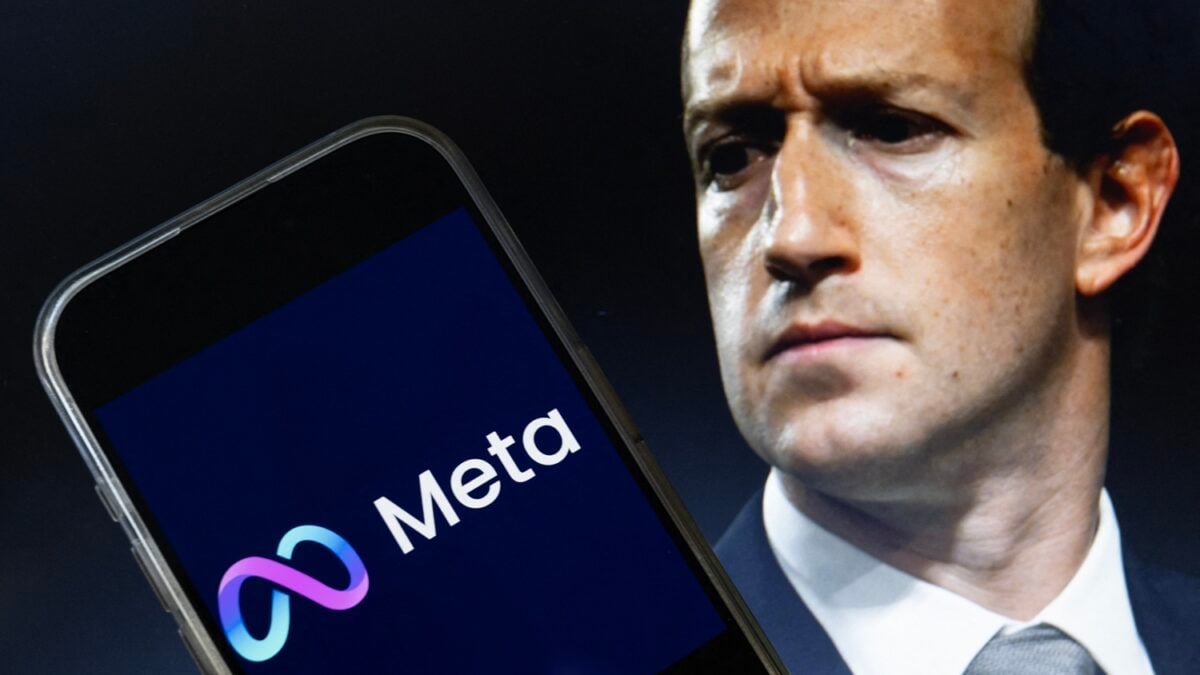
Clearly, throwing billions of dollars at a problem can’t solve everything.
Nearly six months after its debut, Meta’s consumer-facing AI app still struggles with inconsistencies and persistent shortcomings, casting doubt on the company’s lofty ambitions for artificial intelligence.
It has been a rough learning curve for Mark Zuckerberg’s efforts to join the AI race after lagging behind an already-crowded field and spending tens of billions of dollars on catching up. So far, the most Meta has to show for it is a glitchy chatbot, a growing chorus of irritated users, and frustrated shareholders who would like to have something to show for that kind of capital outlay.
Now, market watchers and consumers alike are wondering what exactly Meta can deliver if its flagship AI offering remains uneven.
Launched in April 2025, the standalone app was a late entry into the AI space, arriving roughly two and a half years after OpenAI introduced ChatGPT, Meta’s biggest competitor in the space and by far the most commercially recognizable brand for AI currently.
Meta AI also took a different approach: Its AI bot attempts to combine chat, image creation, and a public feed showcasing user-generated content.
Hit or Miss Has Been Mostly Miss
That tack appears to be failing. Users across the internet have expressed frustration with its unpredictability and limited relevance, saying it feels less like a polished product and more like an early prototype struggling to live up to Meta’s new AI-driven vision.
Since its launch, critics and users alike have voiced concerns on social media, highlighting bugs, odd interactions, and a lack of personalization.
The app’s Discover feed, intended to inspire conversations and showcase creative uses of the AI, often displays outdated user-generated images, diminishing its appeal as a dynamic social hub.
Meanwhile, its chat feature, which purportedly learns about user preferences, frequently makes up false information—an issue known as “hallucination” in AI lingo—that calls into question its reliability.
The reception has been lukewarm at best.
A Reddit post titled “Who hates Meta AI?” has garnered thousands of upvotes, with commentators dismissing it as “here anyway,” and “nobody ever asked for it.”
In the company’s own words, the app is still in its infancy. “This is just the first of many steps,” a Meta spokesperson told Bloomberg, promising ongoing updates as the company invests heavily in AI talent and infrastructure.
The success of the program and its importance to Meta’s future cannot be overstated.
Zuckerberg has made AI a cornerstone of Meta’s future, pledging hundreds of billions of dollars toward development, and actively recruiting top researchers from rivals like Apple and OpenAI. Meta even open-sourced its large language model, Llama, positioning itself as a leader in AI research, but its consumer tools, including the Meta AI app, are still far from polished.
Meta’s aspirations go beyond simple chatbot interactions
Zuckerberg has said he thinks of AI as a “personal superintelligence” that empowers individual users, not just a tool for entertainment. The company has said it wants to eventually embed AI across its portfolio of apps, including Facebook, Instagram, and Messenger, and hardware.
But the current experience falls short of that vision, because the way Meta is slicing and dicing the data it receives is stymying internal efforts to advance its AI program. Conversations with the AI are siloed across apps, and it doesn’t retain memory or context from previous chats unless explicitly programmed to do so, limiting its usefulness and personalization.
More worryingly, the AI sometimes hallucinates, fabricating details that users may believe to be true. It can also get pretty weird, with many of the AI-generated images and text snippets that it uses to flood feeds with user-generated content ranging from inappropriate to the outright bizarre.
This has been worsened by Meta’s grappling with balancing automation and moderation.
Meta’s goal of harnessing the potential in AI applications for productivity and entertainment remains largely aspirational. For now, the company’s most visible consumer product remains a work in progress, far from fulfilling Zuckerberg’s lofty promises of an AI-powered future designed for “individual empowerment.”
As Meta continues to develop its AI technology, it remains to be seen whether the company can transform this nascent app into a truly useful and trustworthy personal assistant, or if it will continue to flunk its real-time tests and become a cautionary tale of moving too fast.


Κατηγορίες
Διαβάζω περισσότερα
Bảo An sinh năm 2006, nổi lên sau MV Xúc xắc xúc xẻ khi mới 3 tuổi. Đến nay, MV này đã đạt hơn 400 triệu lượt xem. Đây là MV thiếu nhi đầu tiên vượt mốc 200 triệu view. Bảo An còn là người nắm giữ 3 clip âm nhạc nằm trong số những clip Việt Nam đạt nhiều lượt xem nhất trên YouTube gồm Xúc xắc xúc xẻ, Mẹ ơi tại sao, Bé chút chít. Năm 2011, cô bé đoạt...

Cư dân mạng Việt Nam đang không ngừng xôn xao trước một vụ việc thương tâm được ví von như phiên bản "Mèo Béo" của Việt Nam, gây ra làn sóng đồng cảm và phẫn nộ sâu sắc. Dù chi tiết cụ thể vẫn đang được làm rõ, câu chuyện về sự hy sinh thầm lặng của một người trẻ vì tình yêu trở thành tâm điểm bàn tán.Câu chuyện đau lòng Theo những thông tin lan truyền trên các nền tảng mạng xã...

Hình ảnh Ninh Dương Lan Ngọc di chuyển bằng xe lăn ở sân bay khiến nhiều người lo lắng Mới đây, mạng xã hội xôn xao trước hình ảnh ghi lại khoảnh khắc Ninh Dương Lan Ngọc xuất hiện tại sân bay trong tình trạng ngồi xe lăn. Dù diện trang phục giản dị với áo trắng, quần đỏ và đội mũ bucket che kín mặt, nhiều người vẫn nhanh chóng nhận ra nữ diễn viên....

Mối quan hệ tình cảm là một hành trình dài, có niềm vui, có nỗi buồn, và đôi khi là những vết thương không thể lành lại. Mọi người đều có những cách riêng để đối mặt với nỗi đau khi tình yêu kết thúc, và đàn ông cũng không phải là ngoại lệ. Tuy nhiên, câu hỏi đặt ra là: Đàn ông mất bao lâu để quên đi người phụ nữ họ từng yêu thương nhất? Có thể nói rằng, không có một đáp án cụ thể nào cho câu...

Tuy nhiên, nếu không có điều hòa, tình trạng này chắc chắn còn tồi tệ hơn. Nhiều người đã từng nghĩ về câu hỏi này: làm thế nào con người có thể sống sót qua mùa hè vào thời chưa có máy điều hòa, tủ lạnh và thậm chí là quạt điện? Hãy cùng xem qua một số mẹo vặt mùa hè của họ nhé. Mặc đồ mát Ngày nay, chúng ta có thể mặc một chiếc áo quanh năm nhờ...