This Survey Inquired with Neuroscientists About the Possibility of Retrieving Memories from the Deceased. Here’s Their Response.

The allure and terror of transferring your consciousness to a computer has long been fodder for cyberpunk novels and billionaire-backed immortality startups. But a substantial chunk of neuroscientists think it might be possible to extract memories from a preserved brain and store those memories inside a computer, according to a new study.
The study, published in the journal PLOS One, suggests that most neuroscientists believe that memory has a physical basis and, on average, give a 40% probability that we might one day be able to emulate a human brain. But there was little consensus as to what exactly that physical basis is, highlighting just how little we know about what memories are made of.
The authors surveyed 312 neuroscientists—both memory experts and general neuroscientists—to get their thoughts on the feasibility of preserving a human brain and later extracting its memories. It was led by Ariel Zeleznikow-Johnston, a neuroscientist at Monash University in Australia and the author of The Future Loves You: How and Why We Should Abolish Death.
While the researchers wrote that the questions of memory extraction from preserved brains are “strange and speculative,” they provide insight into how neuroscientists think about memory formation.
Results of the survey show that neuroscientists largely agree that memories have a physical substrate rather than relying on a dynamic process that ceases at preservation; they’re likely stored in the synaptic connections between neurons, which strengthen and weaken with experience. The survey showed that 70% of neuroscientists agree that a physical, molecular record of a memory exists—stored in stable changes to neural connectivity and interactions between proteins and other cellular components—of which you could theoretically take a snapshot.
However, “there was no clear consensus on exactly which neurophysiological feature or scale is critical for memory storage,” the authors wrote in the study. The surveyed scientists didn’t agree on what resolution—from the atomic-level composition of biomolecules to nanometer-level resolution of subcellular structures—would be required to extract a memory from a preserved brain. This is largely due to the fact that, while most neuroscientists agree that memory has a physical basis, it’s still up for debate exactly what that basis is.
The survey also asked whether existing tools could theoretically preserve the structure of a brain well enough to extract memories. Preserving a brain in such a way that the proteins and cells remain intact is tricky, since freezing can damage neural tissue. But one way neuroscientists could do this is through aldehyde-stabilized cryopreservation, a technique that combines chemical fixation with vitrification—the process of turning a substance into a glass-like solid by cooling it down rapidly. The study asked neuroscientists to assign a probability that memories could be extracted from a cryopreserved brain. The participants gave a wide range of estimates, but the median answer was around a 40% probability.
The authors asked the neuroscientists how probable it might be to emulate a whole brain—like, uploading and digitizing a person’s brain onto a computer—from preserved neural tissue. That could open up the possibility of uploading your full self and consciousness into a machine. In this case, the median answer was again around 40%, though the authors note that the responses again varied widely.
“Admittedly, that’s not 100 percent,” Zeleznikow-Johnston told IFLScience. “That means that there’s not full consensus in the community that yeah, definitely this will work, but it’s not 0.1 percent, or 0.01 percent. That’s a substantial chunk of neuroscientists who think there’s a very real chance that it will work, and my guess is that actually that number will creep up over time as we get better at doing these brain implants, emulations, all these other things.”
Neuroscientists believe we’re still a long way off from being able to emulate an entire human brain, according to the study. When asked when we might be able to emulate a human brain, the respondents gave a median answer of 2125.
Still, it’s something to think about.


Categorieën
Read More
Nghĩa vụ quân sự là trách nhiệm bắt buộc của mỗi công dân nam trong độ tuổi quy định. Tuy nhiên, pháp luật hiện hành cũng cho phép tạm hoãn nghĩa vụ quân sự đối với một số trường hợp nhất định. Dưới đây là thông tin chi tiết về những trường hợp được tạm hoãn nghĩa vụ quân sự năm 2026, cùng với lịch trình khám và gọi nhập ngũ theo quy định mới nhất....

6 loại giấy tờ bắt buộc người dân phải có khi tham gia giao thông năm 2025 Căn cứ Điều 56 Luật Trật tự, an toàn giao thông đường bộ 2024 (có hiệu lực từ ngày 01/01/2025) quy định về điều kiện của người điều khiển phương tiện tham gia giao thông đường bộ. Theo đó ngoài việc phải đủ tuổi, sức khỏe theo quy định của pháp luật; có giấy phép lái xe đang...

Crispy Feta with Lemon Pepper Chicken and Rice This delicious dish features crispy feta paired with flavorful lemon pepper chicken and vibrant vegetables. Perfect for a hearty meal! Here’s how to make it:Ingredients:For the Chicken and Vegetables:1 pound boneless skinless chicken tenders4 tablespoons extra virgin olive oil (divided)2 teaspoons paprika2 teaspoons cumin seeds1...

Giờ Dần (3:00-5:00): Tài năng mới nổi và cơ hội Người sinh giờ Dần giống như mặt trời mọc buổi sáng, tràn đầy sức sống và sinh lực. Họ sinh ra với sự sáng suốt và khả năng quyết đoán, có thể nhanh chóng nắm bắt và nắm chắc các cơ hội kinh doanh. Người sinh giờ này thường có thể mở ra một thế giới rộng lớn trong sự nghiệp bằng trí tuệ và lòng dũng cảm...

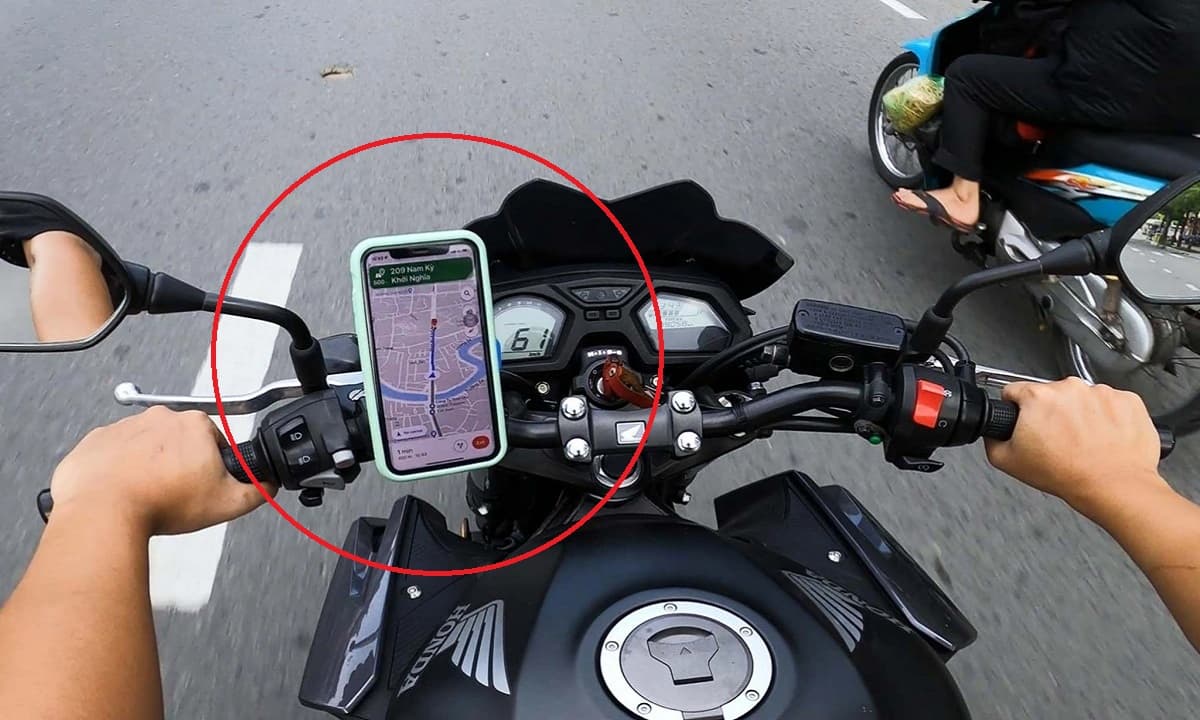
Ngày nay khi công nghệ ngày càng phát triển, việc sử dụng điện thoại hàng ngày đã trở thành một thói quen của nhiều người. Hành vi lái xe máy sử dụng điện thoại là một vấn đề nghiêm trọng, ảnh hưởng trực tiếp đến an toàn giao thông, tính mạng bản thân và người khác. Khi tham gia giao thông sử dụng điện thoại sẽ làm giảm khả năng phản ứng, người điều...