New Details Emerge About Ancient Inca Counting Technology
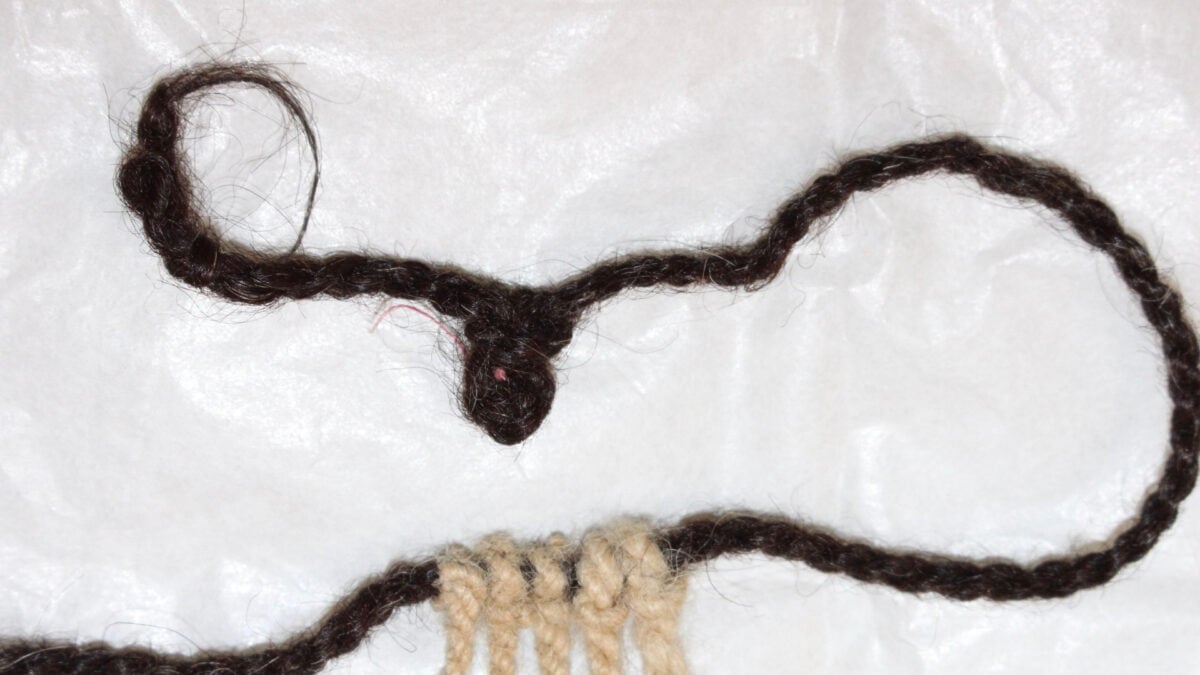
The Inca were a pre-Columbian civilization whose empire sprawled along South America’s Pacific Coast from the 15th to the 16th century CE. Like other Andean peoples, they used khipus (also known as quipus), an intricate cord and knot system used to record information. According to Spanish colonial-era sources, only male Inca elites could make khipus. A new study, however, challenges this widespread notion.
In a paper published today in Science Advances, an international team of researchers investigated the primary cord of a khipu from around 1498 CE made from human hair. Their analysis revealed that the individual who wove their hair into the khipu ate a diet commonly associated with commoners, suggesting that a greater diversity of people used the instrument than previously thought.
“Despite recent advances in our understanding of Andean khipus, scholars know little about the specialists who created Inka khipus,” the researchers wrote in the study. “With limited direct evidence concerning the lives of Inka khipu experts, our knowledge is based mainly on the chronicles of Spanish-language colonial observers.”

Researchers believe that khipus were buried alongside their owners when they died. Unfortunately, however, the burials where experts have discovered many Inca khipus were previously looted, meaning they can no longer provide this crucial insight. As such, the team from the new study took a different approach.
“Historically, when human hair was incorporated into a khipu’s primary cord, it served as a ‘signature’ to indicate the person who created the khipu,” the researchers explained. “Recent advances in elemental analysis–isotope ratio mass spectrometry allowed us to undertake simultaneous carbon (C), nitrogen (N), and sulfur (S) measurements from a single KH0631 hair sample, revealing that this individual consumed a diet characteristic of low-ranking commoners,” they added. “This evidence suggests that Inka commoners could be involved in creating Inka-style khipus.”
Specifically, the individual in question ate tubers and greens instead of meat and corn, which was the typical Inca elite’s diet. The researchers’ approach also revealed that this khipu specialist, or khipukamayuqs, probably lived in modern-day southern Peru or northern Chile.
These results align with the fact that in the 19th and 20th centuries, “commoners,” such as peasant farmers, farm laborers, and female peasants, created and used khipus. What’s more, it bolsters recent research as well as accounts by Felipe Guamán Poma de Ayala, a 16th-century Inca nobleman and chronicler, that women in the Inca Empire also made khipus.
While the researchers admit that “KH0631 is only one khipu,” they conclude that “the new isotopic evidence from KH0631 suggests that khipu literacy in the Inca Empire may have been more inclusive and widespread than hitherto thought.”


Kategoriler
Read More
Biển Quỳnh Địa điểm đang được nhắc tới là biển Quỳnh, thuộc huyện Quỳnh Lưu, Nghệ An, nằm cách thành phố Vinh 60km về phía Bắc. Theo thông tin từ Cục Du lịch Quốc gia Việt Nam, biển Quỳnh vốn là tên chung để gọi 7 bãi biển kề nhau, thuộc các xã ven biển của huyện Quỳnh Lưu. Các bãi biển này lần lượt mang tên gọi riêng biệt là: Quỳnh Phương, Quỳnh...

Có thể hiểu đất 50 năm là gì? Tại điều 9 Luật Đất đai 2024 đã phân loại đất đai thành 3 nhóm gồm: 1. Đất nông nghiệp. 2. Nhóm đất phi nông nghiệp. 3. Nhóm đất chưa sử dụng. Pháp luật có quy định cụ thể về các loại đất gồm: Đất ở, đất thương mại dịch vụ, đất trồng lúa, đất trồng cây hàng năm, đất trồng cây lâu năm... nhưng không có khái niệm nào là...
Đầu tiên, Rắn Năm nguyên tố của Rắn là hỏa. Nó nhanh nhẹn, biến hóa và hành động nhanh nhẹn. Nó trú ngụ trong Cung Tấn, giỏi ẩn núp và di chuyển lén lút. Vào năm Tỵ, các yếu tố Mộc và Hỏa bổ sung cho nhau, ủng hộ việc tổ chức tư tưởng, tiến triển công việc và đổi mới công nghệ. Vào tháng Giáp Thân, sau khi bắt đầu mùa Thu, sao Âm xuất hiện trong...

Meat Lovers Pizza TacosIngredients:For the Meat Mixture:1/2 lb ground beef1/2 lb Italian sausage (casings removed)1/2 cup diced pepperoni1/2 cup cooked and crumbled bacon (about 4-5 slices)1/4 cup diced onions (optional)1 teaspoon garlic powder1 teaspoon dried oreganoSalt and pepper to tasteFor the Taco Shells:8 hard taco shells (or soft flour tortillas for a different twist)For the Toppings:2...

Căn cứ theo Tiểu mục 1 Mục C Phần V Phụ lục ban hành kèm theo Nghị định 151/2025/NĐ-CP quy định thủ tục tách hợp thửa đất từ ngày 1.7.2025 như sau: (1) Người sử dụng đất nộp 1 bộ hồ sơ tại bộ phận một cửa cấp tỉnh, cấp xã; văn phòng đăng ký đất đai; chi nhánh văn phòng đăng ký đất đai. Hồ sơ bao gồm: - Đơn đề nghị tách thửa đất, hợp thửa đất theo Mẫu...