


New Brain Interface Interprets Inner Monologues With Startling Accuracy
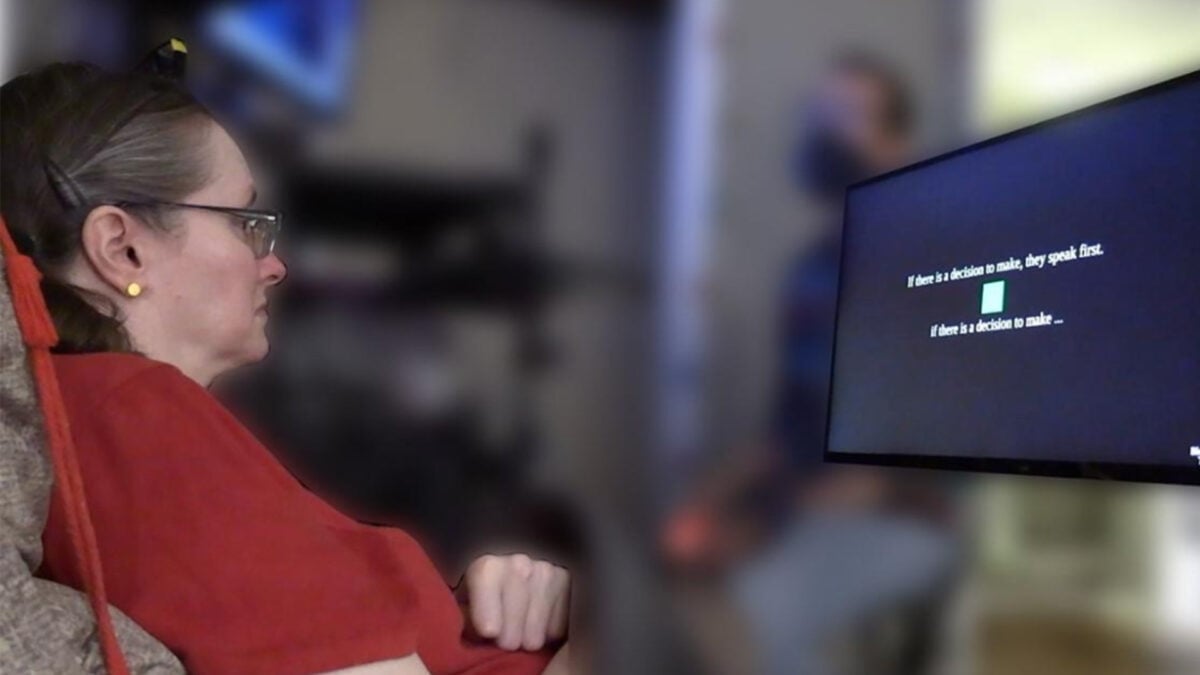
Scientists can now decipher brain activity related to the silent inner monologue in people’s heads with up to 74% accuracy, according to a new study.
In new research published today in Cell, scientists from Stanford University decoded imagined words from four participants with severe paralysis due to ALS or brainstem stroke. Aside from being absolutely wild, the findings could help people who are unable to speak communicate more easily using brain-computer interfaces (BCIs), the researchers say.
“This is the first time we’ve managed to understand what brain activity looks like when you just think about speaking,” lead author Erin Kunz, a graduate student in electrical engineering at Stanford University, said in a statement. “For people with severe speech and motor impairments, BCIs capable of decoding inner speech could help them communicate much more easily and more naturally.”
Previously, scientists have managed to decode attempted speech using BCIs. When people physically attempt to speak out loud by engaging the muscles related to speech, these technologies can interpret the resulting brain activity and type out what they’re trying to say. But while effective, the current methods of BCI-assisted communication can still be exhausting for people with limited muscle control. The new study is the first to directly take on inner speech.
To do so, the researchers recorded activity in the motor cortex—the region responsible for controlling voluntary movements, including speech—using microelectrodes implanted in the motor cortex of the four participants.
The researchers found that attempted and imagined speech activate similar, though not identical, patterns of brain activity. They trained an AI model to interpret these imagined speech signals, decoding sentences from a vocabulary of up to 125,000 words with as much as 74% accuracy. In some cases, the system even picked up unprompted inner thoughts, like numbers participants silently counted during a task.
For people who want to use the new technology but don’t always want their inner thoughts on full blast, the team added a password-controlled mechanism that prevented the BCI from decoding inner speech unless the participants thought of a password (“chitty chitty bang bang” in this case). The system recognized the password with more than 98% accuracy.
While 74% accuracy is high, the current technology still makes a substantial amount of errors. But the researchers are hopeful that soon, more sensitive recording devices and better algorithms could boost their performance even more.
“The future of BCIs is bright,” Frank Willett, assistant professor in the department of neurosurgery at Stanford and the study’s lead author, said in a statement. “This work gives real hope that speech BCIs can one day restore communication that is as fluent, natural, and comfortable as conversational speech.”


Catégories
Lire la suite
Nghệ sĩ Diễm Trinh sinh năm 1954, là nghệ sĩ cải lương từng hoạt động trong thập niên 70-80. Bà sinh ra trong gia đình nghèo khó nhưng từ nhỏ đã đam mê cải lương. Từ năm 17 tuổi, bà đã theo các đoàn hát cải lương đi khắp nơi biểu diễn. Sau đó, bà thi vào trường Sân khấu 2 khoa Cải lương, học hành bài bản rồi tốt nghiệp, đi hát thêm được 10 năm. Tới...

Những ngày gần đây, cụm từ "Mèo Béo phiên bản Việt" nhanh chóng trở thành từ khóa tìm kiếm hàng đầu, cho thấy mức độ quan tâm của dân tình đối với vụ việc. Cư dân mạng không ngừng xôn xao và dành sự thương cảm dành cho chàng trai si tình, cố gắng làm bạn gái hài lòng với những nhu cầu vật chất. Anh chàng chọn cái kết ra đi khiến dân tình dễ liên tưởng với câu chuyện từng gây chấn...

1. Tý: Trí tuệ minh mẫn, tài lộc tăng vọt Người tuổi Tý nổi tiếng thông minh, lanh lợi, giỏi quan sát và nắm bắt cơ hội. Tuần tới, những người tuổi Tý sẽ được hưởng "may mắn cao quý", đặc biệt là trong sự nghiệp và đầu tư, sẽ có sự giúp đỡ bất ngờ. Dù là cơ hội thăng tiến trong công việc hay lợi nhuận đầu tư và quản lý tài chính, điều đó đều có thể...

Không lắp đủ 2 gương có bị phạt không? Nghị định 168/2024/NĐ-CP đã chính thức có hiệu lực từ ngày 1/1/2025 nêu những quy định xử phạt hành chính trong lĩnh vực trật tự an toàn giao thông. Theo đó Điểm a, Khoản 1 Điều 14 xử phạt về gương chiếu hậu như sau: 1. Phạt tiền từ 400.000 đồng đến 600.000 đồng đối với một trong...

Tử vi 12 con giáp ngày 20/6/2025 của tuổi Tý Tuổi Tý rơi vào thế tương hại nên vận trình không được như mong muốn. Bạn nên cẩn trọng trong lời nói và hành động, tránh thẳng thắn quá mức gây mất lòng người khác hoặc tự tạo rắc rối. Kẻ xấu có thể lợi dụng sơ hở của bạn để gieo tin đồn thất thiệt, ảnh hưởng không nhỏ đến hình ảnh và uy tín cá nhân. Mặc...
