New Brain Interface Interprets Inner Monologues With Startling Accuracy
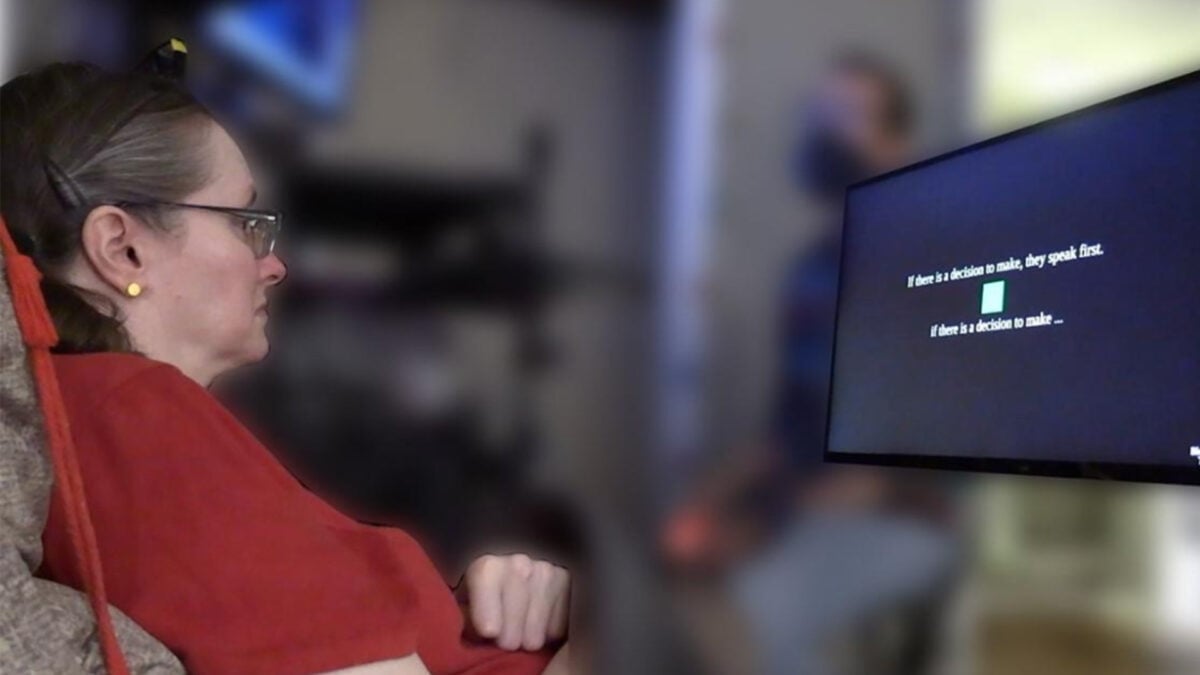
Scientists can now decipher brain activity related to the silent inner monologue in people’s heads with up to 74% accuracy, according to a new study.
In new research published today in Cell, scientists from Stanford University decoded imagined words from four participants with severe paralysis due to ALS or brainstem stroke. Aside from being absolutely wild, the findings could help people who are unable to speak communicate more easily using brain-computer interfaces (BCIs), the researchers say.
“This is the first time we’ve managed to understand what brain activity looks like when you just think about speaking,” lead author Erin Kunz, a graduate student in electrical engineering at Stanford University, said in a statement. “For people with severe speech and motor impairments, BCIs capable of decoding inner speech could help them communicate much more easily and more naturally.”
Previously, scientists have managed to decode attempted speech using BCIs. When people physically attempt to speak out loud by engaging the muscles related to speech, these technologies can interpret the resulting brain activity and type out what they’re trying to say. But while effective, the current methods of BCI-assisted communication can still be exhausting for people with limited muscle control. The new study is the first to directly take on inner speech.
To do so, the researchers recorded activity in the motor cortex—the region responsible for controlling voluntary movements, including speech—using microelectrodes implanted in the motor cortex of the four participants.
The researchers found that attempted and imagined speech activate similar, though not identical, patterns of brain activity. They trained an AI model to interpret these imagined speech signals, decoding sentences from a vocabulary of up to 125,000 words with as much as 74% accuracy. In some cases, the system even picked up unprompted inner thoughts, like numbers participants silently counted during a task.
For people who want to use the new technology but don’t always want their inner thoughts on full blast, the team added a password-controlled mechanism that prevented the BCI from decoding inner speech unless the participants thought of a password (“chitty chitty bang bang” in this case). The system recognized the password with more than 98% accuracy.
While 74% accuracy is high, the current technology still makes a substantial amount of errors. But the researchers are hopeful that soon, more sensitive recording devices and better algorithms could boost their performance even more.
“The future of BCIs is bright,” Frank Willett, assistant professor in the department of neurosurgery at Stanford and the study’s lead author, said in a statement. “This work gives real hope that speech BCIs can one day restore communication that is as fluent, natural, and comfortable as conversational speech.”


Categorias
Leia Mais
Để hiểu rõ vấn đề, chúng ta cần phân biệt cách tính của Dương lịch và Âm lịch. Dương lịch: Dựa trên chu kỳ Trái Đất quay quanh Mặt Trời, một năm Dương lịch thường có 365 ngày. Tuy nhiên, để đồng bộ với chu kỳ thực tế, cứ 4 năm sẽ có một năm nhuận Dương lịch, thêm một ngày vào tháng 2 (29/2). Tháng 6 nhuận năm Ất Tỵ 2025 không phải là tháng cô hồn...

OpenAI is delaying the release of its much-anticipated open-weight AI model, citing the need for “additional safety tests” and last-minute concerns over “high-risk areas,” CEO Sam Altman announced on X (formerly Twitter). The decision lands in the middle of a brutal AI arms race, particularly with Meta, which has been aggressively poaching OpenAI...

Dự kiến, nhiều vị trí lãnh đạo cấp cao trong hệ thống chính trị, cơ quan hành chính và lực lượng vũ trang sẽ được hưởng mức tăng này từ năm 2025. Đề xuất tăng phụ cấp gấp gần 7 lần Ngày 5/7, Bộ Tài chính đã gửi Tờ trình lên Chính phủ về dự thảo Nghị định quy định chế độ phụ cấp phục vụ cho các chức danh lãnh đạo. Điểm nhấn chính của đề xuất này là...

Khi nào xây dựng nhà ở phải xin giấy phép? Theo quy định tại khoản 2 Điều 107 Luật Xây dựng 2014, việc khởi công xây dựng nhà ở riêng lẻ chỉ yêu cầu phải có giấy phép xây dựng nếu thuộc trường hợp pháp luật quy định phải có. Như vậy, không phải mọi công trình nhà ở đều bắt buộc phải xin giấy phép. Khoản 1 và khoản 2 Điều 89 Luật Xây dựng 2014 (được...

Quy định tạm đình chỉ với công chức thuộc các trường hợp sau: Công chức có thể bị tạm đình chỉ công tác khi có hành vi vi phạm đạo đức, lối sống, làm ảnh hưởng xấu đến dư luận xã hội hoặc uy tín của cơ quan, tổ chức, cá nhân. Bên cạnh đó, các hành vi như gây phiền hà cho người dân, doanh nghiệp; nhũng nhiễu, tiêu cực; chậm trễ trong xử lý công việc;...