New Brain Interface Interprets Inner Monologues With Startling Accuracy
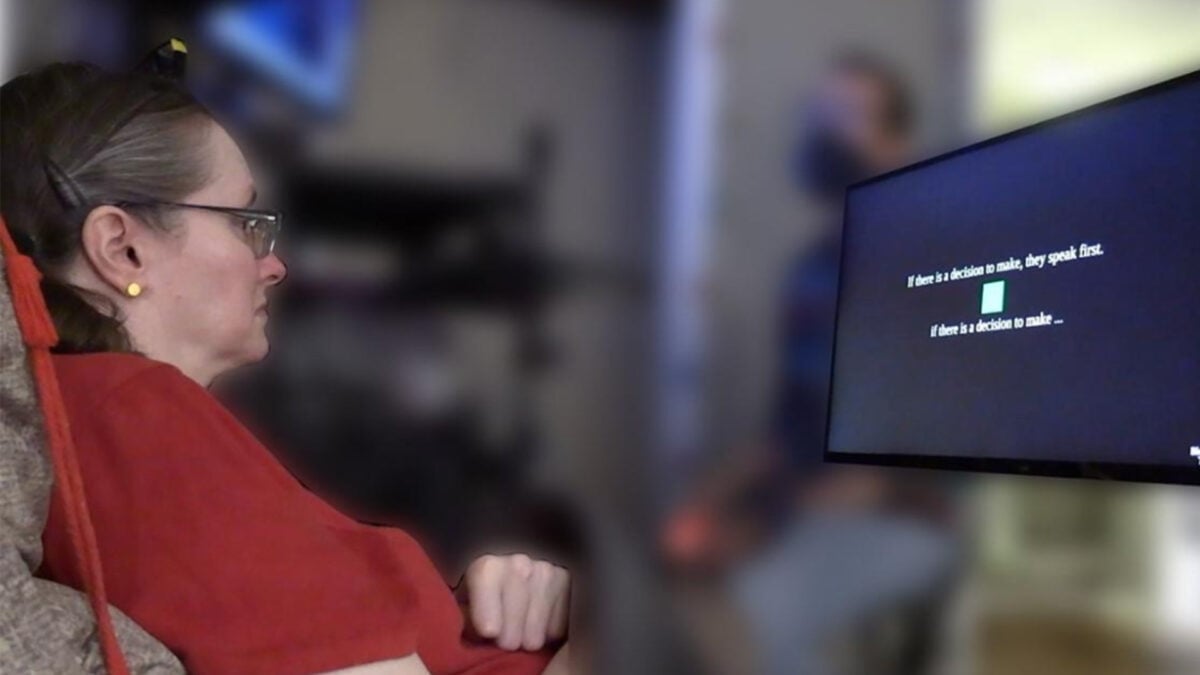
Scientists can now decipher brain activity related to the silent inner monologue in people’s heads with up to 74% accuracy, according to a new study.
In new research published today in Cell, scientists from Stanford University decoded imagined words from four participants with severe paralysis due to ALS or brainstem stroke. Aside from being absolutely wild, the findings could help people who are unable to speak communicate more easily using brain-computer interfaces (BCIs), the researchers say.
“This is the first time we’ve managed to understand what brain activity looks like when you just think about speaking,” lead author Erin Kunz, a graduate student in electrical engineering at Stanford University, said in a statement. “For people with severe speech and motor impairments, BCIs capable of decoding inner speech could help them communicate much more easily and more naturally.”
Previously, scientists have managed to decode attempted speech using BCIs. When people physically attempt to speak out loud by engaging the muscles related to speech, these technologies can interpret the resulting brain activity and type out what they’re trying to say. But while effective, the current methods of BCI-assisted communication can still be exhausting for people with limited muscle control. The new study is the first to directly take on inner speech.
To do so, the researchers recorded activity in the motor cortex—the region responsible for controlling voluntary movements, including speech—using microelectrodes implanted in the motor cortex of the four participants.
The researchers found that attempted and imagined speech activate similar, though not identical, patterns of brain activity. They trained an AI model to interpret these imagined speech signals, decoding sentences from a vocabulary of up to 125,000 words with as much as 74% accuracy. In some cases, the system even picked up unprompted inner thoughts, like numbers participants silently counted during a task.
For people who want to use the new technology but don’t always want their inner thoughts on full blast, the team added a password-controlled mechanism that prevented the BCI from decoding inner speech unless the participants thought of a password (“chitty chitty bang bang” in this case). The system recognized the password with more than 98% accuracy.
While 74% accuracy is high, the current technology still makes a substantial amount of errors. But the researchers are hopeful that soon, more sensitive recording devices and better algorithms could boost their performance even more.
“The future of BCIs is bright,” Frank Willett, assistant professor in the department of neurosurgery at Stanford and the study’s lead author, said in a statement. “This work gives real hope that speech BCIs can one day restore communication that is as fluent, natural, and comfortable as conversational speech.”


Категории
Больше
Khi nào hợp đồng chuyển nhượng nhà đất không công chứng vẫn được cấp Sổ đỏ? Căn cứ Điều 42 Nghị định 101/2024/NĐ-CP, các trường hợp hợp đồng chuyển nhượng nhà đất không công chứng vẫn được cấp sổ đỏ bao gồm: (i) Các trường hợp sử dụng đất sau đây do nhận chuyển quyền sử dụng đất không đúng quy định nhưng có chữ ký của các bên liên quan và không thuộc...

Mai Dora, nữ MC quyến rũ nhất VCS, nổi đình nổi đám trong cộng đồng mạng, mới đây đã khiến dân tình "rụng tim" khi chia sẻ bộ ảnh mới nhất của mình. Với phong cách hóa trang nữ thần tiên tỷ, Mai Dora không chỉ khiến fan xuýt xoa bởi vẻ đẹp thiên thần mà còn "gây sốt" bởi vóc dáng nuột nà và lưng trần gợi cảm, quyến rũ.Trong bộ trang phục nhẹ nhàng nhưng đầy mê hoặc, Mai Dora toát lên vẻ đẹp...

A deadly outbreak of Legionnaires’ disease is ripping through Central Harlem in New York City. Local health officials report that about two dozen residents have been sickened by the pneumonia-causing bacteria so far this month. The NYC Health Department issued its latest update on the outbreak Wednesday, following its first report last week. Since...

Họ giống như mặt trời nhỏ trong gia đình, không chỉ tự tỏa sáng mà còn soi sáng vận mệnh của ba thế hệ trong gia đình. Có những thành viên như vậy trong gia đình thực sự là một phước lành được truyền từ thế hệ này sang thế hệ khác và sự thịnh vượng của gia đình đang ở rất gần! Bạn có muốn biết bốn con giáp nào quyền lực đến vậy không? Hãy xem thử và...

UBND TP Hà Nội mới đây có Văn bản số 4329/UBND-NC về việc triển khai một số tiện ích miễn phí phục vụ tổ chức, cá nhân thực hiện thủ tục hành chính tại các chi nhánh, điểm phục vụ hành chính công trên địa bàn TP Hà Nội. UBND TP Hà Nội chấp thuận chủ trương cho phép Trung tâm Phục vụ hành chính công Thành phố và UBND các xã, phường triển khai đồng bộ...