


Newly Discovered Fossils Reveal Unknown Humanlike Relative
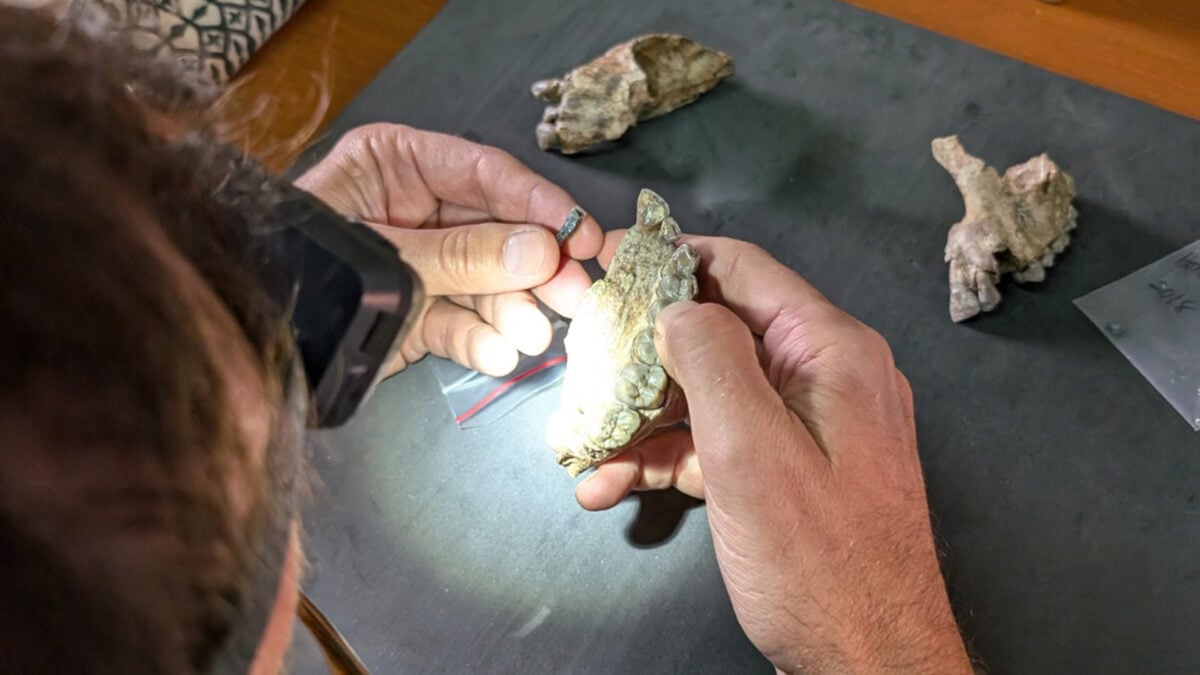
Researchers have uncovered fossils belonging to a previously unknown ancient human relative. And they may have lived in the same time and place as the earliest-known members of the genus Homo, from which modern humans evolved, according to a new study.
A team of archeologists working at Ethiopia’s Ledi-Geraru research project area unearthed a set of fossilized teeth that likely belonged to an unidentified species within the Australopithecus genus, known for having both human- and ape-like traits. The findings are published in Nature.
Until now, scientists have discovered six Australopithecus species in sites in Africa, including the famous Lucy fossil. But not all of these species intersected with our earliest human ancestors in the genus Homo.
The newly found teeth, from two individuals, date back 2.6 to 2.8 million years. While they share some characteristics with other Australopithecus species, comparisons with nearby fossils and other hominin specimens indicate they are distinct enough to be considered a new species.
At the same site, the scientists also discovered three other teeth that likely belonged to members of the earliest species of Homo, dating to 2.59 million years ago. That species was first identified in 2013 through a jawbone at the same study site.
These discoveries suggest that as many as four early human-like lineages—Homo, Paranthropus, Australopithecus garhi, and the newly identified species—may have coexisted in East Africa between 2.5 and 3.0 million years ago.
“This new research shows that the image many of us have in our minds of an ape to a Neanderthal to a modern human is not correct—evolution doesn’t work like that,” Kaye Reed, a paleoecologist at Arizona State University, said in a statement. “Here we have two hominin species that are together. And human evolution is not linear, it’s a bushy tree, there are lifeforms that go extinct.”
The researchers need more fossils from the species to officially give it a name. But for now, the researchers have dubbed the new genus Ledi-Geraru Australopithecus.
How these early ancestors were able to coexist is still a mystery, but it’s possible that they ate different things and weren’t competing for the same resources. The scientists are currently examining the enamel of the newly discovered teeth to figure out what these species may have eaten.
“Whenever you have an exciting discovery, if you’re a paleontologist, you always know that you need more information,” Reed said in a statement. “You need more fossils. That’s why it’s an important field to train people in and for people to go out and find their own sites and find places that we haven’t found fossils yet.”


Κατηγορίες
Διαβάζω περισσότερα
Tính đến thời điểm hiện tại, ở khối trường công lập, trường Đại học Công nghệ - Đại học Quốc gia Hà Nội, Trường Đại học Khoa học tự nhiên và Trường Đại học Quốc tế - Đại học Quốc gia TP.HCM đang áp dụng ngưỡng đảm bảo chất lượng đầu vào (điểm sàn xét tuyển) cao nhất là 24 điểm với một số ngành. Trong khi đó nhiều ngành điểm sàn chỉ từ 19 đến 20 điểm....

The iconic photography company Kodak could go out of business within a year. The 133-year-old American company warned investors Monday in a regulatory filing that there’s “substantial doubt” it can keep its doors open unless it pays down its debts or renegotiates its terms. In the filing, Kodak warned it has “debt coming due within twelve months and...

Trong thời đại mà game online trở thành một xu hướng giải trí, một phần không thể thiếu trong cuộc sống của nhiều bạn trẻ. Với họ, đó còn là nơi thể hiện bản thân, giao lưu và kết nối với bạn bè. Nhất là những người trẻ vốn không có nhiều mối quan hệ ở cuộc sống ngoài đời.Có hoàn cảnh như vậy, cô bé tên Lưu Chi, 16 tuổi sống ở Chiết Giang với bà ngoại nhiều năm khi còn nhỏ và hiếm...

Theo thời gian, mảnh đất YouTube ngày càng trở nên cạnh tranh hơn và bản thân các YouTuber cũng phải đau đầu trước việc tìm ra những nội dung mang tính thu hút người xem.Cũng nhờ vậy, trào lưu Lookbook đã ra đời. Hiểu theo một cách đơn giản, đây là nội dung thường được thực hiện bởi các nữ YouTuber xinh đẹp. Những cô nàng này sẽ liên tục thay, thử quần áo trên sóng, vừa nhằm mục đích giới...

Rau dền trắng là loại rau đặc trưng của mùa hè, tươi ngon nhất từ tháng 6 đến tháng 8. Ưu điểm của loại rau này là dễ trồng, ít sâu bệnh nên hạn chế được việc sử dụng thuốc bảo vệ thực vật, đảm bảo an toàn cho người tiêu dùng. Theo Đông y, rau dền trắng có tính mát, vị ngọt, tác động vào kinh đại tràng và tiểu trường, có công dụng thanh nhiệt, lợi...
